







Buying guide
Fat bike – fat tyre electric bike for gravel, snow and city all year round
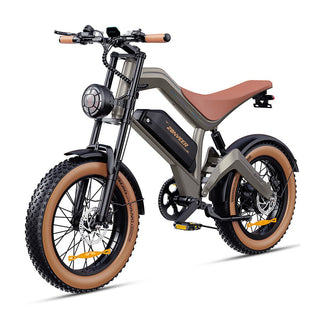
A fat bike has extra-wide tyres that give stability, grip and comfort where a normal e-bike feels unsafe: gravel roads, snow, sand, forest trails and uneven city streets. At Wheelyshop you find electric fat bikes from brands like ENGWE, Duotts, VARUN and KOOLUX – from moped-inspired long-range models to affordable commuters. Compare tyre width, battery, range and weight in the filter. Every electric bike ships with free delivery, a 2-year warranty (in addition to your statutory rights) and the option to pay in instalments.
In short
- A fat tyre electric bike (often 4-inch tyres) gives grip and comfort on gravel, snow and sand – but adds weight and rolling resistance on tarmac.
- Calculate range with a margin: wide tyres and cold use more energy than the manufacturer's test value.
- Torque and disc brakes matter more than peak power when the bike is heavy and the surface loose.
- Check weight, maximum load and storage – a fat bike is rarely easy to carry.
- Pedelec fat bike: max 250 W, assistance up to 25 km/h – otherwise moped rules apply.
How to choose the best fat bike 2026
A fat bike is usually bought to handle more than tarmac: winter roads, gravel, forest trails and sand. Start from where you actually ride most. If you ride almost only in town, a normal e-bike is lighter and nimbler; if you mix surfaces and seasons, the fat bike is the safer choice.
1. Fat bike tyres and surface – 4-inch wide tyres
- Tyre width – 4 inches is standard and floats on snow and sand; narrower tyres roll more easily on tarmac.
- Tyre pressure – low pressure gives grip and comfort on loose ground, higher pressure lowers rolling resistance on the road.
- Suspension – a suspension fork adds comfort on trails; full suspension costs weight.
- Studded tyres – consider them for ice and packed snow.
2. Range and battery on a fat tyre electric bike
Wide tyres use more energy than narrow ones, and cold reduces battery capacity. The stated range is a test value – calculate your return journey and add a generous margin in winter. Compare capacity in Wh, charging time and whether the battery is removable so it can be charged indoors. Our practical tips to get more range from every charge apply to e-bikes too.
3. Motor, torque and brakes on an electric fat bike
A fat bike is heavy and rolls on loose ground, so torque in Nm matters more than peak power. Hydraulic disc brakes give the best control in wet and cold weather, and gears help the motor work efficiently on hills. Check that the model has proper lights if you commute in the dark.
4. Folding fat bike or full size – weight and storage
Fat bikes often weigh 30 kg or more. Measure where the bike will be stored, whether it must be lifted up stairs or loaded into a car, and check the maximum load including luggage. Folding models with 20-inch wheels are an option if space is limited. The recommended rider height must suit the person riding.
5. Rules for a fat tyre electric bike in the EU
In the EU a fat bike counts as a bicycle when the motor has at most 250 W, only assists while you pedal and cuts out at 25 km/h – then no licence, registration or compulsory insurance is required. Models with a throttle or higher assistance are classed as mopeds. National details, including helmet and age rules, differ – see Your Europe's country-by-country road rules. Add a helmet and a solid lock. Wear parts such as tyres, tubes and brake pads are in the spare-parts portal. Read more in our guide to e-bike laws in Europe.
Best fat bike – compare the last two candidates
When only two candidates remain, record the same information for both:
- Tyre width, suspension and brake type
- Motor power, torque and gears
- Battery capacity in Wh, charging time and removable battery
- Stated range and test conditions
- Weight, maximum load and recommended rider height
Mark missing information instead of guessing and choose the model whose whole package suits your surfaces and storage. A smaller selection is in our e-bike top list and offers under e-bike deals.
Frequently asked questions
What is a fat tyre electric bike?
A bike with extra-wide tyres, usually around 4 inches, that give a larger contact patch with the ground. That means better grip, stability and comfort on gravel, snow, sand and uneven roads. As an e-bike the wide tyres are combined with assistance that makes heavy surfaces and hills easier.
Is a fat bike good in winter and snow?
Yes, it is one of the most common reasons to choose one. Wide tyres at low pressure give grip and stability in snow and slush, and studded tyres help on ice. Expect shorter range in the cold, charge the battery indoors and rinse off salt after riding.
Fat bike or normal e-bike – which should I choose?
If you ride mostly in town on tarmac, a normal e-bike is lighter, easier to handle and often cheaper. If you mix gravel, forest, snow or sand, or want maximum stability, the fat bike is the safer choice. Weight and rolling resistance are the price you pay for the grip.
Do I need a licence or insurance for a fat bike?
Not as long as the fat bike is a pedelec: max 250 W, assistance only while pedalling and up to 25 km/h. Models with a throttle or higher assistance are classed as mopeds and require a helmet, insurance and a licence in most countries. Helmet and age rules for bicycles differ by country – we recommend a helmet for everyone.
What range does a fat bike have on one charge?
Most fat bikes state 50–120 km, but wide tyres, cold, loose ground and high assistance lower the real range. Calculate your return journey and add a margin – and compare the battery capacity in Wh when choosing a model.