
























Buying guide
Puncture-proof electric scooter – solid tyres with no air pressure
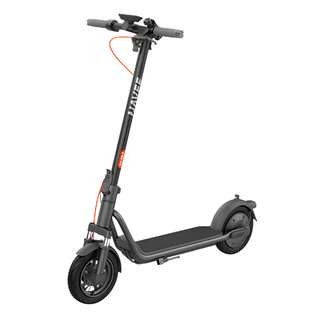
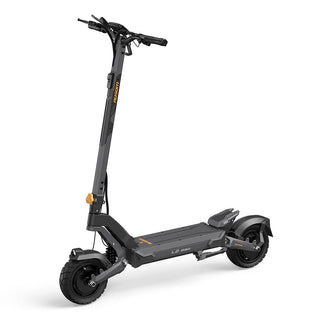
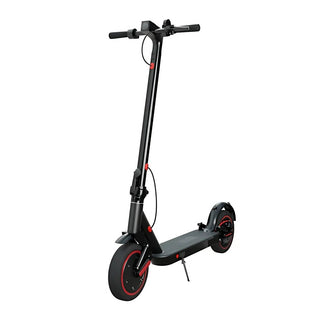
At Wheelyshop you will find puncture-proof electric scooters with solid tyres or honeycomb tyres – from light kids' and commuter models under 10 kg from Wheely, NAVEE and HX to seated scooters with suspension and up to 50 km of claimed range. No more pumping, patching inner tubes or being stranded with a flat on the way to work. Compare weight, suspension and range directly in the filter. Every electric scooter comes with free delivery, a 2-year warranty (in addition to your statutory rights) and the option to pay in instalments.
In short
- A puncture-proof electric scooter has solid or honeycomb tyres with no air chamber that cannot puncture in the usual way – but they still wear and need replacing over time.
- Without an air cushion, suspension, wheel size and rubber compound decide comfort. Choose a model with suspension if your route is rough.
- Solid tyre electric scooters in the collection span roughly 6.6 to 25 kg and 5 to 50 km of claimed range – best suited to short and medium city trips.
- Kids' and adult models should not be compared like for like; check the intended rider, height and maximum load.
- In most EU countries e-scooters are limited to 20–25 km/h and 250–500 W on public roads – most puncture-proof models are well within that, but always check your national rules.
How to choose the best puncture-proof electric scooter 2026
A tyre without air removes the most common reason an electric scooter ends up stranded: the puncture. The price is a slightly harder ride and suspension that has to do more of the work. So start from your usual distance and surface, then choose between the light city models, the honeycomb options and the suspended seated models.
1. Solid or honeycomb – what sets puncture-proof tyres apart?
- Solid tyres are moulded from a single piece of rubber. They are hard-wearing and completely maintenance-free as far as air is concerned, but give the firmest ride.
- Honeycomb tyres are also airless but have hollow chambers in the structure that flex slightly. They feel softer than fully solid tyres but are still harder than pneumatic tyres.
- Both types can wear, crack and deform – "puncture-proof" does not mean maintenance-free forever.
Still weighing puncture-proof against pneumatic? Our guide to solid vs pneumatic tyres compares comfort, grip and puncture risk side by side.
2. Solid tyre electric scooter – suspension takes the edge off bumps
A pneumatic tyre acts as a shock absorber in itself. Without it, the suspension, wheel size and rubber compound decide how the vehicle feels over joints and kerbs. Several light models have no suspension at all and suit smooth tarmac best, while models with front and rear suspension cope with rougher city streets. If you mostly ride on gravel and rough roads, off-road electric scooters with pneumatic tyres are often the better choice despite the pumping.
3. Who is a puncture-proof electric scooter for?
- The commuter who wants a vehicle that is always ready and never needs a pump or repair kit.
- Children and teenagers – many kids' models have solid tyres precisely to avoid punctures and maintenance; see the full selection under kids electric scooters.
- Anyone riding short distances in the city, where reliability matters more than comfort.
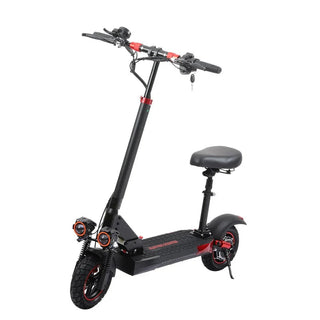
- Anyone who wants to sit: some models combine solid tyres with a seat and suspension – compare them with the full range of electric scooters with seat.
4. Light electric scooter with puncture-proof tyres – weight and range
Puncture-proof models are mostly light city vehicles: the collection ranges from roughly 6.6 to 25 kg and from 5 to 50 km of claimed range. The lightest models are easily carried up stairs and taken on the train, but have small batteries. Calculate your round trip, add a margin for cold weather and hills and check the battery capacity in Wh. If you need to go further than that, there are long range electric scooters, where pneumatic tyres dominate. Tyre pressure, speed and charging habits all matter – see our guide on how to increase your range.
5. Replacing puncture-proof tyres on an electric scooter
Check the tyres regularly for uneven wear, cracks and correct seating on the rim. A worn solid tyre gives less grip and a longer braking distance even though it never loses air. Replacement usually needs the right tools and some force, because the tyre has to be pressed onto the rim – some models have a split rim that makes the job easier. The right size and model compatibility are in the spare parts portal and among our electric scooter tyres.
6. Electric scooter rules in the EU
Most puncture-proof models are built well within the limits that apply on public roads: in most EU countries e-scooters are limited to 20–25 km/h and 250–500 W; many countries require a minimum age (often 14), third-party insurance and/or a plate, and some require a helmet. We recommend a helmet for everyone, whatever the rules say. Always check your national rules before riding – read more at Your Europe. Always check the model's design top speed and power on the product page.
Best puncture-proof electric scooter – final comparison
When you are down to two models, write down the same details for both:
- Tyre type (solid or honeycomb) and wheel size
- Suspension: none, front, rear or dual
- Weight, folded dimensions, maximum load and recommended rider height
- Claimed range, battery capacity in Wh and charging time
- Brake type, lighting and design top speed
Mark any missing data rather than assuming a value, and choose the model whose overall package suits your distance and surface. The current best-selling models are in our electric scooter top list, and the full range is under all electric scooters.
Frequently asked questions
Can puncture-proof tyres on an electric scooter get a puncture?
No, not in the usual way – the tyre has no air chamber and therefore cannot go flat. It can, however, wear, crack or be damaged and then needs replacing. Check the tyres regularly and replace them when the tread is worn or the rubber has cracked.
Are honeycomb tyres more comfortable than solid tyres on an electric scooter?
Usually slightly, because the hollow chambers in the honeycomb structure flex a little. The difference is still smaller than that between airless tyres and pneumatic tyres. Wheel size, rubber compound and above all the vehicle's suspension affect comfort more than the tyre type alone.
Is a puncture-proof electric scooter suitable for gravel and rough roads?
It is best suited to tarmac and smooth city streets. On gravel and rough roads the ride is hard without an air cushion, so choose a model with front and rear suspension – or an off-road model with pneumatic tyres if you ride a lot on rough terrain.
How do you replace puncture-proof tyres on an electric scooter?
The tyre has to be pressed onto the rim, which takes the right tools, heat or soapy water and some force. Models with a split rim are easier to work on. Check the correct size in the spare parts portal and, if you are unsure, let a workshop do the job.
Do children need a helmet on a puncture-proof electric scooter?
Helmet rules differ between countries – some EU countries require a helmet for all e-scooter riders, others only for minors, and some not at all. We recommend a helmet for every age, whatever the tyre type. Check your national rules for helmet requirements, minimum age and where an e-scooter may be ridden.