
It's one of those questions that comes up again and again in e-scooter forums, and the honest answer is rarely that one tyre type wins. Pneumatic and solid tyres solve different problems. Air gives you comfort and grip. Solid, airless tyres take away the most annoying thing that can happen on the way to work: a flat. Which one suits you depends on how far you ride, what your roads are like and how happy you are to get your hands dirty.
Solid vs pneumatic tyres – which should you choose?
If you commute more than a few kilometres, ride on broken tarmac, cobbles or gravel, or ride in the rain and all year round: go pneumatic. If you mostly do short trips on smooth tarmac and never want to pump or patch a tyre, solid tyres work – just expect a harsher ride. Suspension takes the edge off the bumps, but it doesn't make an airless tyre as soft as air. If you want a bit of both, tubeless pneumatic tyres with sealant are the middle ground, and some models already come with them from the factory.
Tyre types – how they differ in practice
Broadly, there are two families: tyres with air and tyres without. Each family has a few variants:
- Pneumatic tyres with an inner tube. Same principle as on a normal bike. The softest ride, and cheap to repair. If the pressure is too low, the tube can get pinched against the rim when you hit a kerb, leaving two small holes side by side – a so-called snakebite.
- Tubeless pneumatic tyres. The air sits directly in the tyre. There's no tube to pinch, so they puncture less often, and a small hole can often be sealed with a plug without taking the tyre off – BikeRadar's guide to fixing a tubeless puncture shows how it's done on a bike. The downside is that they can be stiffer to get onto the rim, and they still need pumping.
- Tubeless with sealant or gel. A tubeless tyre with a layer of sealing gel or liquid sealant on the inside that plugs small holes while you ride. Great against glass and thorns, but it won't fix a bigger cut, and the sealing doesn't last forever.
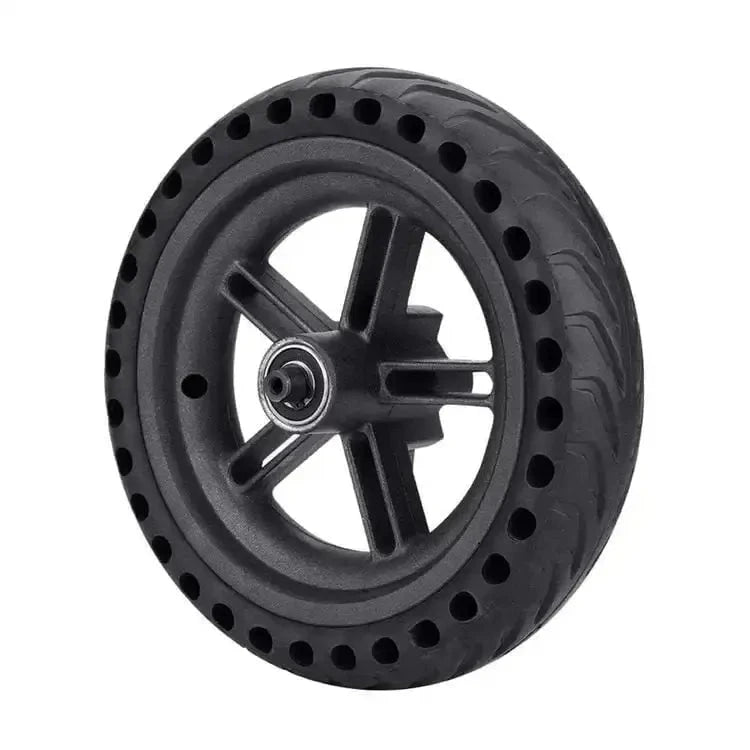
- Semi-solid tyres. Solid rubber with cavities inside for a little give. They can't puncture.
- Honeycomb tyres. Airless tyres with a pattern of holes that looks like a honeycomb. The holes make them slightly softer than fully solid tyres.
- Solid tyres. Rubber all the way through. Nothing to pump and nothing to fix, but the harshest ride, the heaviest tyre and the hardest to fit.
| Tyre type | Best for | What you live with |
|---|---|---|
| Pneumatic with inner tube | Comfort and grip, longer commutes | Snakebites at low pressure, fiddly to fix at the roadside |
| Tubeless | Comfort with fewer punctures | Needs pumping, can be stiff to fit |
| Tubeless with sealant | City riding with glass and grit in the bike lane | Only seals small holes, doesn't last forever |
| Semi-solid or honeycomb | Short trips on smooth tarmac | Harsher ride, less grip in the wet |
| Solid | As little maintenance as possible | Most vibration, heaviest and hardest to replace |
Comfort and grip: why air feels softer
A pneumatic tyre works like a spring. It squashes over a joint or a root and soaks up part of the bump before it reaches the handlebar. An airless tyre does much less of that, and on the small wheels e-scooters have, you feel the bumps clearly. Tom's Guide's scooter reviewer is blunt about it in his five buying tips: get air-filled wheels if you can. They have far more give over potholes, even if the risk of a puncture is higher. Some airless tyres have holes cut into the rubber for a bit more give – which is exactly the idea behind honeycomb tyres.
Suspension helps, especially front and rear, but it doesn't make an airless tyre as soft as air. The Italian consumer association Altroconsumo saw the same thing in its tests: only the scooters with pneumatic tyres front and rear got top marks for vibration, and the airless ones scored lower – even those with dual suspension. Solid tyres on a scooter with suspension can feel perfectly fine in town – just don't expect the same ride as on air.
Grip follows the same logic. A pneumatic tyre moulds itself to the road and grips better on wet and loose surfaces than an airless one. If you often ride in the rain, that's a strong argument for air – more on what rain does to your scooter in our guide to riding an electric scooter in the rain.
Punctures: how big a problem are they really?
Plenty of punctures on tubed tyres aren't caused by nails at all but by low pressure: the tube gets pinched against the rim and splits. BikeRadar's advice on preventing punctures describes exactly this pinch flat, with its two parallel slits in the tube. Keep your tyres at the pressure printed on the sidewall or in the manual and much of the problem goes away – how to check it is covered in our guide to the right air pressure for electric scooters. The rest is glass, thorns and sharp stones at the edge of the bike lane.
What makes a puncture more of a hassle on an e-scooter than on a bike is the small wheels and the motor that often sits in one of them. Changing a tube at the roadside is rarely realistic, so many riders walk the scooter home. On the motor wheel, the motor cable often has to be disconnected and reconnected, and a connector that isn't properly seated after a tyre change is a common cause of error code 18 on a Xiaomi scooter. How to get the wheel out, swap the tube or tyre and put everything back together is covered step by step in our guide on how to change an electric scooter tyre.
That's exactly why airless tyres are tempting. The question to ask yourself is how often you'd actually get a flat with the right pressure and tubeless tyres, compared with how much a harsher ride would bother you every single day.
City, gravel or trails – choose by surface
- Smooth tarmac and short trips: every tyre type works here. If you'd rather never think about pressure or punctures, have a look at our electric scooters with puncture-free tyres – suspension makes a big difference if the road isn't perfectly smooth.
- Broken tarmac, cobbles and kerbs: pneumatic, ideally combined with suspension.
- Gravel and forest tracks: pneumatic tyres with a chunkier tread on bigger, wider wheels. Small wheels and loose gravel are a nervous combination. Models built for gravel and trails are among our off-road electric scooters.
- Rain: air grips better than airless. Replace the tyre before the tread is completely worn.
- Winter: for some models you'll find studded tyres among our winter accessories. Cycling UK's guide to winter tyres is written for bikes, but the basics carry over: the studs bite into the ice, the tyres are heavy, and deep snow on top of the ice can stop the studs from reaching it. More tips in our guide to riding an e-scooter or e-bike in winter.
One tip the other way: chunky off-road tyres on a scooter that only ever sees tarmac add rolling resistance and cost range without giving you anything back. More on what tyres mean for range in our guide to increasing your e-scooter range.
Wheel size: 8.5 inches, 10 inches or bigger?
Bigger wheels tend to roll more calmly over potholes, joints and gravel, because a bump is relatively smaller for a large wheel. For years 8.5 inches was standard on commuter models. Today 10 inches is common, and some newer models have 11 or 12 inches. Altroconsumo points out the flip side too: bigger wheels soak up more, but they add a lot of weight. The smaller wheel gives you a lighter, handier scooter to carry up the stairs. The bigger one gives you a more confident ride. Top speed is mostly set by the motor and controller, so choose wheel size for comfort and surface rather than speed.
On a scooter you already own, you can't choose freely. The fork, rim and mudguards are built for one size, and it's printed on the sidewall – for example 8.5x2 or 10x2.5, or in metric form such as 60/70-6.5. Note that 10x2 and 10x2.5 are not the same tyre – the whole marking has to match, not just the inch figure. You can see which tyres fit which model among our tyres and wheels for electric scooters, or by searching for your model in the spare parts portal.
Switching tyre type on the scooter you already own
It usually works, as long as the size stays the same. Plenty of riders switch from air to honeycomb or solid tyres on an older Xiaomi with 8.5-inch wheels, for example. Think it through first:
- You trade punctures for vibration. A scooter without suspension gets noticeably shakier, and the screws and folding mechanism need checking more often.
- Solid tyres are a job to fit. They have to be forced onto the rim, often with heat, soapy water and a fair bit of muscle. Many people let a workshop do it.
- Solid tyres are heavier, and airless tyres roll less easily. That can cost a little range.
- There are middle ways. A tubeless tyre with sealant, or an inner tube with sealant inside, gets rid of a lot of punctures without giving up the comfort of air. BikeRadar notes that sealant in the tube adds a little weight and rolling resistance, but that's a small price next to a solid tyre.
Price rarely decides it. In our range, a new tyre for a typical 8.5–10-inch scooter sits in roughly the same price band whether it's pneumatic, honeycomb or solid – studded tyres and some large off-road tyres cost more. The real difference is comfort and the work of fitting it. Tyre levers, pumps and repair kits are among our electric scooter tools.
Common mistakes when choosing tyres
- Solid tyres on a scooter without suspension – and then commuting on bad tarmac every day.
- Thinking puncture-free means maintenance-free. Solid tyres wear too. Replace them when the tread is gone or the rubber starts to crack.
- Running pneumatic tyres at too low a pressure. It leads to snakebites, vaguer steering and less range.
- Buying by the inch figure instead of the full size marking on the sidewall.
- Chunky off-road tyres for pure city commuting, with more rolling resistance and less range for no benefit.
- Thinking the sealant lasts forever. Liquid sealant dries out and needs topping up, and when a tyre with factory-applied gel stops sealing, you replace the tyre.
Not sure what suits your model and your commute? Get in touch with our customer service and we'll help you find the right tyres.