


























Buying guide
Ninebot electric scooter – current models at Wheelyshop
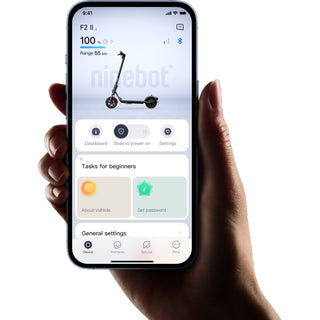
Ninebot by Segway is one of the best-known names in electric scooters, and at Wheelyshop you will find the current models: the compact E2 Pro, the commuter favourite MAX G3 and the powerful GT3. Stated range runs from 35 to 95 km, weight from 18.8 to 39.5 kg and rated motor output from 350 to 1200 W. All of them share an app, Smart BMS, Apple Find My and the TCS traction control system. The range suits anyone who wants a proven e-scooter with well-thought-out software, whether you ride short trips in town or want long range and suspension. Wheelyshop offers free delivery on all electric vehicles, a 2-year warranty and spare parts.
In short
- Current Ninebot electric scooters with 35–95 km of stated range, 18.8–39.5 kg and 350–1200 W of rated motor output.
- Signature technology: app, Smart BMS, Apple Find My, TCS traction control and RideyLONG or SegRange for extra range – the MAX G3 and GT3 also have front and rear suspension, indicators and cruise control.
- The E2 Pro for short city trips, the MAX G3 for daily commuting with long range and the GT3 for maximum performance.
- Rules in Europe: none of the models stays within the 250 W limit most EU countries set for bicycle-class e-scooters, so they are formally treated as mopeds and need national registration and insurance on public roads, or enclosed private land.
- Wheelyshop offers free delivery on all electric vehicles, a 2-year warranty and spare parts.
Choosing the right Ninebot electric scooter – a guide to the models
The Ninebot range is small but clearly tiered, from light entry-level model to fully suspended flagship. Here we go through what separates the models, how to interpret range and power, and what applies on European roads.
The models: E2 Pro, MAX G3 and GT3
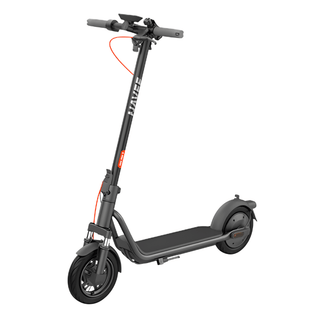
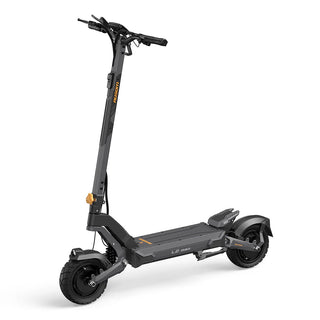
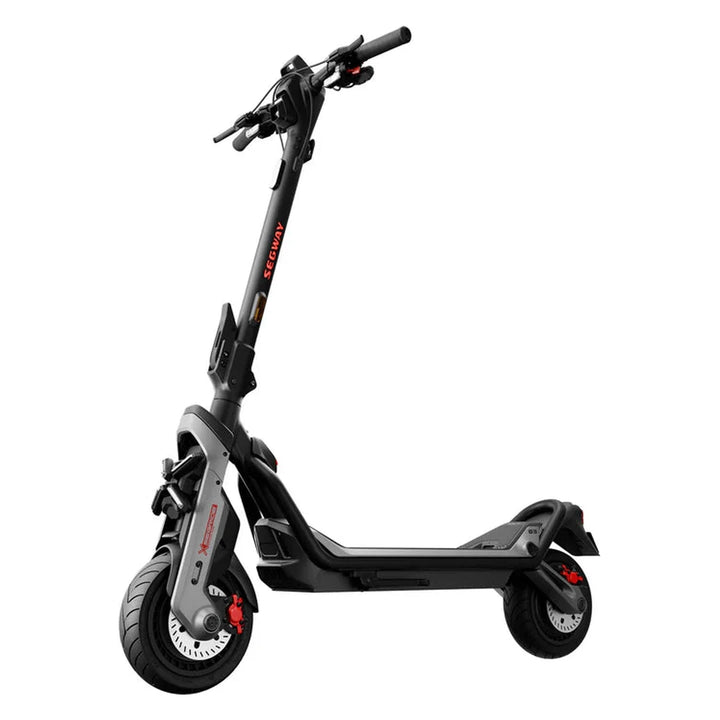
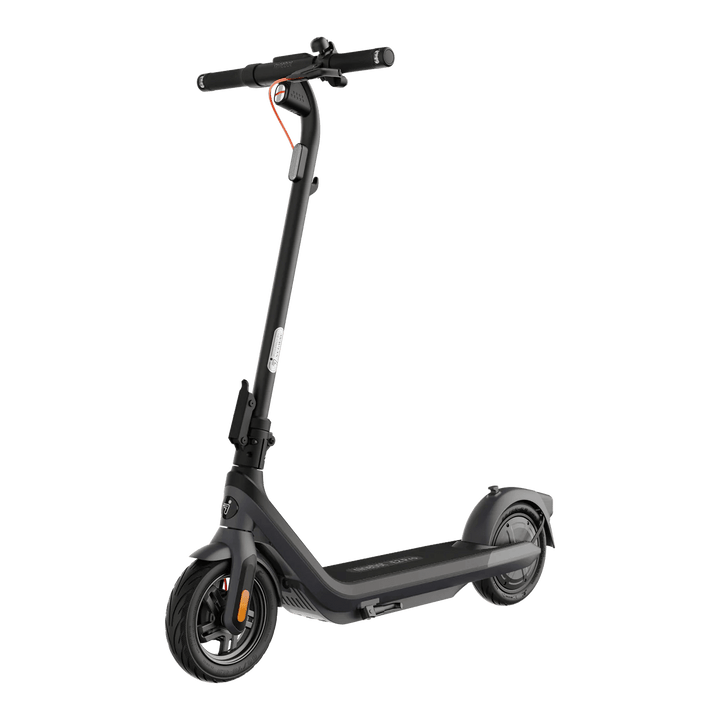
The E2 Pro is the entry-level model: 18.8 kg, a 350 W rated motor (750 W peak), 25 km/h and 35 km of stated range, with E-ABS and a drum brake, indicators and 10-inch puncture-resistant tyres. The MAX G3 is the commuter model: 850 W rated (2000 W peak), 45 km/h, 80 km of stated range, front and rear suspension, dual disc brakes and dual charging ports. The GT3 is the flagship: 1200 W rated (2400 W peak), 50 km/h, 95 km of stated range, 39.5 kg and a 150 kg recommended maximum load.
Range and battery on a Ninebot electric scooter
Stated range is the manufacturer's figure under ideal conditions. Expect 50–70 % in real-world riding, depending on rider weight, speed, temperature and hills. That means roughly 15–25 km for the E2 Pro (36 V 7.65 Ah, about 275 Wh), 40–55 km for the MAX G3 (46.8 V 12.75 Ah, about 600 Wh) and 45–65 km for the GT3 (46.8 V 19.2 Ah, about 900 Wh). Charging takes 5–6 hours for the E2 Pro, 6–7 hours for the GT3 and about 3.5 hours for the MAX G3 (2.5 hours with two chargers). The RideyLONG (E2 Pro) and SegRange (MAX G3 and GT3) functions optimise motor control to squeeze more kilometres out of the battery. If you want to compare with other brands, the models with the biggest batteries are gathered under long-range electric scooters. Our practical tips to get more range from every charge work whatever model you ride.
Motor, hills and weight
Rated output says the most about how an e-scooter copes on hills, while peak output is what the motor can deliver briefly. The E2 Pro with 350 W is rated for 18% climbs, while the MAX G3 and GT3 are rated for 30% – enough for steep city hills even with a heavy rider. Weight goes hand in hand with battery and frame: the 18.8 kg E2 Pro can be carried up stairs, the 24.6 kg MAX G3 is manageable if you have a lift, and the 39.5 kg GT3 is best rolled and stored at ground level. All three fold and have a hook for your bag.
Comfort: tyres, suspension and brakes
The MAX G3 and GT3 have both front and rear suspension combined with 11-inch puncture-resistant tyres, which gives the best comfort on cobbles and uneven tarmac. Both brake with dual disc brakes and are IPX6-rated against rain. The E2 Pro has no suspension but 10-inch puncture-resistant tyres, a drum brake at the front, an electronic brake at the rear and IPX4. All three have indicators, cruise control and front and rear lights; the E2 Pro also has ambient lighting. No Ninebot electric scooter in the range has a saddle or a removable battery.
Rules in Europe for a Ninebot electric scooter
In most EU countries an e-scooter counts as a bicycle only if it is limited to 20–25 km/h and, usually, 250 W of rated motor output. It may then use the cycle path with one rider at a time, while helmet and minimum-age rules vary from country to country. None of the Ninebot models meets both requirements: the E2 Pro has 350 W, the MAX G3 850 W and the GT3 1200 W. The MAX G3 has a speed limiter that caps it at 25 km/h, but since output exceeds 250 W that does not change the classification. The models are therefore formally treated as mopeds in most countries and need national registration and insurance on public roads, or enclosed private land. We recommend a helmet whatever your age – see our selection of helmets – and check your national rules via the EU overview of road rules and safety. See our country-by-country guide to electric scooter laws in Europe.
Service and spare parts for Ninebot electric scooters
Every Ninebot model at Wheelyshop ships with free delivery and a 2-year warranty, and we help you with support and parts throughout your ownership. Tyres, brake parts, chargers and wear parts are in our spare parts portal. With Apple Find My in the Segway-Ninebot app you can locate the vehicle if it goes missing, but a solid electric scooter lock is still the best protection. Do compare Ninebot with all electric scooters in the range before you decide.
Frequently asked questions
Is a Ninebot electric scooter legal on public roads in Europe?
None of the current models stays within the limits most EU countries set for bicycle-class e-scooters, usually 250 W of rated motor output and 20–25 km/h. The E2 Pro, MAX G3 and GT3 all have more than 250 W and are therefore formally treated as mopeds in most countries. On public roads they need national registration and insurance where available; otherwise they are for enclosed private land. Check your national rules before riding.
How far does a Ninebot electric scooter go?
Stated range is 35 km for the E2 Pro, 80 km for the MAX G3 and 95 km for the GT3. In real-world riding you should expect 50–70 % of that, i.e. around 15–25 km for the E2 Pro, 40–55 km for the MAX G3 and 45–65 km for the GT3 depending on rider weight, speed and temperature.
Which Ninebot suits daily commuting?
For daily commuting the MAX G3 suits most riders: 80 km claimed range, front and rear suspension, dual disc brakes and IPX6. With the built-in charger it takes about 3.5 hours to charge, or about 2.5 hours with an extra charger (sold separately) in the second port. For short trips, or if you often carry it, the 18.8 kg E2 Pro is the easier choice. How the models differ day to day is covered in our guide Which Segway Ninebot scooter should you buy?
Do the Ninebot MAX G3 and GT3 have suspension and an app?
Yes, both the MAX G3 and GT3 have front and rear suspension, indicators, cruise control and an electric horn. All models connect to the Segway-Ninebot app and have Smart BMS for battery monitoring, Apple Find My and the TCS traction control system.
Are spare parts available for Ninebot electric scooters?
Yes, Wheelyshop supplies tyres, brake parts, chargers and other wear parts through the spare parts portal. Every model ships with a 2-year warranty, and our support helps you find the right part for your model and version.