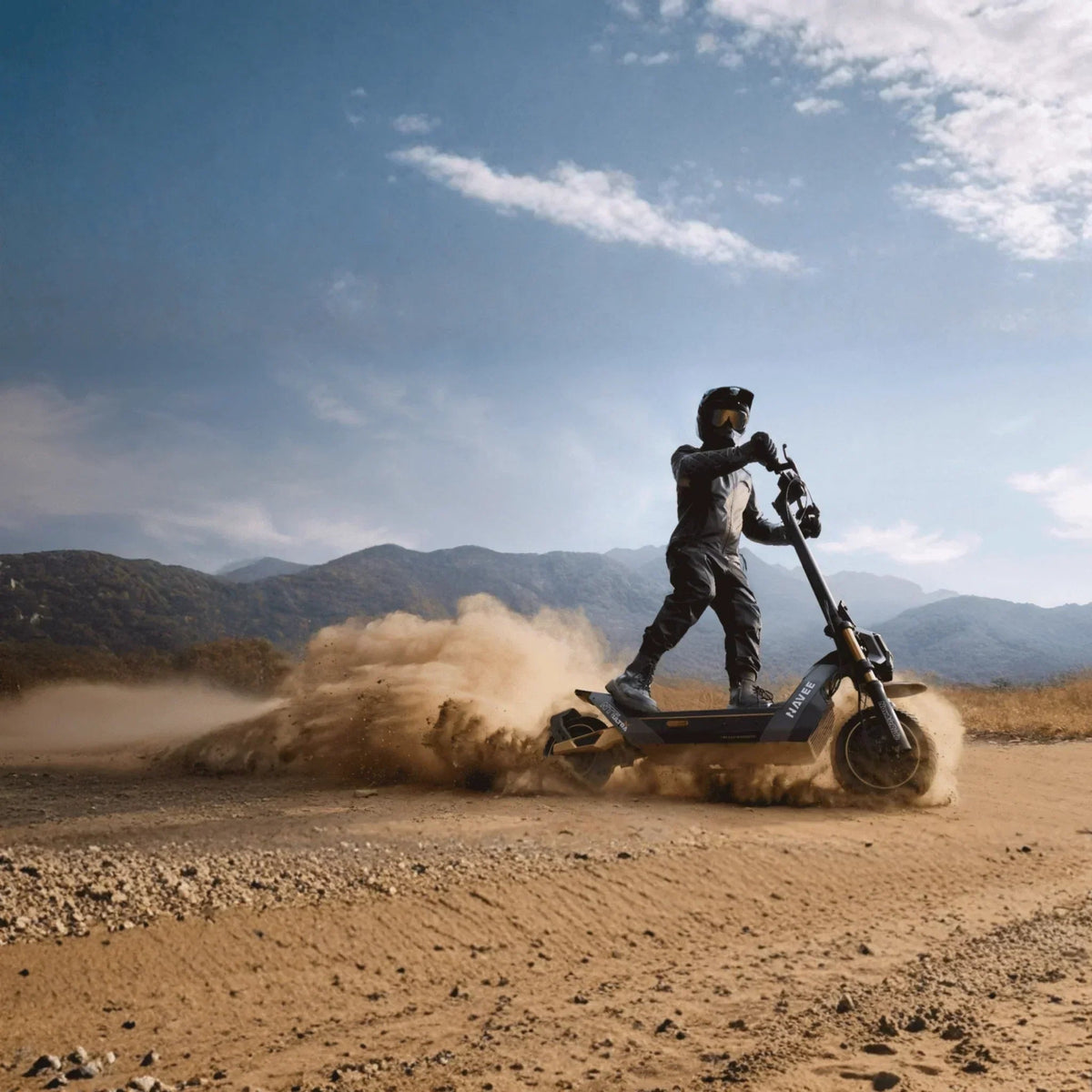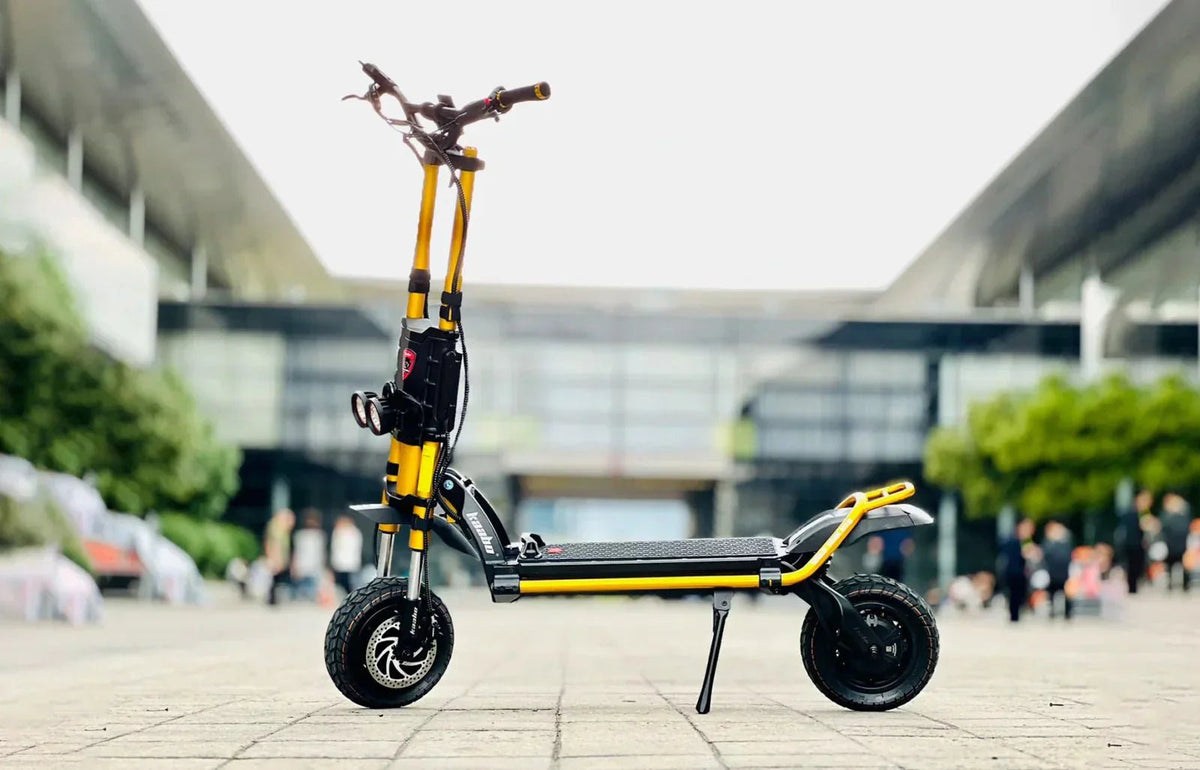

E2 Pro or MAX G3 – and is the GT3 worth the extra kilos? It’s a common question when you’re buying your first Ninebot, and top speed is rarely what settles it. Here we go through the models one at a time, what you’ll live with day to day and what’s worth knowing if you already have a Ninebot at home.
Which Ninebot should you buy? The short answer
No Ninebot is the best one for everybody – it depends on your trip home. If the scooter has to be carried up stairs or lifted into a car and your rides are short: E2 Pro. If you commute every day and want suspension and fast charging: MAX G3. If you’re a heavier rider, ride long distances and can roll it in at ground level: GT3. If you want something completely different from a kick scooter for short trips: the self-balancing Mini Pro 2. Start with the stairs and where you’ll charge it, not with the top speed.
E2 Pro, MAX G3, GT3 and Mini Pro 2 in practice
Ninebot and Segway have belonged together since 2015, when Beijing-based Ninebot bought its American rival Segway (TechCrunch reported the deal). That’s why the models are often called “Ninebot by Segway”. The figures below are the manufacturer’s (product pages and manuals, September 2026). All the specifications are in the Ninebot collection – here the focus is on what the models are like to live with.
| Model and weight | Suits you if you | What you live with |
|---|---|---|
| E2 Pro, 18.8 kg | carry it up stairs and ride shorter distances in town | no suspension, rear drum brake, 10-inch wheels |
| MAX G3, 24.6 kg | commute every day and want comfort | heavy to carry for more than one flight of stairs |
| GT3, 39.5 kg | are a heavier rider, ride long distances and want the most comfort | rolled rather than carried, one charging port – plan to charge overnight |
| Mini Pro 2, 13.6 kg | want a self-balancing vehicle for short trips | no ordinary handlebar – you steer with your knees against a bar, maximum rider weight 100 kg |

The MAX G3 and GT3 are built to the same recipe: front and rear suspension, disc brakes and 11-inch self-sealing tyres. The GT3 weighs about 15 kg more, has a bigger battery and a 150 kg maximum load against 130 kg for the MAX G3. The E2 Pro is the simple, light model, and the Mini Pro 2 is a different kind of vehicle altogether. In Tom’s Guide’s review of the MAX G3, the reviewer liked the smooth ride and the pull on hills, but pointed out that the indicators sit at the ends of the handlebar, where your body hides them from traffic behind you.
Top speeds vary a lot, from 18 km/h on the Mini Pro 2 to 50 km/h on the GT3 according to the manufacturer – what that means for where you can ride is covered in our guide to electric scooter laws in Europe.
Weight, brakes and suspension – where they differ
A common mistake is to choose by top speed and only discover the weight on the stairs. The E2 Pro, MAX G3 and GT3 all fold, but foldable doesn’t mean portable. At 18.8 kg, the E2 Pro can be carried up a flight of stairs every day. The MAX G3 at 24.6 kg can too, but it gets heavy. The GT3 at 39.5 kg is one you roll. The battery isn’t removable on any of them, so the scooter has to be kept where you charge it.
- E2 Pro: rear drum brake and an electronic brake in the motor. The drum brake is enclosed and easy to look after, but it gives less braking power than a disc brake. The manual says to contact customer service if it starts making a lot of noise when you brake.
- MAX G3 and GT3: disc brakes front and rear. More stopping power with a light squeeze. Get used to them at low speed first – grabbing the front brake hard can lock the front wheel. Use both brakes and expect the pads to wear: weak braking, a loud squeal in the dry and extra lever travel are the signs of worn or contaminated pads that BikeRadar lists in its guide to changing disc brake pads.
- Suspension and tyres. The E2 Pro has no suspension and 10-inch tubeless pneumatic tyres, so you feel rough tarmac in your hands. The MAX G3 and GT3 have front and rear suspension and 11-inch self-sealing tyres – on the MAX G3 they seal holes of up to 4 mm, according to the manufacturer.

Self-sealing doesn’t mean the tyre can’t go flat – a bigger cut or a hole in the sidewall won’t seal. How self-sealing, solid and ordinary pneumatic tyres compare is explained in solid vs pneumatic tyres, and how to swap one is in our guide to changing an electric scooter tyre. If you ride all year round, read our guide to riding an electric scooter in winter and have a look at our winter accessories – compare the size on the tyre sidewall before you order.
Range and charging: plan with a margin
The manufacturer gives 35 km for the E2 Pro and up to 80 km for the MAX G3 – but not at top speed. The E2 Pro manual shows clearly how much speed matters: about 40 km in ECO mode but about 27 km at top speed. The GT3 has the biggest battery, 899 Wh according to the manufacturer. Treat the figures as a ceiling. In the same Tom’s Guide review, the reviewer rode the MAX G3 hard in Sport mode on hilly roads and worked out a range of less than half what the scooter itself estimated for that mode – adding that a gentler rider will get much further. Cold weather, hills and a heavier rider cut the range on any Ninebot in the same way. What actually helps is covered in our guide to increasing your e-scooter’s range.
Charging times differ more than you might think. The E2 Pro takes about 5.5 hours according to the manual. The MAX G3 has a built-in charger: with the standard cable it takes about 3.5 hours, and with an extra charger (sold separately) in the second port about 2.5 hours. The GT3 has one charging port and the biggest battery – plan to charge it overnight. How to charge so the battery lasts is in our guide to charging an electric scooter battery, and what a charge costs is worked out in how much it costs to charge an electric scooter.
Day one: app, activation and updates
A Ninebot wants the app from day one, and it’s easy to miss:
- Charge first. The GT3 manual says the battery should be activated with a short charge before your first ride.
- Install the app and activate the scooter. The E2 Pro manual is clear: install the manufacturer’s app, activate the scooter and download the latest updates and safety instructions. A GT3 that hasn’t been activated only rides in ECO mode. A new Mini Pro 2 only goes 7 km/h until you’ve completed the beginner tutorial in the app, and then 10 km/h for the first kilometre (according to the Mini Pro 2 manual).
- Update the software. Do it straight away and then whenever the app suggests it. Updates can make a real difference: Tom’s Guide found that the MAX G3 could lurch forward when the throttle was only pressed part of the way, and a firmware update from Segway eased the problem somewhat. Error codes and temperature warnings also show up in the app.
- Connect Apple Find My. The E2 Pro, MAX G3 and GT3 can be linked to Apple’s Find My network through the app. It helps you find the scooter, but it doesn’t replace a proper lock – there are tips in our guide to protecting your electric scooter from theft.
Already own a Ninebot? Parts and care
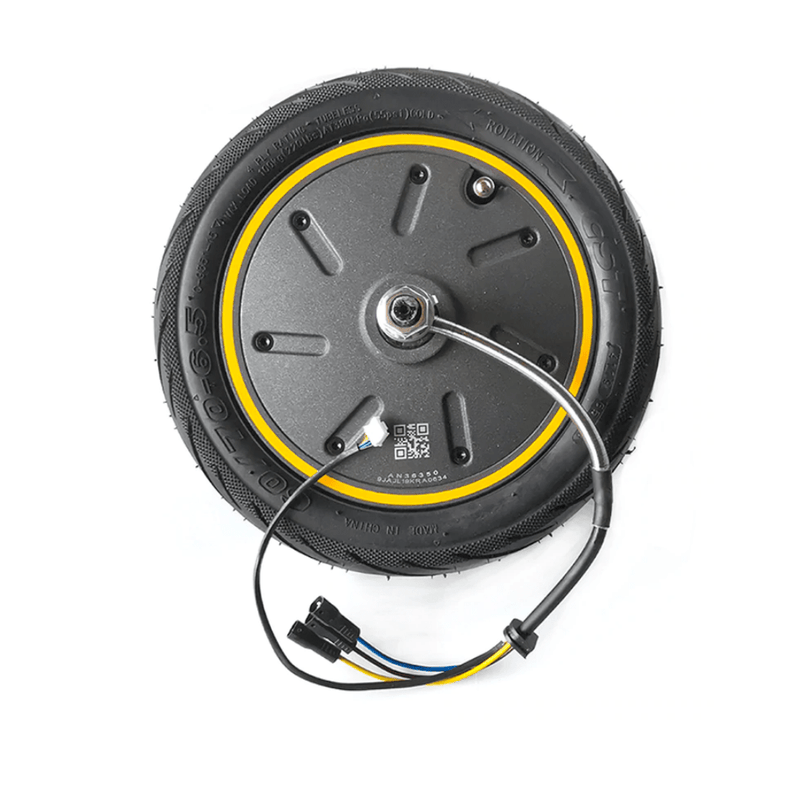
Ninebot scooters have been on city streets for years, so many people reading this already own one – a G30 Max, an ES model, something from the E or F series, a G2 or a ZT3. Tyres, brake parts, chargers, controllers and shock absorbers for many of them are among our Ninebot spare parts. Always search by the exact model designation in the spare parts finder – the G30 and G30D, or the E2, E2 Pro and E2 Plus, don’t always take the same part.

- Tyres: check the pressure often and stick to the pressure in the manual, within the range printed on the tyre sidewall.
- Brakes: adjust the cable when the drum brake feels slack, and keep an eye on the pads on the disc brakes.
- Bolts and folding: tighten the handlebar and folding-mechanism bolts on the schedule in the manual – play in the stem soon makes itself felt.
- Rain: the E2 Pro is IPX4-rated, the Mini Pro 2 IP54-rated and the MAX G3 and GT3 IPX6-rated. The rating is a lab test, not a promise that the scooter can take deep puddles or a hose – read our guide to riding an electric scooter in the rain.
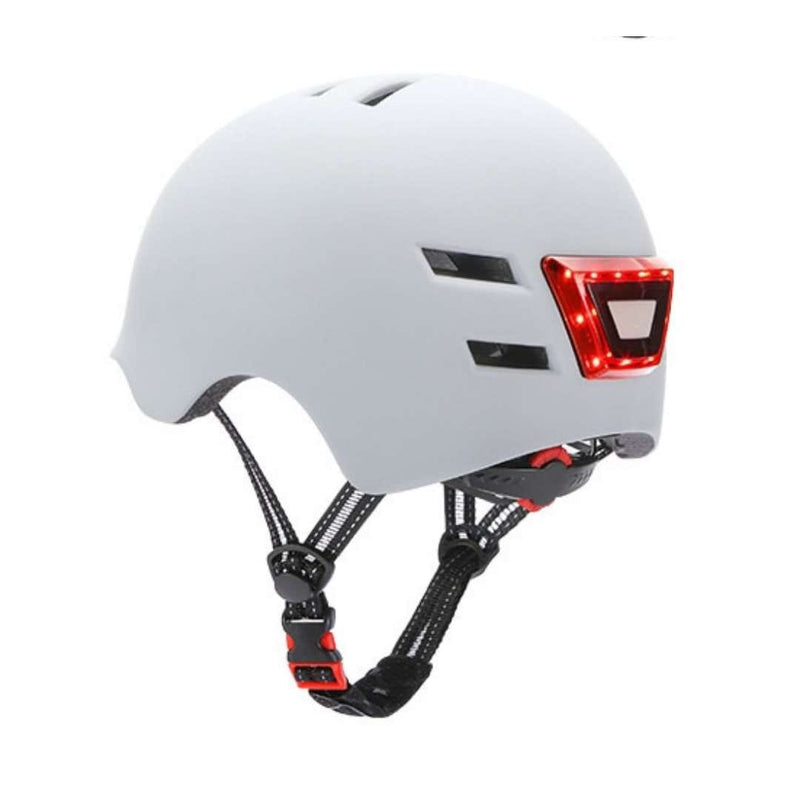
Don’t skimp on the helmet. It should be made for the way you ride and fit snugly, and if you want to compare how well different bike helmets protect, BikeRadar goes through Virginia Tech’s independent ratings in its guide to the safest bike helmets. On the GT3, which goes up to 50 km/h, a helmet approved to the motorcycle standard ECE 22 is the sensible choice – check the certification when you choose from our helmets. Like all electric vehicles from us, the Ninebot models come with a 2-year warranty, and customer service can help you find the right part.
Common mistakes when choosing a Ninebot
- Choosing by top speed. Choose by weight, brakes and storage – those are what you notice every day.
- Counting on the full claimed range. The figure is measured in favourable conditions – according to the E2 Pro manual with a full battery, a 75 kg load and 25 °C on tarmac – and often in a lower speed mode. Plan with a generous margin.
- Forgetting where you’ll charge it. Without a removable battery, the scooter is charged where it’s kept – a storeroom without a socket won’t work.
- Skipping activation. Charge, activate in the app and update before the first ride.
- Buying parts by an approximate model name. Check the exact model and version before you order.
- Wanting a test ride after delivery. An electric vehicle that has been ridden can’t be returned, and registering it in the manufacturer’s app also counts as use under our returns policy. Compare before you order – and if you’re unsure, ask us first.