
Charging an electric scooter costs less than a cup of coffee a month – but exactly how much depends on the battery size, your electricity price and how far you ride. The formula below lets you do the maths for your own commute.
Charging an electric scooter: how much does it cost?
Charging a typical electric scooter (275–550 Wh) from empty to full costs about €0.09–0.18, and an e-bike (500–750 Wh) €0.16–0.24, at the EU average of €0.29/kWh, with charging losses included. That is roughly €0.48 per 100 km by electric scooter and €0.32 by e-bike – or €10–24 a year if you commute 3,000 km. The petrol alone for the same distance costs around €375.
How to calculate the cost of charging an e-scooter or e-bike
You need three figures: the battery's energy in watt-hours (Wh), your electricity price per kilowatt-hour (kWh) and an allowance for charging losses.
Cost per charge = battery (Wh) ÷ 1,000 × 1.1 × electricity price (€/kWh)
- The battery in Wh is listed in the specifications. If it is missing, multiply voltage by capacity: 36 V × 15 Ah = 540 Wh. Divide by 1,000 to get kWh.
- The electricity price is on your bill – use the total price, not just the energy component. According to Eurostat, households in the EU paid on average €0.29/kWh in the second half of 2025, all taxes and network charges included. Prices differ a lot between countries, so check your own tariff. We use €0.29/kWh in the examples below.
- Charging losses mean the socket always supplies a little more than the battery holds. The lithium-ion cell itself charges at around 99 per cent efficiency, but the charger's conversion from alternating to direct current and the battery's own heat cost energy. Allow about 10 per cent – hence the factor 1.1 in the formula.
Example: an electric scooter with a 551 Wh battery gives 0.551 × 1.1 × 0.29 = €0.18 per full charge.
Worked examples: electric scooter electricity cost in euros
The table shows what a full charge costs for some typical battery sizes, and what it comes to per 100 km and per year for 3,000 km of riding. Consumption per kilometre is based on real riding in city traffic, not the manufacturer's headline figure.
| Vehicle (battery) | Per charge | Consumption | Per 100 km | Per year (3,000 km) |
|---|---|---|---|---|
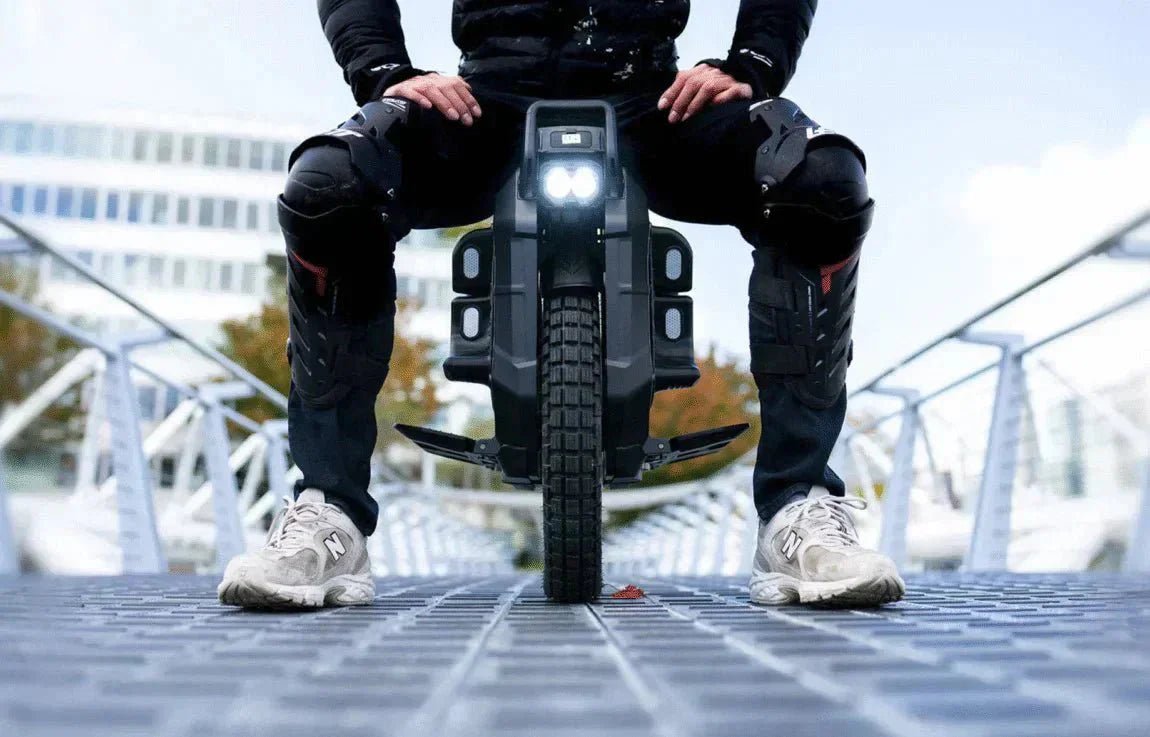
| Compact electric scooter (275 Wh) | €0.09 | approx. 15 Wh/km | €0.48 | €14 |
| Commuter electric scooter (551 Wh) | €0.18 | approx. 15 Wh/km | €0.48 | €14 |
| Powerful electric scooter (1,500 Wh) | €0.48 | approx. 25 Wh/km | €0.80 | €24 |
| E-bike (500 Wh) | €0.16 | approx. 10 Wh/km | €0.32 | €10 |
| E-bike (750 Wh) | €0.24 | approx. 10 Wh/km | €0.32 | €10 |
All figures are calculated at €0.29/kWh including 10 per cent charging losses. If your tariff is cheaper, or you charge at night on a time-of-use tariff, it costs even less.
How much electricity does an electric scooter use?
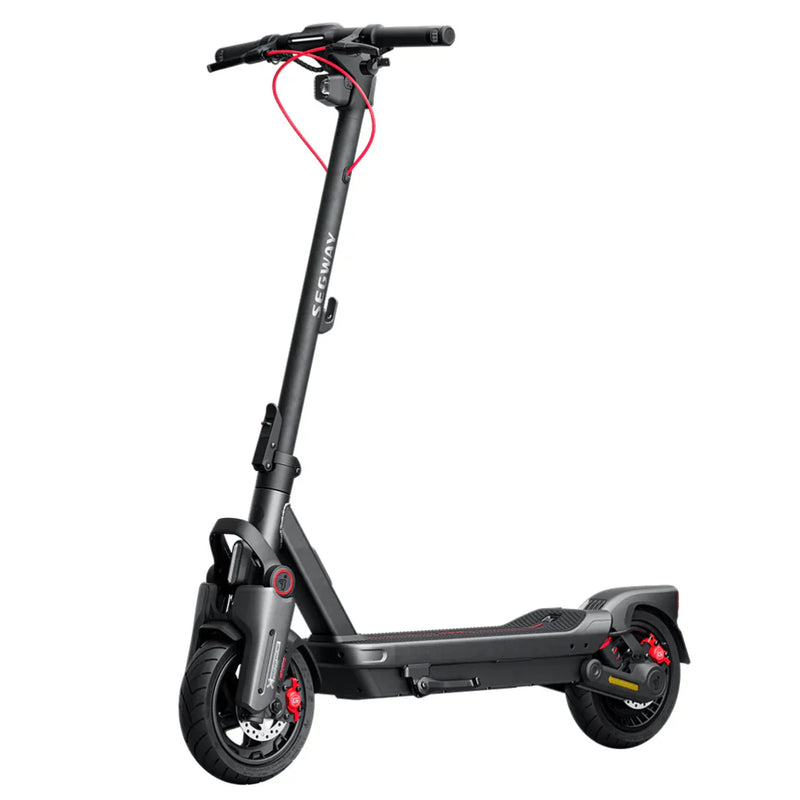
What matters is not the size of the battery but how much energy you use per kilometre. An electric scooter in city traffic typically uses 12–18 Wh/km, an e-bike 8–12 Wh/km because you pedal along, and a heavy, fast electric scooter 20–30 Wh/km. Manufacturers measure range under ideal conditions – Segway, for example, states 70 km for the Ninebot Max G2 E with 551 Wh, which works out at just under 8 Wh/km, measured with a 75 kg rider, 25 °C and a steady 16 km/h. In real traffic most riders use roughly twice that.
At 15 Wh/km and 3,000 km a year, an electric scooter therefore uses about 45 kWh. The charging cost is never an item worth worrying about – what drives the total cost of ownership is the purchase price, the battery's lifespan and wear parts.
Charging losses: why you pay for more than the battery holds
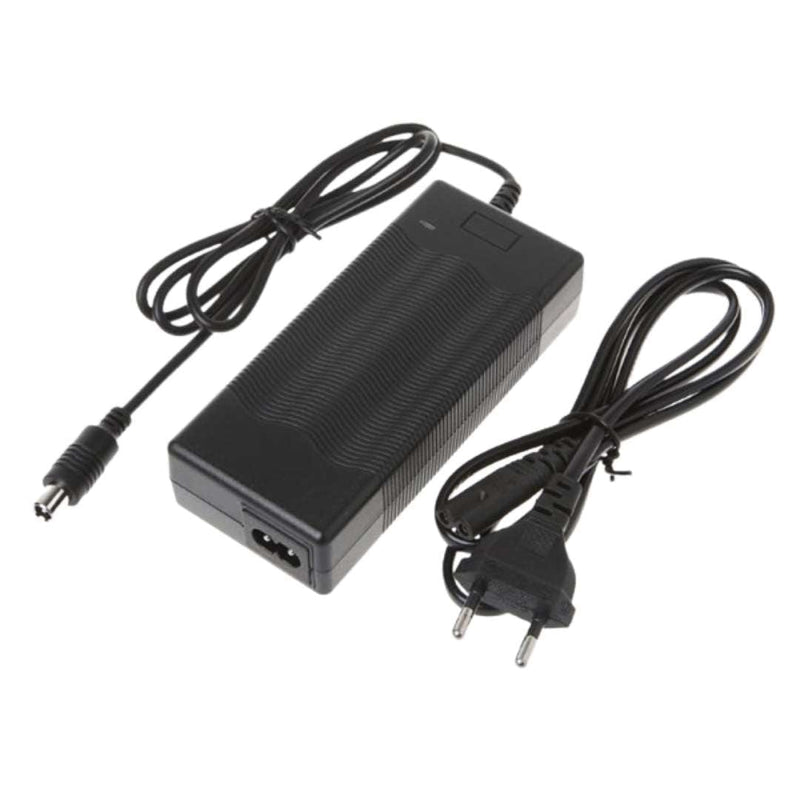
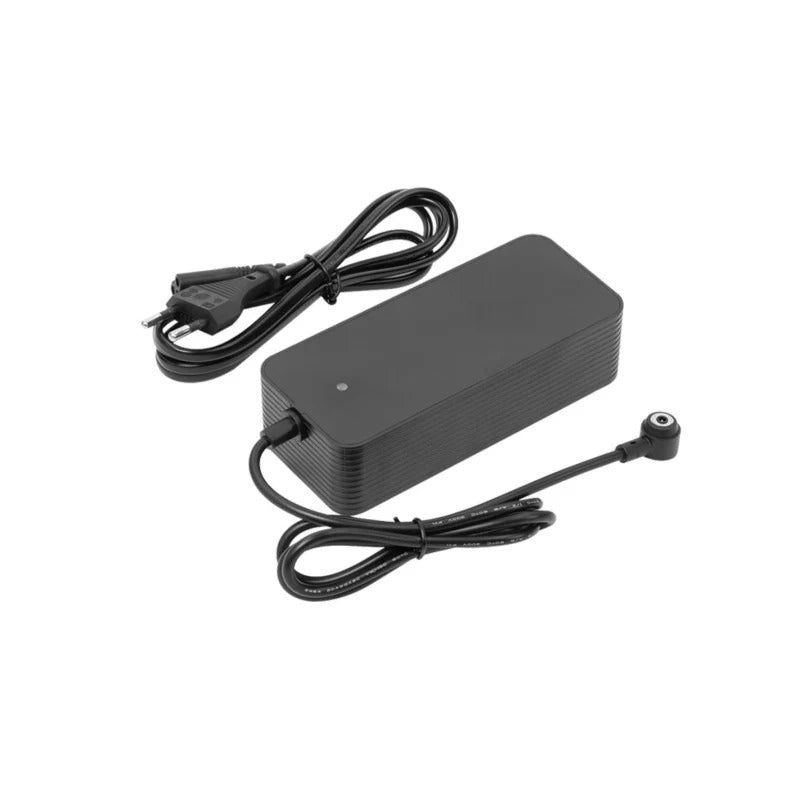
A 500 Wh battery does not take exactly 0.5 kWh from the wall. The charger converts 230 V alternating current into the battery's direct voltage and gets warm in the process, and the battery is warmed by the charging current. Together that normally adds 5–15 per cent, more with a cheap charger or charging in a cold garage. Use the original charger or a charger for your electric scooter with the correct voltage and connector, charge at room temperature and under supervision, and never charge while the battery is cold – below 0 °C a lithium-ion cell can be damaged permanently.
Electric scooter vs car: how much you save
This is where the difference becomes clear. A petrol car using 6 litres per 100 km costs, at the EU average pump price of about €2.09 per litre for Euro-super 95, taxes included (European Commission Weekly Oil Bulletin, 21 September 2026), roughly €0.126 per km in fuel alone – around €375 for 3,000 km. Insurance, servicing, parking and depreciation come on top.
| Mode of transport | Cost per km | Per 100 km | Per year (3,000 km) |
|---|---|---|---|
| Electric scooter (electricity) | approx. €0.005 | €0.48 | €14 |
| E-bike (electricity) | approx. €0.003 | €0.32 | €10 |
| Petrol car, fuel only | approx. €0.126 | €12.55 | approx. €375 |
Electricity is therefore about 26–39 times cheaper per kilometre than petrol. Even an entry-level model among our affordable electric scooters soon pays for itself if it replaces car journeys.
How to cut the charging cost even further
- Ride economically. Eco mode, the right tyre pressure and a steady speed reduce consumption per kilometre more than anything else. You'll find all the tips in our guide on how to increase e-scooter range.
- Charge when electricity is cheap. With a time-of-use or dynamic tariff, night-time is often cheapest; a timer on the charger is enough.
- Charge to 80 per cent day to day. It saves nothing per charge, but the battery lasts more cycles and needs replacing later.
- Replace a tired battery. A battery that has lost capacity needs more charges per kilometre. You will find a battery for electric scooters and e-bikes for the most common models in our range.
- Measure. A simple energy meter between the socket and the charger shows exactly how many kWh a charge takes.
Thinking of replacing car trips altogether? Compare battery size and real-world range among our electric scooters and e-bikes – as you have seen, the charging cost is nothing to worry about.
Frequently asked questions about e-scooter charging costs
How much does it cost to fully charge an electric scooter?
About €0.09–0.18 for a typical electric scooter with a 275–550 Wh battery and up to €0.48 for a powerful model with 1,500 Wh, based on the EU average of €0.29/kWh including charging losses.
How much electricity does an electric scooter use?
Around 12–18 Wh per km in city traffic, or about 1.5 kWh per 100 km. Including charging losses that is roughly €0.48 per 100 km at €0.29/kWh.
How much does it cost to charge an e-bike?
Charging an e-bike costs €0.16–0.24 per full charge for a 500–750 Wh battery. Per 100 km it comes to about €0.32, because you pedal along and consumption stays around 10 Wh/km.
Is it cheaper to charge at night?
Yes, if you have a time-of-use or dynamic tariff – electricity is then often cheapest at night. With a fixed price the time of day makes no difference. Never charge a cold battery, and preferably charge under supervision.
How much cheaper is an electric scooter than a car per kilometre?
The electricity costs about half a cent per kilometre, against roughly 12.6 cents for petrol in an average car – about 26 times cheaper, and that is before insurance, servicing and depreciation.