
The honest version first: what you save depends more on what happens to your car than on the price of electricity. If the car just stays on the drive, you mainly save petrol. If you also stop paying for parking, or the household can drop a second car, the numbers grow fast. We've worked through a typical commute – 7.5 km each way, 3,000 km a year – and included the things spreadsheets tend to forget: the rain, the charging and where the thing lives while you're at work.
How much do you save with an e-scooter instead of a car?
Leave the car at home and commute by electric scooter, and you save roughly €290–320 a year, net. That's the petrol minus electricity and wear parts, and an e-bike you look after yourself ends up at about the same. Decent money, but not the thousands of euros you sometimes see promised. The big amounts are in two other places:
- Parking and tolls. If you pay to park at work, or pay a toll on the way, those items can easily outweigh the petrol. On-street parking in central Dublin, for example, costs up to €4 an hour.
- One car fewer. If your household can manage with one car instead of two, the second car's motor tax, insurance and depreciation go too. That's where the really big sums are.
Petrol, electricity and wear parts: cost per year
| Item | Per year | How we worked it out |
|---|---|---|
| Car: petrol | about €375 | 6 l/100 km, €2.09/l |
| E-scooter: electricity | about €14 | 15 Wh/km, €0.29/kWh |
| E-bike: electricity | about €10 | 10 Wh/km, €0.29/kWh |
| E-scooter: wear parts | about €40–70 | one tyre + one set of pads |
| You save, net | about €290–320 | petrol − e-scooter costs |
The sums assume 3,000 km a year: 7.5 km each way on 200 working days. The petrol price is the EU average for Euro-super 95 including taxes on 21 September 2026, €2.09 a litre, from the European Commission's Weekly Oil Bulletin, and we assume the car uses 6 litres per 100 km. That comes to about 12.6 cents per kilometre. Your own pump price may be quite different: that week it ranged from about €1.34 a litre in Malta to €2.62 in Denmark, so the same 3,000 km costs somewhere between €240 and €470 in petrol. The electricity cost uses Eurostat's EU average household price for the second half of 2025, €0.29/kWh including network charges and taxes, plus 10 per cent charging losses – the same maths as in our guide to what it costs to charge an electric scooter. The wear parts are a worked example using prices from our range in September 2026.
Car costs: what you save and what you pay anyway
Petrol is the item everyone thinks of, but it's rarely the biggest. Split the car's costs into two piles:
- What you save when the car stays at home: petrol, parking at work and any tolls. Tyres and servicing wear with the kilometres, so they get a little cheaper too.
- What you pay anyway: motor tax, insurance and most of the depreciation. According to the RAC, a new car can lose up to 35 per cent of its value in the first year and be worth less than 40 per cent of its original price after three years. That cost only goes away if the car does.
Want to know what your whole car costs? The AA's guide to car running costs splits them into standing charges and running costs and shows how to turn each into a cost per mile – the method works just as well in kilometres and euros. A couple of examples of the other items:
- Motor tax: it varies a lot between countries. In Ireland, for example, even a battery-electric car – the lowest band – pays €120 a year, and cars with higher CO2 emissions pay more.
- Parking: Dublin City Council charges €0.90–4.00 an hour for on-street parking, depending on the zone. If you park for free at work, your saving is smaller. If you pay for it yourself, it can be the biggest item of all.
When has the e-scooter or e-bike paid for itself?
Here we only count the petrol, minus electricity and wear parts – no parking, no tolls. The prices are typical price levels in our range in September 2026, and for the e-bike we've used the same wear-parts budget as for the e-scooter.
| Vehicle | Price | Paid for itself in |
|---|---|---|
| Light e-scooter | €530–800 | about 2–3 years |
| E-bike | €975–1,330 | about 3–4.5 years |
To be honest, the e-bike is no quick win if petrol is all it has to earn back, and a yearly workshop service stretches it further. A Cycling Weekly writer who swapped short car trips for his e-bike put the petrol he avoided on those trips at about £32 – and wrote far more about what the riding did for his fitness. But when the e-bike replaces something bigger – the parking, the travel pass or the second car – it becomes the no-brainer. It handles longer distances and hills, a bag sits on the rack, and you get exercise thrown in.
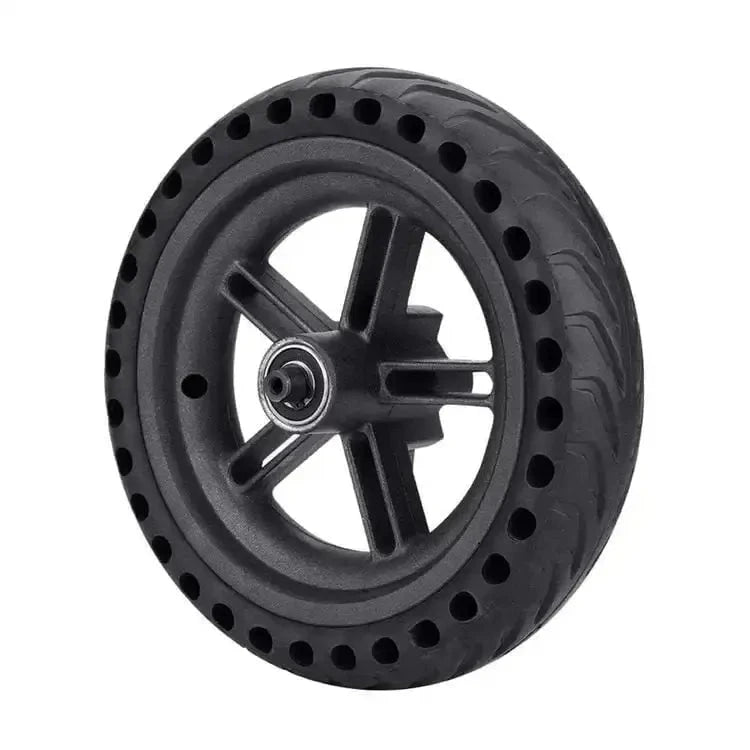
What wears out on an e-scooter is mainly tyres and brake pads. In our range, a tyre for a typical 8–10-inch model usually costs €27–40, an inner tube €16–18 and brake pads €14–31. How often you replace them depends on how you ride and on your roads. Keep an eye on the tyre pressure – it affects both range and wear. There are more tips in our guide on how to increase e-scooter and e-bike range.
Do you take public transport today?
Then the maths looks completely different – and this is where the e-bike often shines. Three examples, straight from the operators:
- Amsterdam: GVB Vrij, unlimited travel on all GVB metros, trams and buses, costs €129 a month for adults.
- Lisbon: the Navegante Metropolitano pass costs €40 a month across the 18 municipalities of the Lisbon area, or €30 for a single municipality.
- Dublin: with a TFI Leap Card, a 90-minute fare is €2 and adult fares are capped at €24 a week in the Dublin zone. Two trips a day comes to €20 a week, or about €800 over 200 working days.
An e-bike at €975–1,330 costs about the same as 8–10 months of GVB Vrij or 24–33 months of Navegante Metropolitano. If it replaces the pass completely, it has paid for itself in under a year in Amsterdam, in about 1.3–1.8 years in Dublin and in 2.3–3.3 years in Lisbon, with electricity and wear parts included. In Malta, buses are free with a personalised tallinja card, so there it's about time and flexibility rather than money. But be honest with yourself: if you want to take the bus on days when it's pouring or icy, you'll still be paying for tickets, and the saving shrinks.
Travel time, rain and winter
- Travel time: at 20–25 km/h, 7.5 km takes about 18–23 minutes, plus traffic lights and junctions. Compare honestly with the car, door to door, including queues, parking and the walk from the car park. BikeRadar's guide to cycling to work suggests test-riding the route on a quiet day first – a map app in bike mode can find a quieter way than the one you drive.
- Exercise: on an e-scooter you stand still. On an e-bike you decide how much the motor helps. In a small Norwegian study where eight adults rode typical commuting routes, they spent almost the whole e-bike ride at moderate to vigorous intensity. The WHO recommends at least 150 minutes of moderate activity a week for adults, and 25 minutes each way, five days a week, adds up to 250.
- Rain: the rain itself is rarely the problem – it's the spray off the road. Mudguards and a rain jacket that stays at work go a long way, and BikeRadar's wet-weather tips add overshoes and glasses against the spray. How much water the vehicle itself can take is shown by its IP rating, which we explain in our guide to riding an electric scooter in the rain.
- Cold: batteries give less range when it's cold – BikeRadar puts it at up to 20 per cent less. Our rule of thumb is to plan on 50–70 per cent of the stated range in summer, and less in winter. Charge the battery indoors at room temperature.
- Grit and ice: according to Sweden's road and transport research institute (VTI), single-vehicle crashes are the most common e-scooter accidents, and the small wheels are sensitive to grit and uneven surfaces. Slow down when the road is poor. Studded tyres are available for several e-scooters, and an e-bike's larger wheels roll more easily over bumps. More tips in our guide to riding an e-scooter or e-bike in winter.
A sensible set-up: ride when the roads are clear, and keep public transport or the car as a back-up for the worst winter weeks.
Storage, charging and luggage at work
- Storage: ask whether you can bring the folded e-scooter inside – under your desk, in a store room or in the bike room. If it has to stay outside, lock the frame to something fixed with a sturdy lock. If your e-bike's battery comes off, take it in with you. More in our guide on how to protect your electric scooter and e-bike from theft, and check what your insurance covers in our guide to electric scooter insurance in Europe.
- Charging: if the battery covers the round trip, you don't need to charge at work at all. Otherwise, ask your employer, bring the charger and charge under supervision. A second charger that lives at work saves you carrying one back and forth. A full charge for a typical commuter e-scooter or e-bike costs under 25 cents, so it's rarely about money.
- Luggage: a backpack works on shorter rides but gets warm. On an e-bike, a bag hangs better on the rear rack, and for e-scooters there are bags that fit on the handlebar or frame. Don't hang too much weight on the handlebar – a heavy bag affects the steering. BikeRadar suggests taking public transport now and then to bring in what you need for the week, and leaving it at work.
Combining with the train or bus
If you live too far away to ride the whole way, ride to the station and take the train from there. What you can bring depends on the operator. On international trains, European rail operators have used a common definition of a bicycle since 14 December 2025: e-bikes with pedal assistance up to 25 km/h count as bicycles, and folding bikes travel free as hand luggage, according to the European Cyclists' Federation. It says nothing about e-scooters, and national and local operators set their own rules, so check before you make it a habit. Think about the weight too: the light e-scooters in our range mostly weigh 18–23 kg, and you'll notice that on the stairs. A full-size e-bike is harder to take on board, so plan on locking it at the station – or look at a folding one. Which? tests folding e-bikes on how quickly they fold and how compact they get. More tips in our guide to combining electric scooters with public transport.
What should you buy first?
Start with the vehicle, and choose it for your trip:
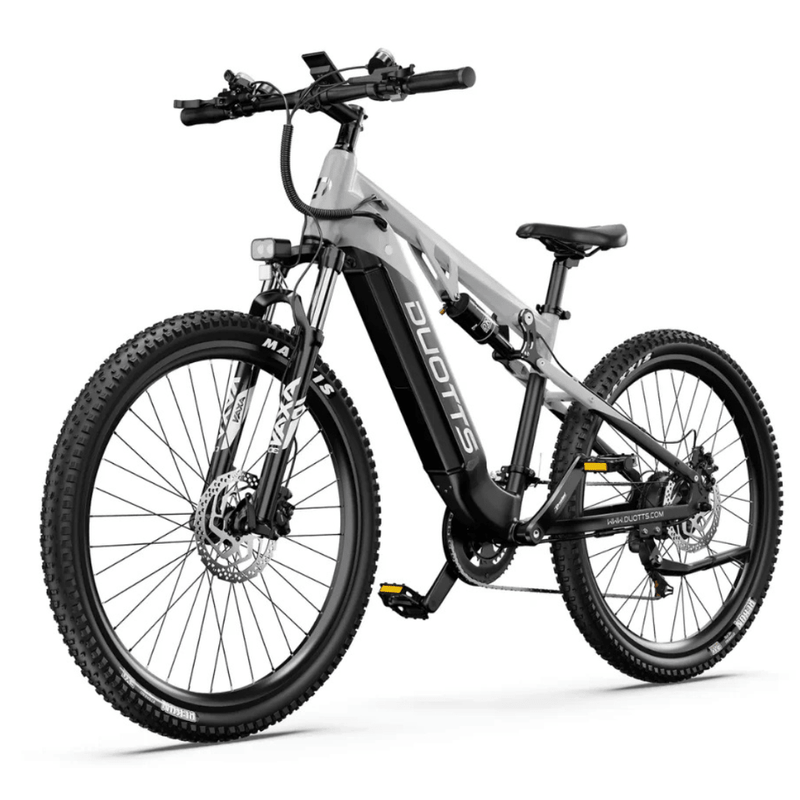
- More than a few kilometres, hills or things to carry: an e-bike. For a normal commute it's the no-brainer: you pedal, the motor helps and it copes with most things. If it has to fit in a small hallway or store room, there are folding e-bikes. Which?'s guide to the best electric bikes explains why you should treat a quoted range of "up to X" as the absolute maximum.
- A short trip on smooth tarmac, or part of the way by train: a light, folding e-scooter – browse our commuter electric scooters. Speed and power limits for e-scooters differ from country to country, so check what applies where you live in our guide to electric scooter laws in Europe.
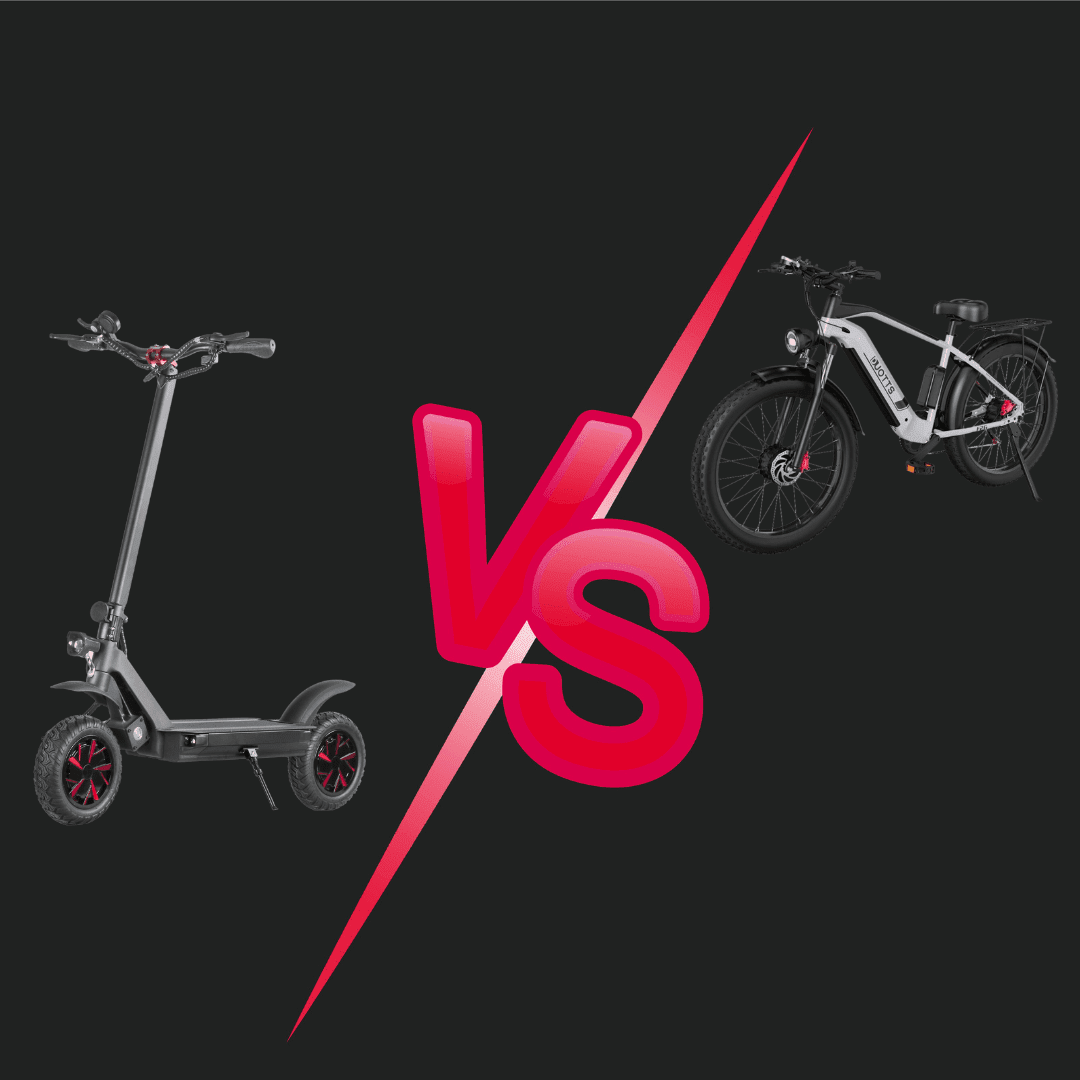
Not sure? We compare them point by point in electric scooter vs e-bike. Then the kit, roughly in this order:
- A helmet that fits well – see our helmets and the tips on how to choose the right helmet.
- A lock you can attach to something fixed – see our locks.
- Rain gear and mudguards, if the vehicle doesn't already have them.
- A pump and a puncture repair kit, so a flat doesn't stop you on the way to work.
- A bag that suits what you carry.
Work out your own commute
- Distance per year: one-way distance × 2 × number of working days.
- Petrol: km per year ÷ 100 × the car's consumption in litres per 100 km × the price per litre.
- Electricity: km per year × 0.015 kWh per km (e-scooter) or 0.010 kWh per km (e-bike) × 1.1 × your electricity price.
- Wear parts and servicing: a few tens of euros a year for tyres and brake pads, more if a workshop services the vehicle.
- What you avoid: parking, tolls or a travel pass if you pay for them today – and the whole car if it can go.
Example: 10 km each way on 200 days is 4,000 km. At the EU average price, the petrol then costs about €500 and the electricity for an e-scooter about €19. A common mistake is to plan around the range in the specifications, so leave a margin for the whole trip home. If you have questions about which model suits your commute, contact our customer service.