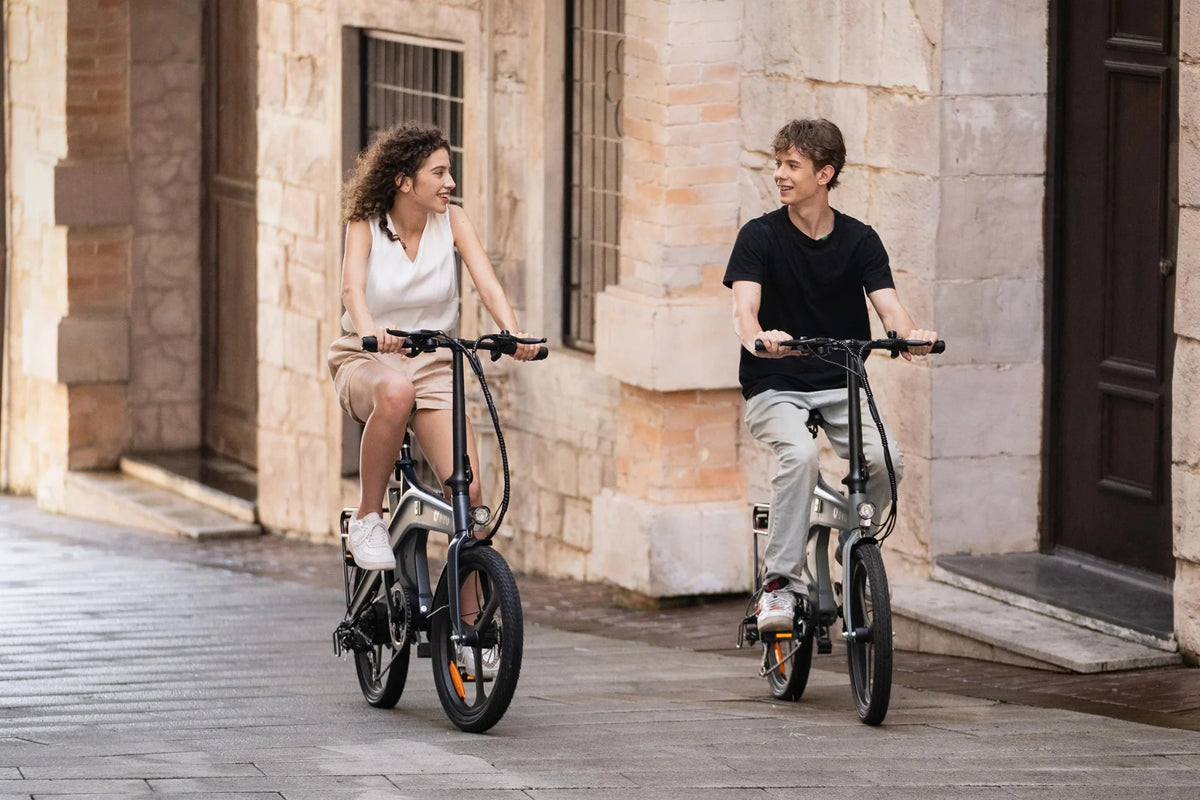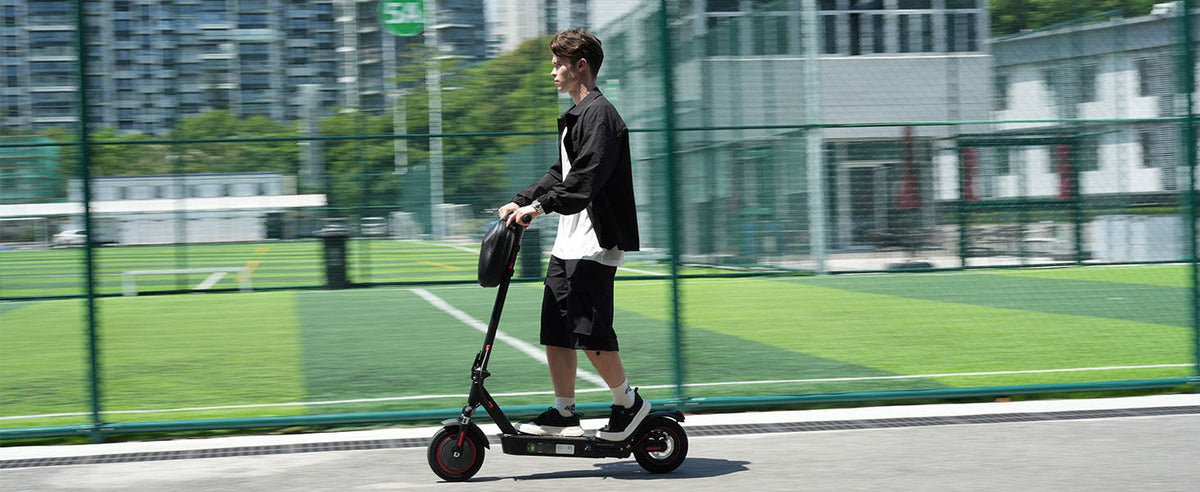

Hidoes, ENGWE and DYU are three of the brands that sell the most folding e-bikes in our range, but they have taken different paths. DYU builds light city bikes with small wheels, ENGWE focuses on big batteries and folding fat bikes, and Hidoes makes fat-bike models with powerful motors. Here we compare nine models from the three brands, using figures from our own product data, and explain who each bike suits.
Hidoes vs ENGWE vs DYU: the short answer
Choose DYU if you want a light folding e-bike for town and short trips, ideally under 25 kg. Choose ENGWE if you commute further, want a large battery and hydraulic brakes, or want a folding fat bike. Choose Hidoes if you want a fat bike with a strong motor and a big battery at a lower price, or the cheapest folding model.
Three brands, three profiles
DYU is the brand for anyone who wants something small. The models in our comparison weigh 17–30 kg, have 14- or 20-inch wheels and are built for city cycle paths. The batteries are modest, 360–749 Wh, and the max load is stated as 120 kg on every model. You will find the whole range in DYU e-bikes.
ENGWE made its name with folding fat bikes but now also has light commuters such as the ZIP. What the models in the comparison share is larger batteries, 360–648 Wh, hydraulic disc brakes on two of the three models and a max load of up to 150 kg. We go through every model in our guide on which ENGWE e-bike to buy, and the full range is in ENGWE e-bikes.
Hidoes is the fat-bike brand of the trio. Motors are stated at 250–750 W, batteries go up to 1,622 Wh and the price is often lower than ENGWE's for a comparable size. The models are heavier, 22–43 kg, and suit riders who spend as much time on gravel and forest roads as on tarmac. See all the models in Hidoes e-bikes.
Comparison table: nine e-bikes from Hidoes, ENGWE and DYU
| Model | Range | Top speed | Weight | Max load | Battery | Price bracket |
|---|---|---|---|---|---|---|
| DYU D3S | 50 km | 25 km/h | 17 kg | 120 kg | 360 Wh | under €800 |
| Hidoes C5 | 50 km | 32 km/h | 22.4 kg | 120 kg | 374 Wh | under €800 |
| DYU T1 | 60 km | 25 km/h | 22.5 kg | 120 kg | 360 Wh | €800–1,100 |
| DYU C9 | 83 km | 25 km/h | 30 kg | 120 kg | 749 Wh | €1,100–1,500 |
| Hidoes B6 Mini | 55 km | 35 km/h | 34.7 kg | 120 kg | 499 Wh | €1,100–1,500 |
| ENGWE EP-2 Boost | 120 km | 25 km/h | 30 kg | 150 kg | 624 Wh | €1,100–1,500 |
| ENGWE ZIP | 120 km | 25 km/h | 19.4 kg | 120 kg | 360 Wh | €1,100–1,500 |
| Hidoes B9 | 150 km | 45 km/h | 43 kg | 150 kg | 1,622 Wh | €1,100–1,500 |
| ENGWE L20 3.0 Boost | 120 km | 25 km/h | 33.2 kg | 150 kg | 648 Wh | €1,500–1,800 |
Source: Wheelyshop product data, November 2026. Range and top speed are the values stated for each model; battery energy is volts times amp-hours. Price brackets are regular prices in November 2026 and change during promotions. What applies to e-bikes that go faster than 25 km/h is covered in our guide to e-bike laws in Europe.
Who is it for?
DYU D3S
The lightest bike in the comparison, 17 kg with 14-inch wheels. Suits short trips in town, carrying the bike up stairs or taking it on the train. The battery is fixed, so you charge where the bike is parked. The recommended rider height is 160–195 cm.
Hidoes C5
The same price bracket and the same 14-inch wheels as the D3S, but with a removable battery, E-ABS braking and a front suspension fork. Suits anyone who wants the cheapest bike with a battery that can come indoors. At 22.4 kg it is still manageable.
DYU T1
A folding 20-inch bike with seven gears, front suspension and a removable battery at 22.5 kg. Suits the commuter riding 5–15 km each way on cycle paths who wants to pedal at a normal pace when the battery runs out. It also features in our guide to the best e-bike for commuting.
DYU C9
DYU's bike for longer commutes: a 749 Wh battery, a stated range of 83 km, hydraulic disc brakes and seven gears. At 30 kg it is less suited to stairs, but it still folds and fits in a car.
Hidoes B6 Mini
A compact fat bike with 16-inch wheels, front and rear suspension and E-ABS. Suits shorter riders (155–180 cm recommended) who want the fat-bike feel on gravel and in the woods without a large frame. The battery is fixed and the bike does not fold.
ENGWE EP-2 Boost
The folding fat bike for anyone who wants a 150 kg max load, a 624 Wh battery and chunky tyres at a mid-range price. Suits gravel roads, snow and heavier riders. How to choose between fat bikes is covered in our guide on which fat tire e-bike to choose.
ENGWE ZIP
The light commuter in the ENGWE family: 19.4 kg, 16-inch wheels, seven gears, hydraulic brakes and a removable battery. Suits anyone who wants DYU's low weight but ENGWE's brakes and gears, and is prepared to pay more for it.
Hidoes B9
The fat bike with the biggest battery, 1,622 Wh, and a stated range of 150 km. Suits riders who cover long distances on gravel and forest roads and do not want to charge every day. At 43 kg it is not a bike to lift, and the recommended rider height is 170–210 cm.
ENGWE L20 3.0 Boost
A folding 20-inch bike with puncture-resistant tyres, front and rear suspension, hydraulic brakes and a 648 Wh battery. Suits anyone who wants a comfortable, well-equipped commuter and accepts 33.2 kg and the highest price bracket in the comparison.

Folding city bike: DYU D3S, Hidoes C5 or ENGWE ZIP?
The three lightest bikes do the same job at different price levels. The D3S and the C5 cost under €800 and have roughly the same battery (360 and 374 Wh) and the same stated range of 50 km. The difference is that the C5 has a removable battery and front suspension but weighs 5 kg more. The ZIP costs almost twice as much but gives you seven gears, hydraulic disc brakes, a stated range of 120 km and only 19.4 kg. All three have a rear hub motor and work well on flat ground in town. As Cycling UK's beginners' guide points out, e-bikes are heavier than regular cycles because of the battery and motor, but the assistance makes the weight far less noticeable once you are pedalling – which is why the kilos matter most when you carry the bike, not when you ride it.
With a single gear, as on the D3S and the C5, pedalling home is hard work if the battery runs out. If you live in a hilly town or want to ride home without the motor on a warm day, the ZIP's seven gears are worth a lot.
Commuting: DYU T1, DYU C9 or ENGWE L20 3.0 Boost?
Here it comes down to how far you commute. The T1 with 360 Wh is enough for 5–10 km each way with a margin. The C9 with 749 Wh handles about twice the distance and also has hydraulic brakes, which need less hand force in the rain. The L20 3.0 Boost has a similar battery to the C9 but adds rear suspension, puncture-resistant tyres and a 150 kg max load. Torque in our product data is 35–75 Nm across the three, which is plenty for most hills.
If you are heavy or carry a lot, the L20's higher max load is a strong argument. If you lift the bike often, the T1's 22.5 kg is the big advantage.
Fat bike: Hidoes B6 Mini, ENGWE EP-2 Boost or Hidoes B9?
Fat bikes have wide tyres that, according to BikeRadar, are usually at least 3.8 inches wide and run at low pressure, which gives grip and comfort on loose surfaces. The B6 Mini is the small version with 16-inch wheels and a fixed 499 Wh battery, built for shorter riders. The EP-2 Boost is the folding all-round fat bike with 624 Wh and a 150 kg max load. The B9 is the big long-distance model: 1,622 Wh, a stated range of 150 km, 43 kg.
Think about where the bike will live. A fat bike of 35–43 kg needs a shed or ground-floor garage, and the B9 and the B6 Mini do not fold. The EP-2 Boost folds but still weighs 30 kg.

Work out the range before you choose
The stated range is measured in good conditions: flat road, light rider, lowest assistance level. Our rule of thumb is to expect 50–70 per cent of the manufacturer's figure in real traffic in summer, and less in winter. BikeRadar's range guide, written after testing more than 200 electric bikes, makes the same point: assistance level, terrain, temperature and how you store the battery all change how far you get.
Worked example: the DYU T1 is stated at 60 km. Expect 30–40 km in practice, which covers 15 km each way if you charge every evening. The ENGWE EP-2 Boost is stated at 120 km, so 60–85 km in practice, and the Hidoes B9 at 150 km, so 75–105 km. To compare range fairly between models, the battery's watt-hours are a better figure than the stated distance, because every brand measures differently.
Battery, brakes and gears – what you notice day to day
- Removable battery: seven of the nine models have one. If you live in a flat without a socket in the bike store, it is decisive. The DYU D3S and the Hidoes B6 Mini have a fixed battery.
- Hydraulic disc brakes: the DYU C9, ENGWE ZIP and ENGWE L20 3.0 Boost have them. Hydraulic brakes need less hand force and rarely need adjusting. The Hidoes C5, B6 Mini and B9 have mechanical disc brakes with E-ABS, which brakes the motor electronically.
- Gears: the D3S, C5 and B6 Mini have one gear, the others seven. More gears matter most when you pedal without the motor or on long climbs.
- Suspension: the fat bikes and the L20 3.0 Boost have front and rear suspension; the D3S and the ZIP have none. Wide tyres at lower pressure do add a fair amount of comfort on their own.
- Charging time: 4–6 hours for the smaller batteries, 6–9 hours for the Hidoes B9.
Common mistakes when choosing between the brands
- Staring at the range. 120 km on paper becomes 60–85 km in reality. Compare watt-hours and work out your own trip.
- Underestimating the weight. A bike of 30 kg or more is heavy to lift into a car or up a flight of stairs. Measure where the bike will stand before you order.
- Choosing a fat bike for pure tarmac. Wide tyres roll heavier and use more power on smooth roads. If you mostly ride cycle paths, a 16- or 20-inch bike with ordinary tyres is nimbler.
- Forgetting the max load. Count your own weight plus luggage. If you are close to 120 kg, the models with a 150 kg max load are the safer choice.
- Skipping the rider height. The Hidoes B6 Mini is recommended for 155–180 cm, the Hidoes B9 for 170–210 cm. Check the figure for each model before you buy.
What to do before you decide
Start by writing down your most common trip: distance, hills, surface and whether the bike has to go through a door or up stairs. Measure the space where the bike will stand, folded or not. Then lift something that weighs as much as the bike you are considering, say two full shopping bags for 17 kg or a suitcase for 30 kg, and ask yourself whether you want to do that every day. Weigh yourself with a rucksack and jacket and compare with the max load.
Think about charging too: is there a socket where the bike is parked, or does the battery need to come off? Finally, think about winter. If there is gravel and snow on your cycle path, the fat bike's wide tyres are a real advantage; otherwise they mostly cost you weight and range. If you are unsure whether it should be an e-bike at all, our guide on electric scooter vs e-bike helps you pick the type of vehicle, and the guide on which electric bike to buy covers the general questions.
Warranty, spare parts and the box
Every e-bike at Wheelyshop comes with a 2-year warranty, whichever brand you choose, without limiting your statutory rights. Keep the original box: if the bike has to be sent in for repair, it must be packed in its original box, and we do not send out new boxes. If you need a spare part, contact our customer service with the exact model name and we will find out what is available.
If you are leaning towards a folding model whatever the brand, you will find them all among our folding electric bikes, and if you want to compare more fat bikes they are in the fat bike collection. The full range is among our electric bikes.