














Buying guide
ENGWE electric bike – models across the ENGINE, EP-2, L20, E26, M20, M1 and ZIP series at Wheelyshop
ENGWE builds electric bikes with big batteries and serious torque, made to commute all week on one charge and still handle the weekend gravel road. At Wheelyshop you will find current ENGWE models with a stated range of 75–170 km, weight from 19.4 to 39.5 kg and batteries of 360–768 Wh. Many of them fold, several roll on fat tyres and several have full suspension. The brand suits you if you want a lot of bike for the money, whether you commute in the city, combine cycling with the train or want a rugged electric bike for forest and beach. Every electric vehicle ships with free delivery and you get a 2-year warranty.
In short
- ENGWE electric bikes in several series: 75–170 km of range, 250–750 W rated motors, 360–768 Wh batteries and 19.4–39.5 kg of weight.
- Standout technology: three-part folding design (ZIP, EP-2, ENGINE, L20), mid-drive motor with 100 Nm (L20 3.0 Pro, E26 3.0 PRO), full suspension on several models and GPS with app on the newest ones.
- City commuting: ZIP or L20 3.0 Pro. Gravel and snow: EP-2 Boost or E26 3.0 PRO. Longest range: M1 with a stated 170 km in the dual-battery version.
- Rules: what applies on the road depends on rated power and top speed – both are listed on each model's product page.
- Wheelyshop: free delivery on all electric vehicles and a 2-year warranty.
Choosing the right ENGWE electric bike – a guide to the models
The model names look similar, but the series have different characters. Below we go through what sets them apart, how to interpret range and torque, what the rules in Europe say and what applies for servicing. If you want to compare with other brands, all electric bikes are gathered in one place.
The series – from the lightweight ZIP to the full-suspension ENGINE
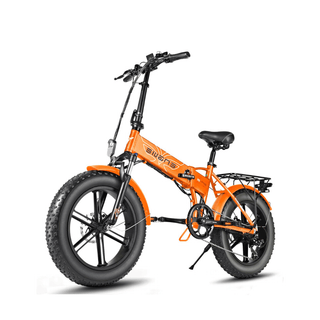
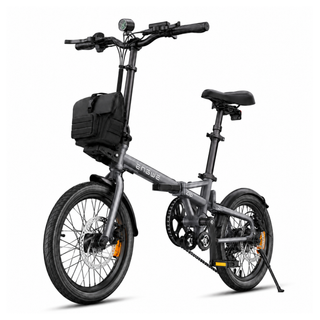
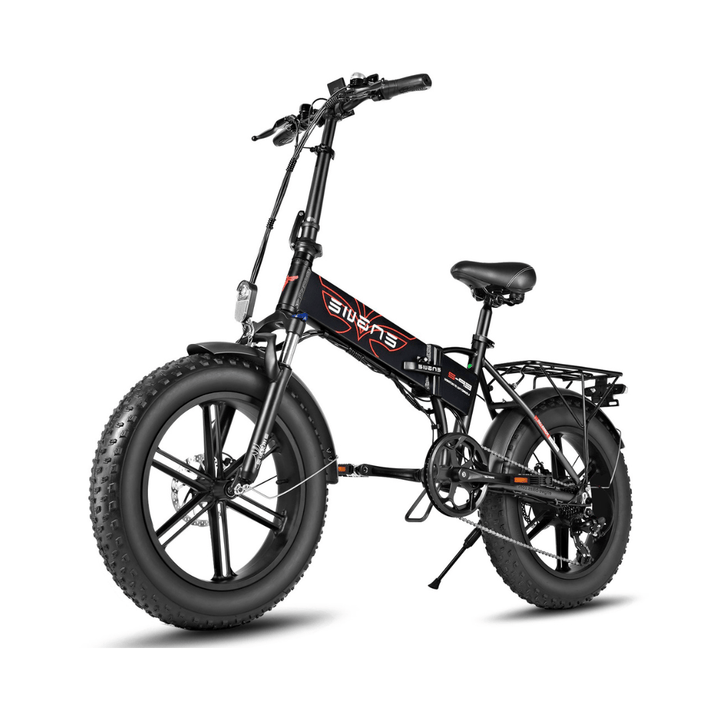
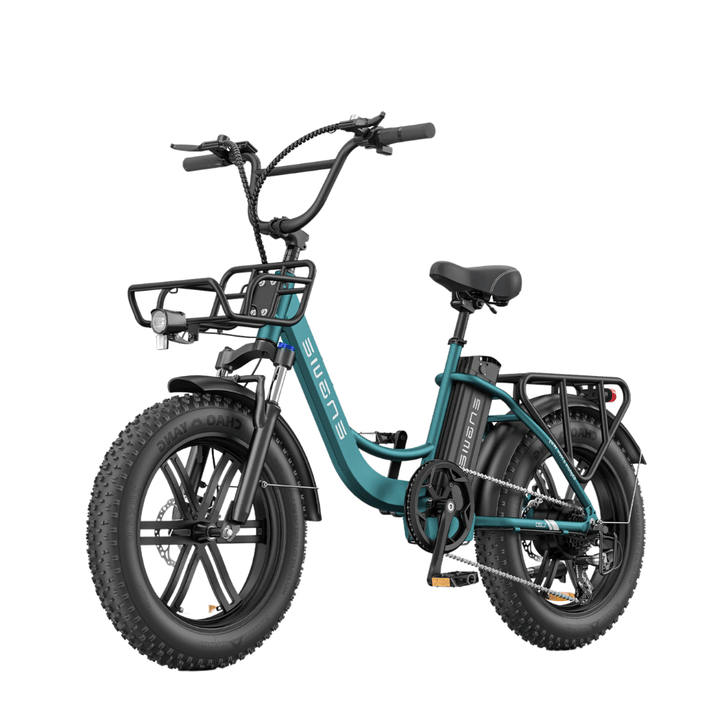
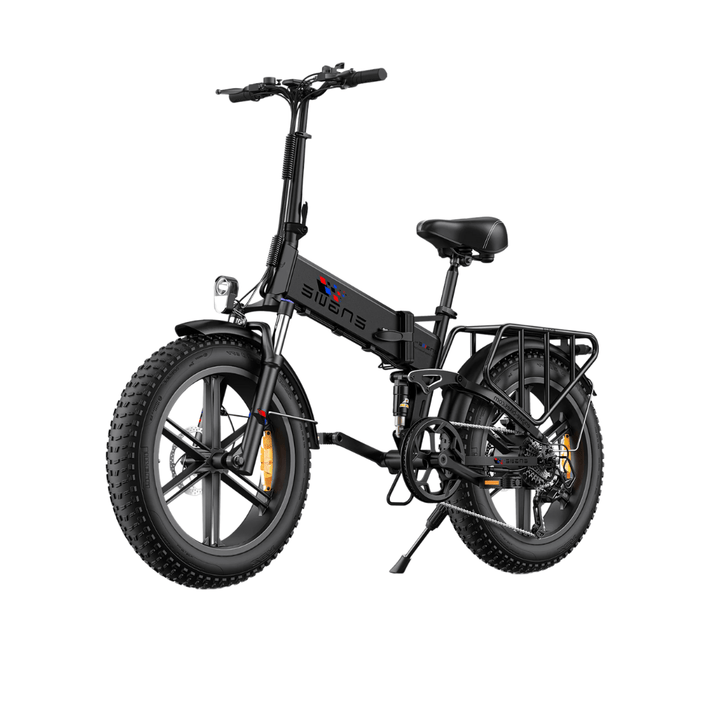
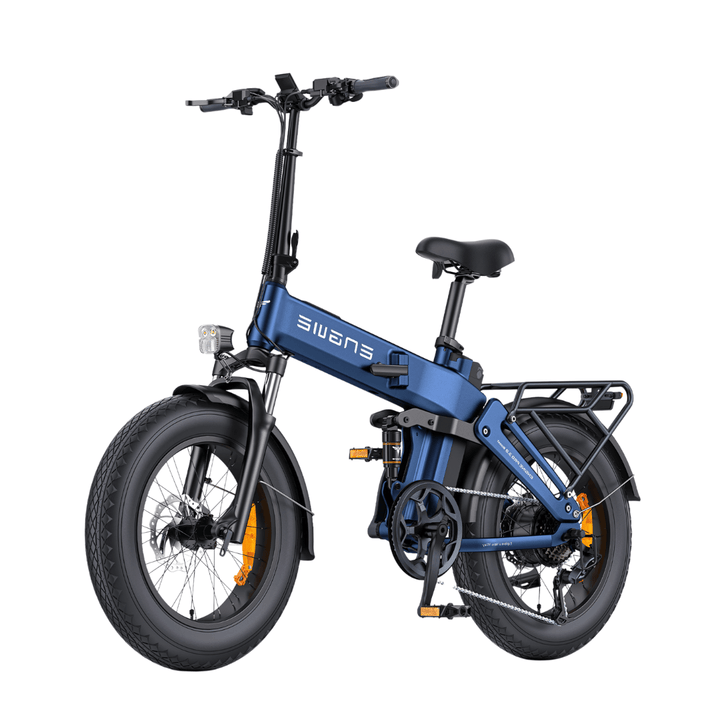
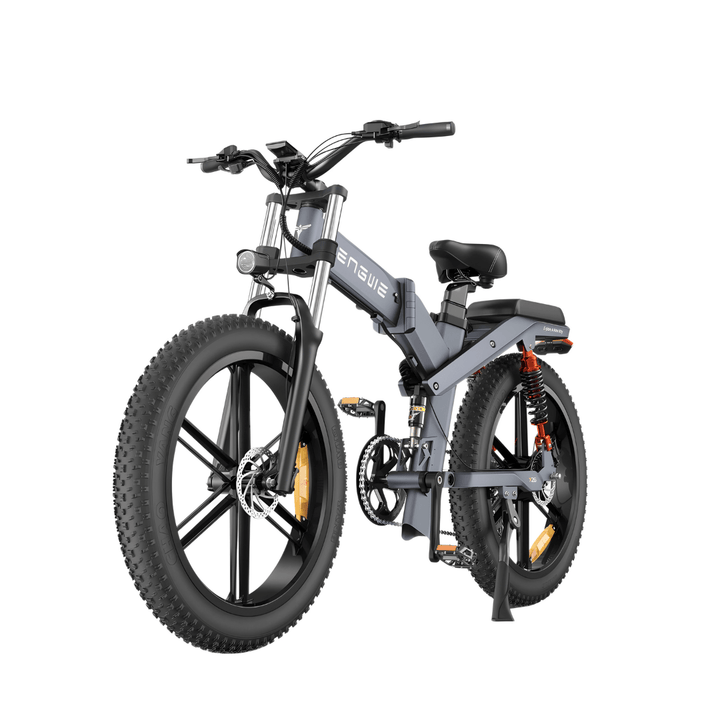
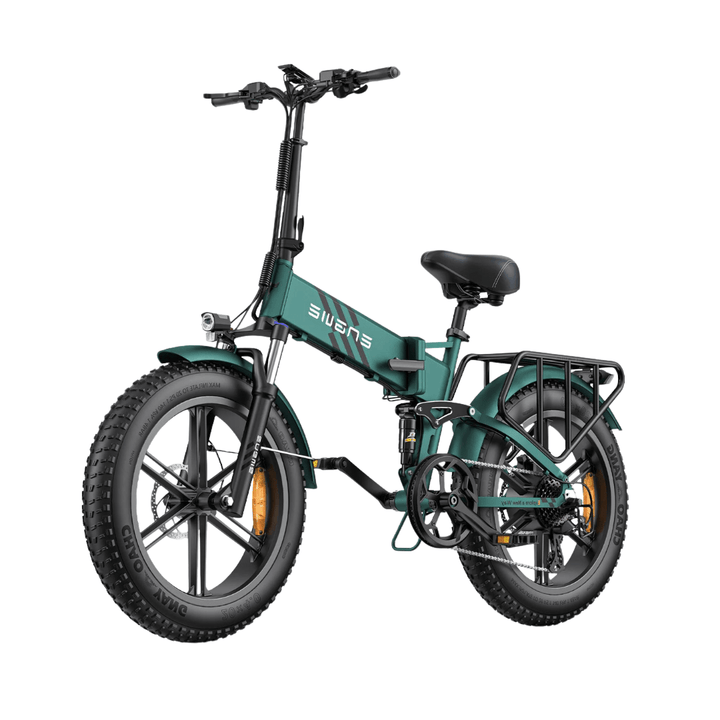
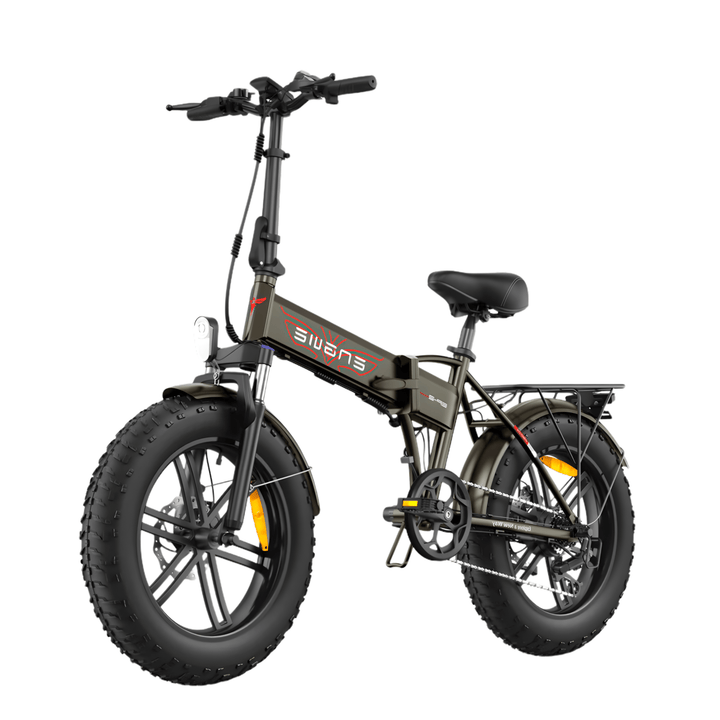
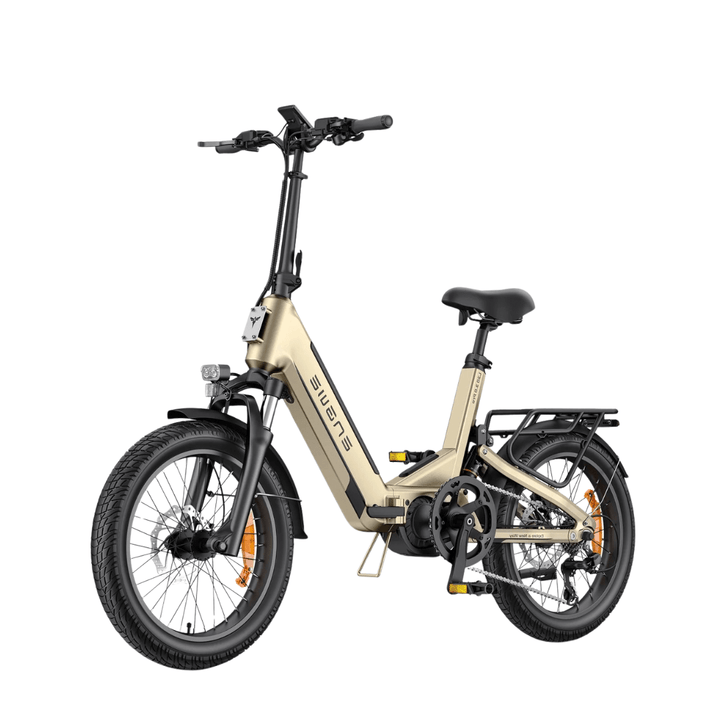
The ZIP is the lightest ENGWE electric bike at 19.4 kg, with 16-inch wheels and a three-part folding design that the manufacturer says unfolds and is ready to ride in seconds. With a 250 W rear hub motor, torque sensor, hydraulic disc brakes and a 360 Wh battery for up to 120 km, it is made for everyday city life. The L20 series (Boost, 3.0 Boost, 3.0 Pro) are 20-inch commuters with a rear rack; the top model L20 3.0 Pro has a mid-drive motor with 100 Nm, full suspension, puncture-resistant tyres and a stated 160 km. The EP-2 series (Boost, 3.0 Boost, Pro) are folding 20-inch fat bikes, where the EP-2 Boost with 55 Nm and 624 Wh is the simple entry model. The ENGINE series (X, Pro 2.0, Pro 3.0 Boost) folds and has full suspension, with the ENGINE Pro 3.0 Boost as the flagship: 90 Nm, a 720 Wh battery (Samsung or LG cells), cruise control and GPS with app.
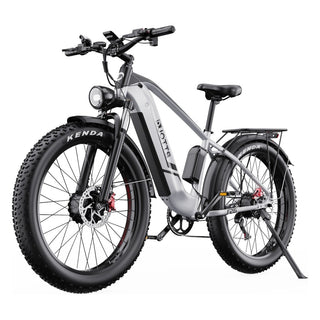
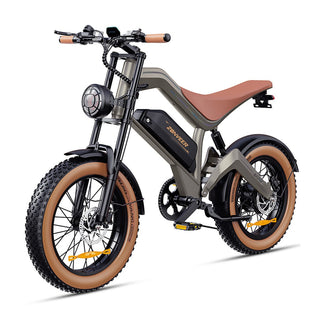
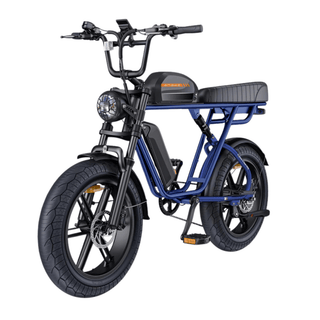
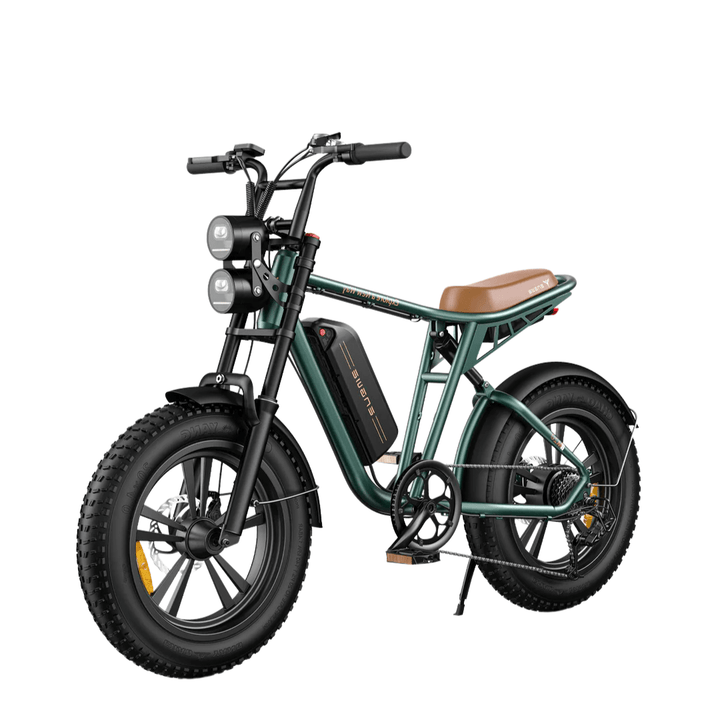
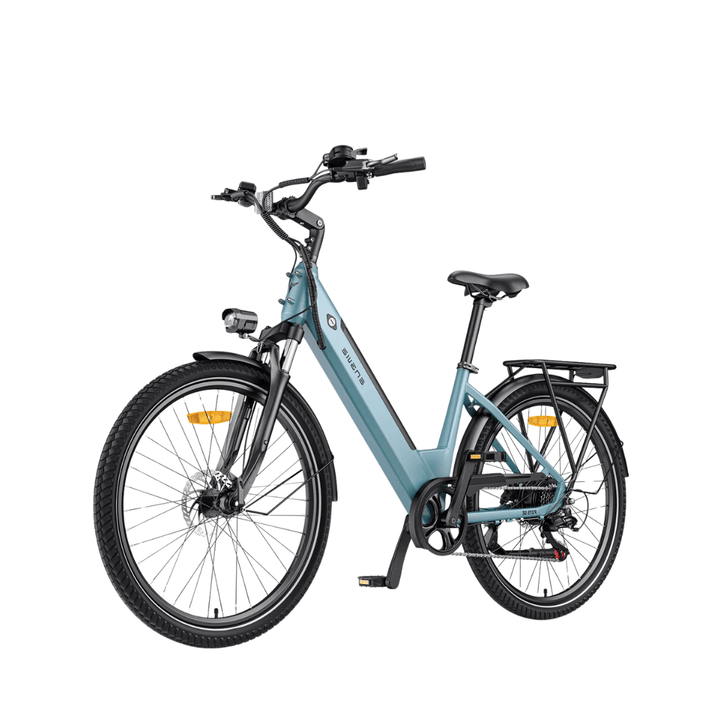
The E26 and E26 3.0 PRO are rigid-frame 26-inch fat bikes, the E26 with 4.0-inch tyres and the E26 3.0 PRO with 3.0-inch tyres. The E26 3.0 PRO has a 250 W mid-drive motor (500 W peak), 100 Nm, a removable 720 Wh LG battery, eight gears and full suspension. The M1 and M20 have a moped look on 20-inch fat tyres; the M1 is the ENGWE model with the longest stated range: 170 km with two batteries, or 90 km with a single 749 Wh battery.
Range and battery on an ENGWE electric bike
Range across the line-up is stated at 75–170 km, with most models at 110–160 km. The figures apply under the manufacturer's test conditions with low assistance, flat roads and a light rider. Count on 50–70 % in real everyday riding, so around 60–110 km for a model rated at 120–160 km. If you mostly ride at the highest assistance level, into a headwind or with luggage, you will land in the lower part of that span. The batteries are removable and charge in 2–8 h depending on the model; the ENGINE Pro 3.0 Boost and the L20 3.0 models charge fastest with an 8 A charger, at a stated 2 h or so. The biggest batteries sit in the ENGINE Pro 2.0 and E26 at 768 Wh. If you need really long range, you will find more options among long-range electric bikes. Our practical tips to get more range from every charge apply to e-bikes too.
Motor, torque and hills
Torque decides how hills feel, not the wattage. ENGWE electric bikes span from 40 Nm (ZIP) to 100 Nm (L20 3.0 Pro and E26 3.0 PRO), and the 100 Nm mid-drive motors are rated for gradients of 30–35 degrees. Most models have a 250 W rear hub motor with 55–90 Nm, which is plenty for city hills and gravel roads. Models with a torque sensor (including the ZIP, L20 3.0 Pro, EP-2 Boost, ENGINE Pro 3.0 Boost and E26 3.0 PRO) give assistance in proportion to how hard you pedal, which feels more natural than a simple cadence sensor. Consider the weight too: 30–35 kg is heavy on stairs but gives stability at speed; only the ZIP is genuinely easy to lift.
Frame and comfort – folding, fat bike or full-suspension ENGWE electric bike
Many ENGWE electric bikes fold, which makes them practical in a flat, on the train or in the boot. Several models have fat tyres that soak up bumps and grip on gravel, sand and snow; if you want big wheels, choose the E26 series with 26 inches. Several models have full suspension and the rest a suspension fork, with the exception of the ZIP, which has a suspension seatpost instead. Hydraulic disc brakes come on many models, the others have mechanical disc brakes. Most have a rear rack from the start, the EP-2 3.0 Boost has a low step-over and the maximum load is 120–150 kg. If you want to compare with other brands' wide-tyre models, the whole range is under fat bikes.
Rules in Europe for ENGWE electric bikes
Across the EU an e-bike counts as a bicycle (pedelec or EPAC) when the motor is rated at no more than 250 W and only assists up to 25 km/h. Several ENGWE models are built that way; others have a stronger motor or a higher top speed and are formally treated as mopeds, which a speed limiter does not change. The rated power and assistance limit on the product page show which applies to a given model, and the exact requirements vary by country – check the EU road rules and safety overview and our guide to e-bike laws in Europe.
Service, warranty and spare parts
Most ENGWE electric bikes arrive roughly 70 % assembled; you fit the handlebar, pedals and front wheel with the included tools. The ZIP arrives ready to unfold and ride. Charge the battery fully before the first ride, check the brakes and tyre pressure and tighten the folding joint as described in the manual. You get a 2-year warranty, and if you need a spare part or servicing, contact customer service with the exact model name and we will help you. If you like the brand but want something smaller, we also carry ENGWE electric scooters.
Frequently asked questions
Is an ENGWE electric bike legal in Europe?
It depends on the model. What applies on the road is decided by the rated power and top speed, both listed on the product page, and the details vary by country – see our guide to e-bike laws in Europe.
How far does an ENGWE electric bike go on a charge?
Stated range is 75–170 km depending on the model, with the dual-battery M1 rated longest at 170 km and the L20 3.0 Pro at 160 km. Count on 50–70 % of that in real-world riding, since assistance level, hills, wind and weight all play a part. The batteries are removable and charge in 2–8 h.
Which ENGWE suits daily commuting?
The ZIP is best if you need to carry the bike or take it on the train, at 19.4 kg with quick folding. The L20 3.0 Pro is best for longer commutes with a 100 Nm mid-drive motor, full suspension, puncture-resistant tyres and a stated 160 km. How the models differ day to day is covered in our guide Which ENGWE e-bike should you buy? Models compared.
Which ENGWE models fold?
Several models fold: the ZIP, the whole EP-2 series, the whole ENGINE series plus the L20 3.0 Boost and L20 3.0 Pro. The E26, E26 3.0 PRO, L20 Boost, M1 and M20 have a fixed frame.
Are spare parts available for an ENGWE electric bike?
If you need a spare part or servicing for your ENGWE electric bike, contact customer service with the exact model name and we will help you – batteries and chargers differ between models. You get a 2-year warranty on the bike.