
EP-2 or ENGINE? L20 Boost or L20 3.0 Pro? ENGWE has a lot of model names, but day to day the differences come down to four things: whether the frame folds, how wide the tyres are, whether there is rear suspension and how big the battery is. Here we go through what decides the choice – using the figures from our product pages.
Which ENGWE suits you? The short answer
Stairs or train: the ZIP, at 19.4 kg – every other ENGWE model weighs 30 kg or more. Folding fat bike: the EP-2 Boost, or the EP-2 3.0 Boost with a step-through frame. Front and rear suspension that still folds: the ENGINE series or the L20 3.0 Boost. Long commutes with luggage: the L20 3.0 Pro with its mid-drive motor.
How the ENGWE models differ in everyday use
The figures in the table are the manufacturer’s data from our product pages (October 2026). Every model with full specifications is among our ENGWE electric bikes – here we focus on what the differences mean once you live with the bike.
| Type | Models | Weight | Battery | What you live with |
|---|---|---|---|---|
| Light and folding | ZIP | 19.4 kg | 360 Wh | 16-inch wheels, no suspension fork |
| Folding fat bikes | EP-2 Boost, EP-2 Pro, EP-2 3.0 Boost | 30–32.3 kg | 624–648 Wh | front suspension only |
| Folding with front and rear suspension | ENGINE X, ENGINE Pro 2.0, ENGINE Pro 3.0 Boost | 31.7–34.7 kg | 624–832 Wh | heavy to lift even when folded |
| Commuters with a rear rack | L20 Boost, L20 3.0 Boost, L20 3.0 Pro | 32.8–34 kg | 624–720 Wh | the L20 Boost has a fixed frame |
| Fixed frame | E26, E26 3.0 PRO, M1, M20 | 34–34.8 kg | 624–768 Wh | does not fold |
The quoted range, 100–170 km depending on the model, applies to good conditions and low assistance. Compare the battery size in watt-hours instead. As a worked example: at 10 Wh per kilometre, a common average for e-bikes, 624 Wh is enough for about 60 km on an ordinary day – more on low assistance, less on hills and into a headwind. Cold weather takes its share too: BikeRadar’s guide to e-bike battery range notes that cold alone can cut range by as much as 20 per cent. More tips are in our guide on how to increase your range.
What counts as a bicycle on the road varies from country to country – we explain it in electric bike laws in Europe.
EP-2 or ENGINE – the folding fat bikes
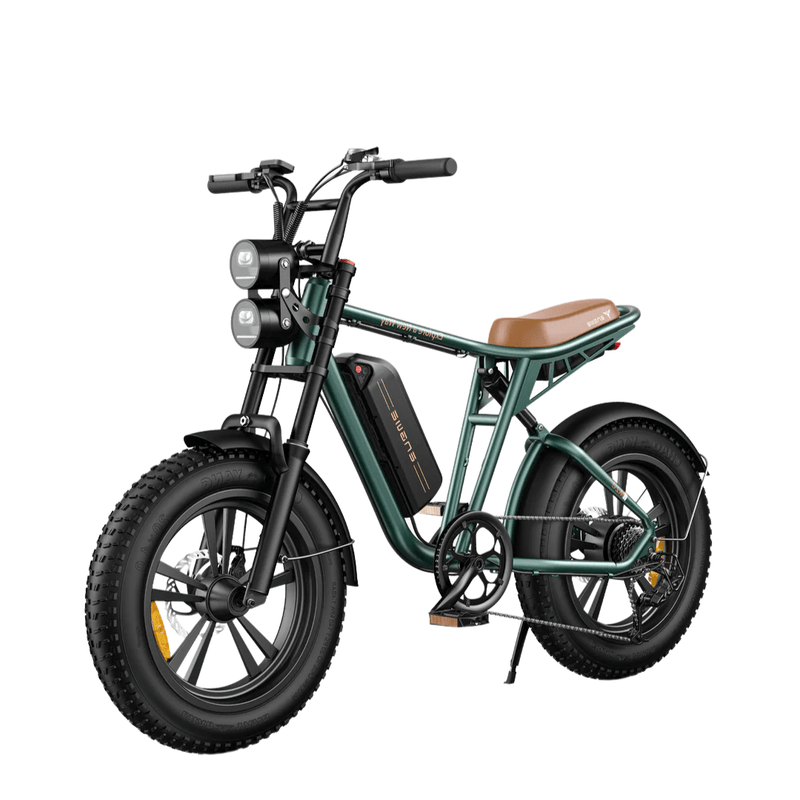
- EP-2 Boost (30 kg): 20 x 4.0-inch tyres, front suspension, mechanical disc brakes and a torque sensor. 55 Nm and 624 Wh. ENGWE’s most straightforward folding fat bike.
- EP-2 Pro (30 kg): the same weight, battery and tyre width as the EP-2 Boost, but with cruise control and the widest recommended rider height range, 160–210 cm.
- EP-2 3.0 Boost (32.3 kg): step-through frame, hydraulic disc brakes, 75 Nm and an app. Charging time is quoted at 3–4 hours.
- ENGINE X (31.7 kg): front and rear suspension, mechanical disc brakes and 55 Nm – the simplest of the ENGINE models.
- ENGINE Pro 2.0 (31.7 kg): the biggest battery, 52 V 16 Ah or 832 Wh, hydraulic disc brakes, 75 Nm, eight gears and cruise control.
- ENGINE Pro 3.0 Boost (34.7 kg): 90 Nm, 720 Wh, cruise control and an app with GPS tracking. Charging time is quoted at 2–3 hours.
Folding does not mean easy to carry. Folded, the bike gets shorter, but the 4-inch tyres keep it wide, and 30–35 kg is not something you want to lift into a car every day. Measure the space in your boot or hallway before you choose. Cycling UK’s guide to electric bikes calls folding e-fat bikes a crossover design – which is exactly what these are. More options are among our folding electric bikes.
L20 Boost, L20 3.0 Boost or L20 3.0 Pro
- L20 Boost (34 kg): fixed frame, front basket and rear rack, 20 x 4.0-inch tyres, front suspension and 75 Nm. The max load is 120 kg, against 150 kg for both L20 3.0 models.
- L20 3.0 Boost (33.2 kg): folding, puncture-resistant tyres, front and rear suspension, hydraulic disc brakes and an app. A pump is included.
- L20 3.0 Pro (32.8 kg): a 100 Nm mid-drive motor, 20 x 3.0-inch puncture-resistant tyres, front and rear suspension and 720 Wh. With an 8 A fast charger, charging time is quoted at 2 hours.
If the bike will carry shopping or a child on the back, check the max load and the rear rack’s capacity in the specification. What the frame shape – step-through or step-over – means day to day is covered in step-through vs step-over e-bikes.
E26, E26 3.0 PRO, M1 and M20 – fixed frame
- E26 (34.5 kg): 26 x 4.0-inch tyres, front suspension, hydraulic disc brakes, 70 Nm and 768 Wh. The recommended rider height is 170–200 cm, so it suits taller riders.
- E26 3.0 PRO (34 kg): a 100 Nm mid-drive motor, 26 x 3.0-inch tyres, front and rear suspension, eight gears, 720 Wh and an app with GPS.
- M1 (34.5 kg): 20-inch off-road tyres, front suspension, hydraulic disc brakes and 749 Wh. It has the longest quoted range of the ENGWE models, 170 km.
- M20 (34.8 kg): 20 x 4.0-inch tyres, front and rear suspension, mechanical disc brakes and 55 Nm. The max load is 120 kg.
To compare with other brands’ wide-tyred models, see our whole range of fat bikes.
Motor and hills – hub motor or mid-drive
The L20 3.0 Pro and E26 3.0 PRO have a mid-drive motor; the other ENGWE e-bikes have a hub motor in the rear wheel. A mid-drive turns the cranks and so can use the bike’s gears on a long climb, while a rear hub motor drives the wheel that carries most of your weight. Torque decides how hills feel: from 40 Nm on the ZIP to 100 Nm on the two mid-drive models. If you live somewhere hilly or carry heavy loads, choose a model with at least 75 Nm.
Tyres, suspension and brakes – what you notice every day
Wide tyres grip well on gravel, sand and snow but roll more heavily on tarmac. If you mostly ride in town, the puncture-resistant tyres on the L20 3.0 models or the ZIP’s slim 16 x 1.95-inch tyres are easier to live with. Riding through the winter? We have gathered more advice in e-scooter and e-bike in winter.
The ENGINE series, M20, L20 3.0 Boost, L20 3.0 Pro and E26 3.0 PRO have front and rear suspension. The EP-2 models, E26, M1 and L20 Boost have front suspension, while the ZIP has a suspension seatpost but no suspension fork. The EP-2 Boost, EP-2 Pro, ENGINE X, L20 Boost and M20 have mechanical disc brakes – the other ENGWE e-bikes have hydraulic disc brakes, which need less hand force. You notice that with a 30 kg bike and luggage.
Battery, charging and spare parts
Every ENGWE e-bike we sell has a removable battery, so you can take it inside and charge it indoors even if the bike lives in a cold shed. Charging time is quoted from 2 hours for the L20 3.0 Pro to 6–7 hours for models such as the EP-2 Pro and L20 Boost. If you need a new battery, a charger or brake parts, contact our customer service with the exact model name, as the batteries differ between models. Every ENGWE e-bike comes with a 2-year warranty from us.
Common mistakes when choosing an ENGWE
- Choosing by the range figure. Compare the battery’s watt-hours and allow for cold and hills.
- Thinking folding means portable. Only the ZIP weighs under 30 kg.
- Forgetting the max load. The L20 Boost, M20 and ZIP take 120 kg, the other ENGWE e-bikes 150 kg. Count rider, child seat and luggage.
- Missing the rider height. The E26 is made for 170–200 cm, the EP-2 Pro for 160–210 cm – check the specification.
- Planning to test ride it and send it back. An e-bike that has been ridden cannot be returned as unused. You can unpack it and check it – read our returns policy before you order. Keep the original box: if the bike ever needs to be sent in for repair, it must be packed in its original box – we don’t send out new boxes.
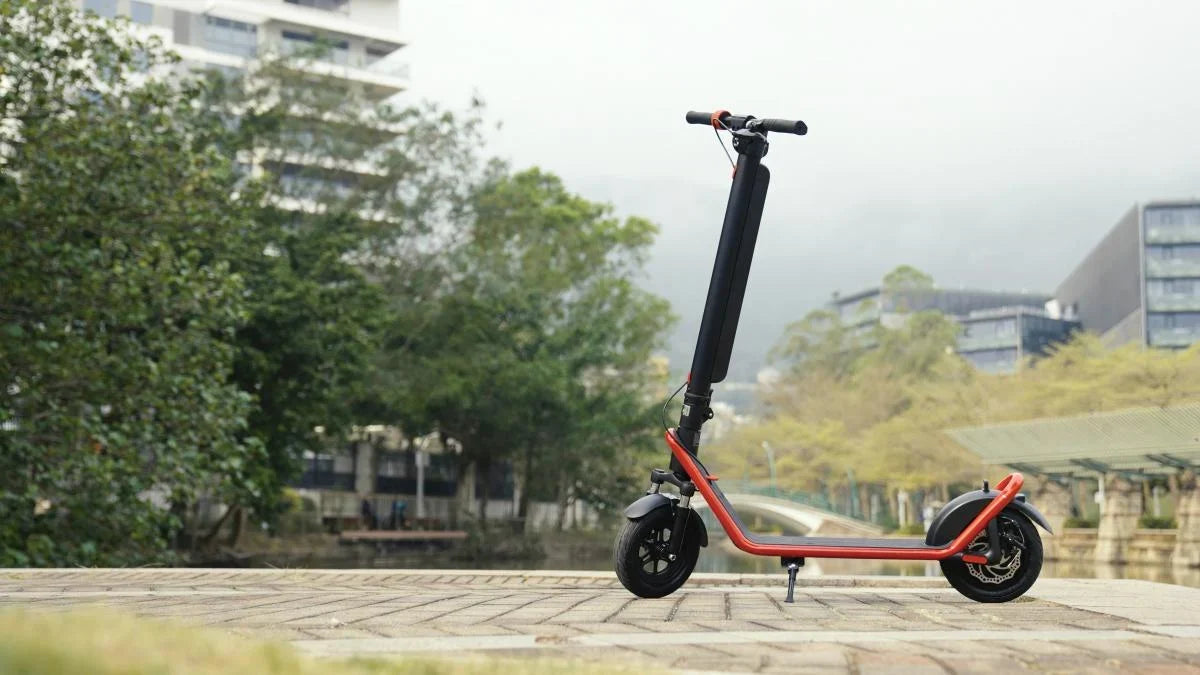
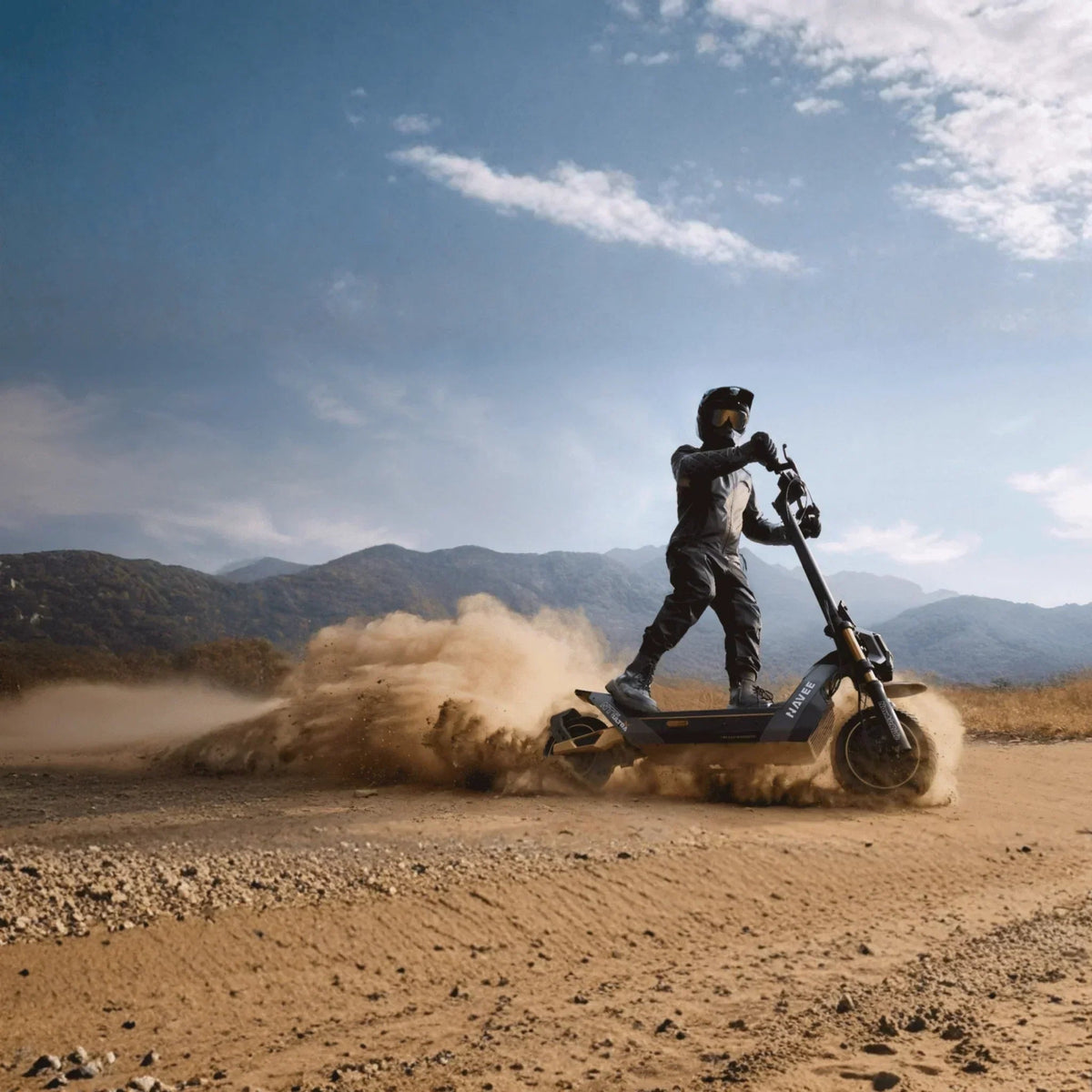
ENGWE also makes the Y600S and Y700 electric scooters, which you will find among our ENGWE electric scooters. Still torn between brands and types? Our guide which electric bike should I buy helps, and there is more buying advice among our guides.