
























Buying guide
Kids electric scooter – safe electric scooters for kids aged 6, 8, 10 and 12
At Wheelyshop you will find electric scooters for kids from around 6 years and up – from light entry-level models such as the Wheely Junior with a low top speed and puncture-proof tyres to more powerful models for children aged 10–12 from brands including EVERCROSS and Ninebot. Compare weight, top speed, range and recommended age directly in the filter and find a model that grows with your child. Every electric scooter comes with free delivery, a 2-year warranty (in addition to your statutory rights) and the option to pay in instalments.
In short
- Choose a kids electric scooter by your child's height, weight and experience – not just age. Check the recommended rider height and maximum load on the product page.
- A low top speed, often 10–15 km/h, and gentle throttle response matter more than power for younger children; choose a model with lockable speed modes.
- Helmet rules for children vary between EU countries, and we recommend one regardless – budget for a helmet and protective gear from day one.
- Most EU countries set a minimum age for e-scooters on public roads (often 14), so kids' models are usually for private land only – always check your national rules.
- Puncture-proof tyres and a removable or easily charged battery mean the least maintenance in everyday use.
How to choose the best kids electric scooter 2026
A kids electric scooter should above all be stable, easy to control and correctly sized. Start from your child's height and experience, choose a model with a low top speed that can be raised as the child grows more confident, and put budget aside for a helmet and protective gear from day one.
1. Electric scooter for kids aged 6, 8, 10 or 12 – choose by age and height
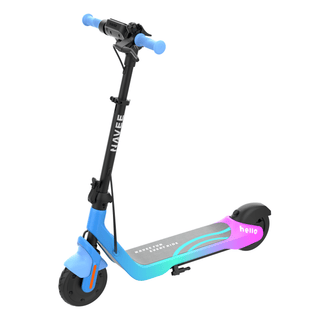
- 6–8 years: light models of 6–9 kg with a low deck, wide footplate and a top speed of around 10 km/h. The handlebar should reach roughly waist height.
- 8–10 years: slightly larger wheels, an adjustable handlebar and two speed modes; often 8–12 kg.
- 10–12 years: models that resemble adult models in size but with limited speed and power; check that the child can reach the ground with a foot when stationary.
Always check the recommended rider height and maximum load on the product page – age is only a rule of thumb. An adjustable handlebar lets the e-scooter keep up for several years.
2. How fast should a kids electric scooter be?
For children, control matters more than performance. Choose a model with a low top speed, gentle acceleration and speed modes that a parent can lock, ideally with kick-to-start so the motor does not deliver power from a standstill. Motors of 150–250 W are plenty for kids' models. In most EU countries e-scooters for public roads are limited to 20–25 km/h and 250–500 W – and most kids' models sit far below that.
3. Helmet and protective gear for your child's e-scooter
- Helmet: rules vary between countries and some require one for minors or for everyone – we recommend a helmet for every child, whatever the rules say. Choose an approved cycle helmet in the right size – see our selection of helmets and our guide to choosing the right helmet for your child.
- Brakes: a foot brake on the rear mudguard plus a hand brake is the simplest combination for younger children; older children can handle a disc brake.
- Lights and reflectors: required in the dark and keep your child visible even at dusk.
- Knee, elbow and wrist guards are recommended for beginners – more accessories are under safety.
4. Where can kids ride an electric scooter?
In most EU countries e-scooters on public roads are limited to 20–25 km/h and 250–500 W, and many countries require a minimum age (often 14), third-party insurance and/or a plate, and some require a helmet. That means kids' models are in most countries for use on private land only – the garden, a courtyard or another quiet, traffic-free area – and never on the pavement. Younger children should in any case start in the garden, the park or another calm spot without traffic until they have mastered the brakes and their balance. Always check your national rules before riding – read more at Your Europe. The rules on helmets, age and cycle lanes are summarised country by country in our guide to electric scooter laws in Europe.
5. Battery and range on a kids electric scooter
Kids' models have small batteries and often 5–20 km of claimed range, which is plenty for play and short rides. More important than range is the charging time and how the battery is handled: charge under supervision with the original charger, let the battery cool down after riding before charging and store it at room temperature. A removable battery makes charging easier if the e-scooter lives in a shed or storage room.
6. Cheap kids electric scooter that lasts – care and spare parts
Puncture-proof tyres remove the most common cause of downtime and are therefore especially well suited to children – see the full selection of puncture-proof electric scooters. Check the brakes, bolts and folding mechanism regularly, wipe the vehicle down after rain and store it indoors over winter. Wear parts such as tyres, brakes and chargers for every model are in our spare parts portal, so the e-scooter can last for years or be passed on to a sibling.
Best kids electric scooter – final comparison
When you are down to two models, write down the same details for both:
- Recommended age, rider height and maximum load
- Top speed, speed modes and whether they can be locked
- Weight, folding and adjustable handlebar
- Brake type, lighting and tyre type
- Battery capacity in Wh, charging time and whether the battery is removable
Mark any missing data rather than assuming a value, and choose the model your child can control today – not the one they will grow into in two years. The current best-selling models are in our electric scooter top list, and the full range is under all electric scooters.
Frequently asked questions
Which electric scooter suits kids aged 6, 8, 10 or 12?
For children aged 6–8 a light electric scooter of 6–9 kg with a top speed of around 10 km/h is right, for 8–10 a model with an adjustable handlebar and two speed modes, and for 10–12 a larger e-scooter with limited speed where the child can reach the ground with a foot. Height, weight and balance matter more than age – and since most EU countries set a minimum age (often 14) for public roads, kids' models are for private land. Always check the manufacturer's recommendation and your national rules.
How fast is a kids electric scooter allowed to go?
In most EU countries e-scooters for public roads are limited to 20–25 km/h and 250–500 W, but kids' models are usually for private land anyway. They typically have a top speed of 10–15 km/h and several speed modes, so the speed can be raised in step with your child's experience.
Do children have to wear a helmet on an electric scooter?
Rules differ between EU countries – some require a helmet for everyone, some only for minors and some not at all. We recommend a helmet for every age, and knee, elbow and wrist guards are a good addition for beginners. Check your national rules for helmet requirements.
Where can children ride an electric scooter?
In most EU countries a minimum age (often 14) applies on public roads, so kids' models are for private land – the garden, a courtyard or another traffic-free area – and never on the pavement. Younger children should start practising away from traffic until they have mastered the brakes and their balance. Always check your national rules.
How far does the battery last on a kids electric scooter?
Kids' models are often rated at 5–20 km per charge, which is enough for play and short rides. Cold weather, hills and heavier riders shorten the distance. Charge under supervision with the original charger and store the battery at room temperature for the longest life.