
Ask “which electric bike should I buy?” in any cycling forum and you’ll get a pile of model names back. The answers that actually help almost always start with a question of their own: how far do you ride, are there hills, and where will the bike live at night? Here are those questions in order. Answer them one at a time and you’ll have narrowed down the right type of e-bike before you’ve even started comparing brands.
Which electric bike should I buy? The short answer
Buy the e-bike that handles your usual ride with room to spare, copes with the hills and fits where you live. Around town, a city e-bike with rack, lights and removable battery is enough. Longer, steeper or loaded rides: spend on battery, motor and brakes – or a cargo bike for kids. Torn? See our electric scooter vs e-bike comparison.
The table is a quick version of the seven questions below:
| Your everyday riding | Look at | Check in particular |
|---|---|---|
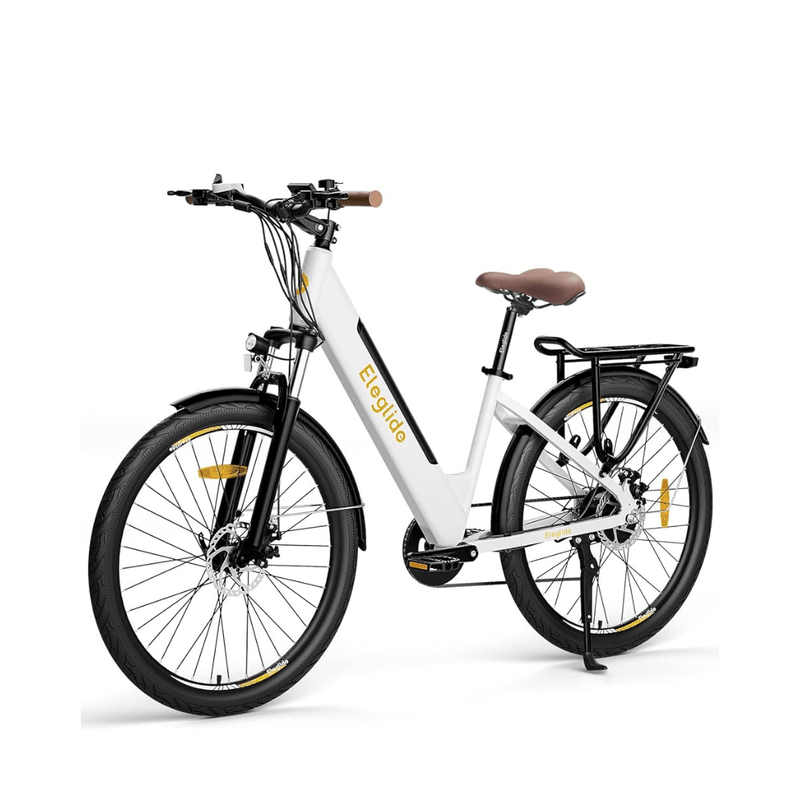
| Commute of under 10 km in town | A city model among our e-bikes | Weight, rear rack, lights and lock |
| 20 km or more a day | Long-range e-bike | Battery capacity, charging time and saddle |
| Hills on the way | High-torque rear hub motor or mid-drive | Torque, gears and brakes |
| Children or heavy loads | Electric cargo bike or bike trailer | Max load, stand and where the battery sits |
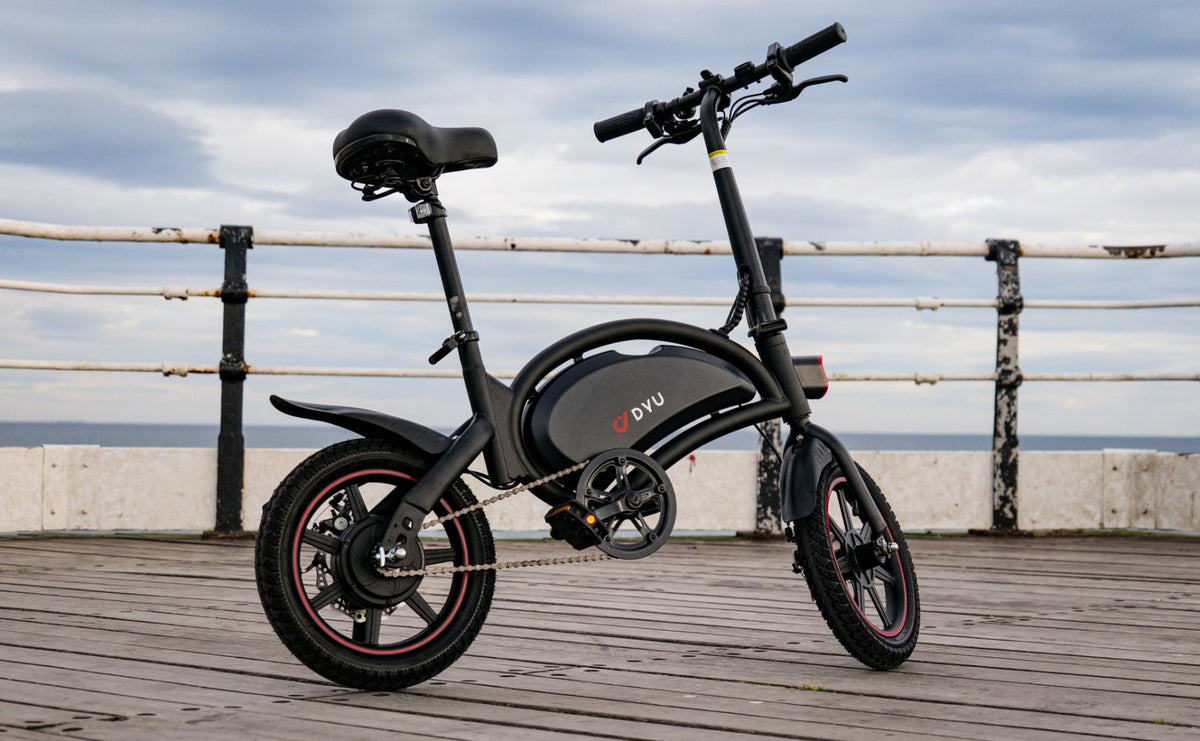
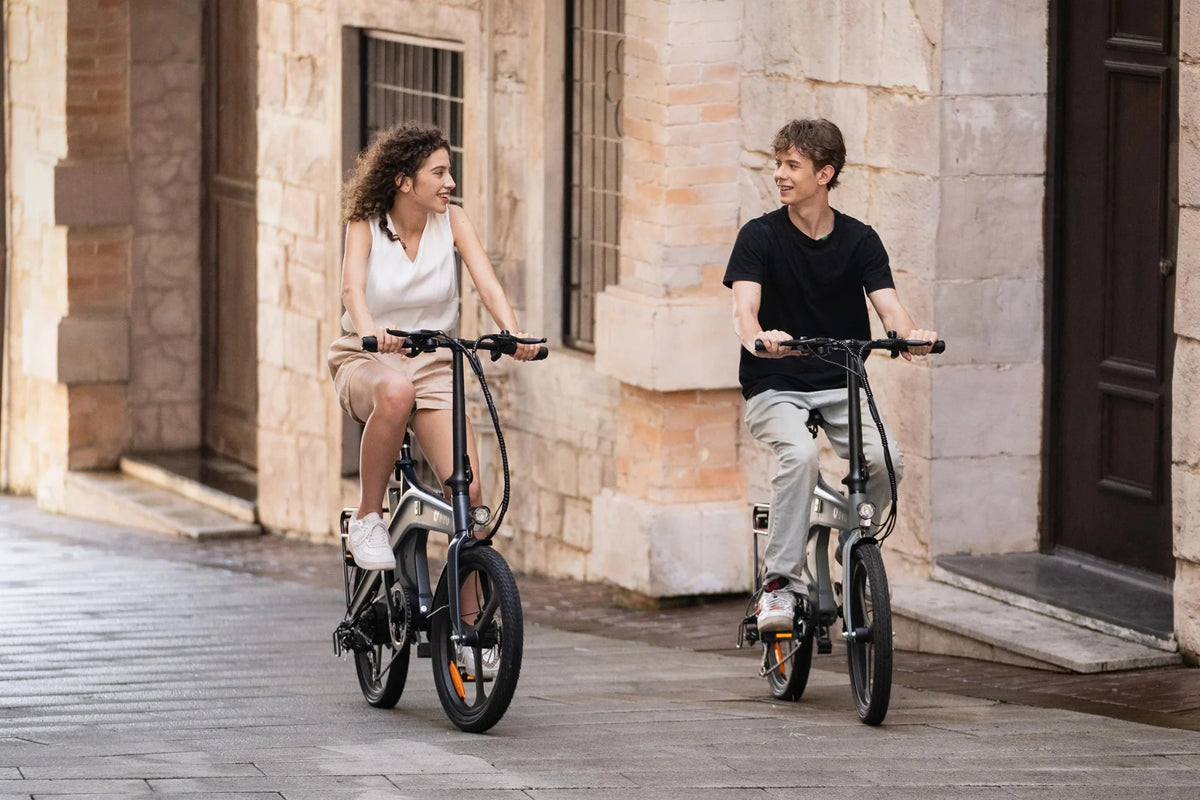
| Small flat, train or car | Folding e-bike | Weight and folded size |
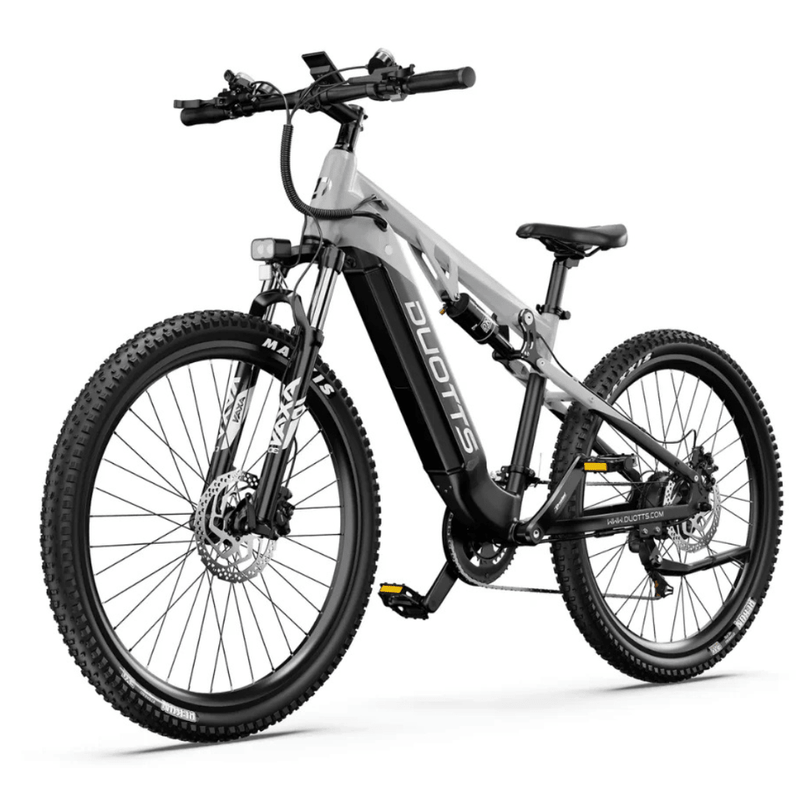
| Gravel, snow and poor roads | Fat bike or electric mountain bike | Tyre width, suspension and weight |
| Three wheels and a steady seat | Tricycle | Width and storage |
Question 1: How far do you ride on a normal day?
Count the whole day, not just the ride to work: there and back, the nursery drop-off and the detour to the shops. Then take the range in the advert with a pinch of salt – it’s measured in ideal conditions. BikeRadar’s senior technical editor, who has ridden more than 200 e-bikes, writes in his guide to e-bike battery range that cold weather alone can cut range by as much as 20 per cent, and that the most powerful assistance modes drain the battery faster.
A simple way to work it out: double your usual daily distance and check that the bike can manage it even on a cold day. That way you don’t have to charge every evening, and you have a margin when there’s a headwind. Product pages often give the battery in volts and amp-hours – multiply them to get watt-hours (48 V × 15 Ah = 720 Wh). Most of our e-bikes have at least 500 Wh, and a typical model has around 720 Wh (September 2026). At 10 Wh per kilometre, a common average for e-bikes, 720 Wh is enough for about 70 km on an ordinary day. On a cold day in the highest assistance mode it will be noticeably less.
Leave room to ride more, too – with a motor helping, trips you’d never have cycled before suddenly feel easy. So choose a battery one step above the minimum you need – but not the biggest you can find, because a bigger battery also means more weight and a higher price. If you want to cover long distances between charges, the largest batteries are among our long-range e-bikes, and how to get more out of the battery you have is covered in our guide on how to increase e-scooter and e-bike range.
Question 2: Are there hills on your route?
This is where the motor matters more than anything else. It sits in the front wheel, in the rear wheel or down by the pedals. Cycling UK’s guide to electric bikes splits them into two families: hub motors, which can sit in the front or the rear wheel, and crank or mid-drive motors at the pedals. A front hub motor is the simplest and usually the cheapest option, and it’s fine if your riding is mostly on the flat. A rear hub motor drives the wheel that carries most of your weight, and with high torque it handles hills, a child on the back and heavier loads well. A mid-drive motor turns the cranks, so it can use the bike’s gears on a long climb – Cycling UK points out that crank motors hold their power across a range of speeds. Better systems also use a torque sensor, so the motor responds to how hard you press on the pedals.
A common rule of thumb is that a hub motor is plenty if you live somewhere flat and don’t carry heavy loads. If you have hills, a child seat or heavy shopping, the torque figure in the specification is the number to look at – it’s what you feel when you pull away on a slope. In that case, choose a high-torque rear hub motor or a mid-drive. Most of our e-bikes have at least 50 Nm (September 2026).
Don’t forget the brakes. An e-bike is heavier than an ordinary bike and often rides faster, so it needs brakes that stop it with confidence. Check the brake type in the specification – disc brakes, at least at the front, give better control than a coaster brake.
Question 3: Will kids, shopping or cargo come along?
Add up rider, child and luggage and compare the total with the Max load on the product page. For most of our e-bikes it is 120–150 kg (September 2026). The rear rack also has its own limit, which is usually given in the manual or the product description – check both.
If a child will ride on the back, two tips are easy to miss. Choose a bike with the battery on or in the frame rather than in the rear rack, so the centre of gravity and the child seat don’t end up too high. And consider swapping the side stand for a centre stand, so the bike stands steady while you strap your child in.
With two children or big shopping trips, an ordinary e-bike soon becomes too small. A bike trailer is the easiest first step, and an electric cargo bike the next. How a box bike, a longtail and a trailer compare for a family is covered in our guide cargo bike vs trailer. For the weekly shop, a rear rack with panniers or a basket is often enough.
Question 4: Where will it live – and how many stairs?
This is the question people forget. An e-bike weighs more than you think: a typical e-bike in our range weighs around 30 kg, and many cargo bikes and tricycles weigh over 40 kg (September 2026). On the road you hardly notice – Cycling UK’s beginners’ guide to e-bikes notes that the extra weight all but disappears once the assistance kicks in. Carrying it is another matter. If the bike has to go down to a basement or up a flight of stairs every day, weight matters more than range. Then a lighter model or a folding e-bike is worth a look – our lightest weigh under 20 kg.
If the bike lives in a cold shed or outside, a removable battery is worth its weight in gold. You take the battery indoors and charge it at room temperature, which is also what e-bike system makers such as Bosch recommend. Almost all our e-bikes have one, but check how easy it is to take out.
Think about where the bike will stand when you get there, too. The lock deserves as much thought as the bike – we go through locks, alarms and trackers in our guide on how to protect your e-bike from theft. While you’re at it, check what your home insurance says about theft – see electric scooter and e-bike insurance.
Question 5: Tarmac, gravel or snow?
On tarmac, narrower tyres roll more easily and the bike feels livelier. If you ride a lot of gravel or poor roads, wider tyres and a suspension fork give more comfort. A fat bike with really wide tyres grips well in snow and loose gravel, but it weighs more and rolls more heavily – you notice that most when the battery is flat. How ENGWE’s folding fat bikes differ in weight, tyres and suspension is covered in our guide to which ENGWE e-bike to buy. If you want to head out on trails, an electric mountain bike is built for it.
If you’ll ride all year round, a few details are worth checking when you buy. A belt drive copes with grit and road salt better than a chain but costs more, and hub gears are better protected than derailleur gears. With electric assistance you’ll barely notice the extra rolling resistance of studded tyres, either. More on batteries, tyres and salt in winter is in our guide to riding an e-scooter or e-bike in winter.
Question 6: How do you get on – and how tall are you?
On an e-bike, “women’s” and “men’s” is about the frame, not about who rides it. A step-through frame makes it easy to get on and off at every red light and with a child seat, while a frame with a high top tube is stiffer. Size matters at least as much: compare your height with the Rider height in the specification, which for a typical model in our range is about 160–195 cm (September 2026). We go through frame types and sizing in detail in step-through vs step-over e-bikes. Buying for an older parent? Our guide to an electric bike for seniors covers step-through frames, trikes and a gentle start.
Question 7: How much to spend – and on what?
If you have a budget to split, the money usually does the most good in the battery, the motor and the brakes. Paint colours and display gimmicks can wait. Think about what the bike costs to own, too. Electricity is the smallest item: a full charge of a 500–750 Wh e-bike battery costs about €0.16–0.24 at the EU average electricity price, as we work out in how much it costs to charge an e-scooter or e-bike. Servicing and wear parts – chain, brake pads, tyres – cost more, and if you ride a lot the battery is a wear part too: Cycling UK calls it a consumable that will eventually need replacing.
So before you decide, check that a charger, battery and brake pads are available for the model, and ask our customer service if you’re unsure. All our e-bikes come with a 2-year warranty. We gather current offers under e-bike deals, and last month’s best-selling models are in our e-bike top 10. Thinking of leaving the car at home for some trips? We’ve done the maths in commuting by e-scooter or e-bike instead of by car.
Common mistakes when buying an e-bike
- Choosing by the range in the advert. Work it out for your own route, on a cold day and with the assistance level you actually use.
- Forgetting the weight. Around 30 kilos up a flight of stairs every day wears out even the keenest rider.
- Skimping on the battery before winter. What’s plenty in June can be tight in January.
- Choosing the frame by its label. Look at the step-in height and the rider height, not at whether the category says women’s or men’s.
- Missing the max load. Rider, child seat and luggage all count.
- Not checking what counts as a bicycle. A throttle, the motor power and the speed decide how an e-bike is classed – we explain it in electric bike laws in Europe.
Ordering an e-bike online – how it works
We sell online, so you’ll need to arrange a test ride yourself before you order. That doesn’t make buying harder, but it does mean doing the groundwork before you place the order:
- Test ride something similar. Borrow a friend’s e-bike or hire one for a day, ideally with the same type of frame.
- Read the specification. Compare Weight, Rider height, Max load, battery Capacity and Charging time for the two models you’re torn between. The guide on our e-bike page has a checklist for exactly that comparison.
- Ask about anything that’s missing. If a measurement isn’t on the product page, ask our customer service and we’ll try to find out before you order.
- Keep the original box. If the bike ever needs to be sent in for repair, it must be packed in its original box – we don’t send out new boxes.
Under our returns policy, we don’t take back an e-bike that has been ridden, however short the distance – you can unpack it and check it, but not ride it, indoors or outdoors.