
This guide is for anyone who wants to keep cycling – or start again – without hills, headwinds or simply getting on the bike standing in the way. And for anyone helping a parent choose. The questions are nearly always the same: how easy is it to get on, how heavy is it, and how gently does it pull away?
Which e-bike suits seniors? The short answer
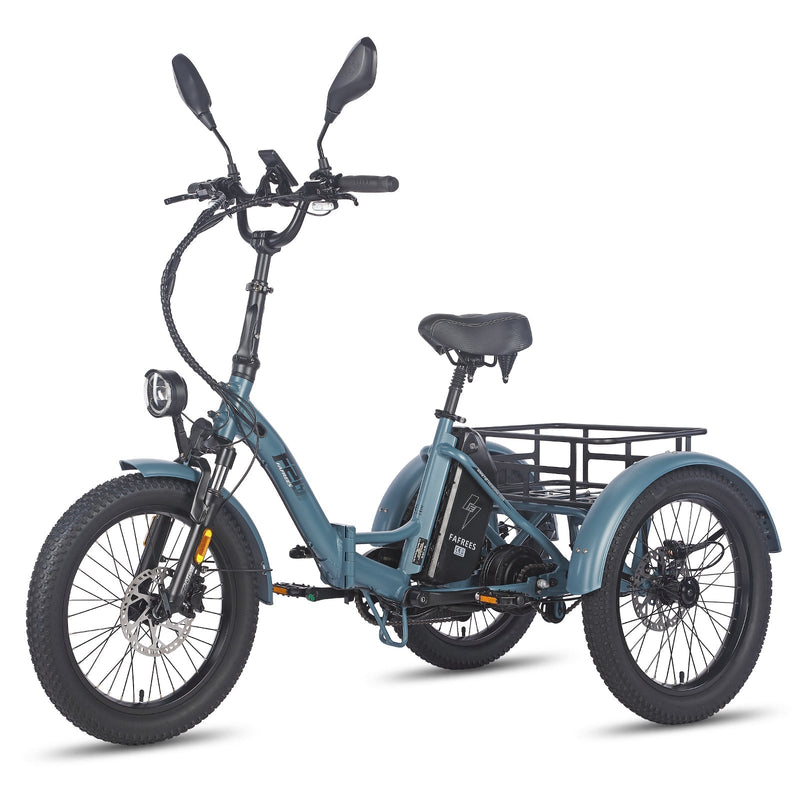
Already ride and want help on hills? Choose a light e-bike with a step-through frame and several riding modes, such as the 25.8 kg VARUN S700-2. If your balance feels uncertain when you stop and start, an electric trike like the Fafrees F20 Mate is steadier, but it weighs 43 kg and needs more space.
Step-through frames – easier to get on and off
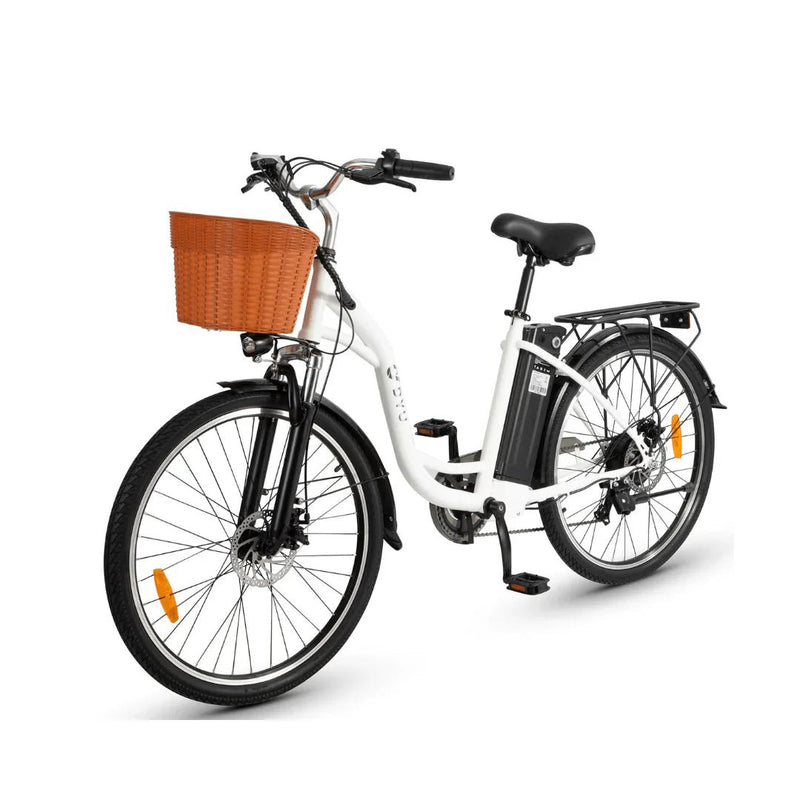
On a step-through bike the frame between saddle and handlebar dips low, so you step through it instead of swinging your leg over the saddle. You notice it every time you stop at a crossing or get off with shopping on the rack. As ebiketips points out in its guide to step-through e-bikes, easy mounting is the big advantage – and because the frame needs a sturdy tube, many step-through e-bikes weigh around 30 kg.
Our step-through electric bikes come in different sizes. The VARUN S700-2 has 27.5-inch wheels and suits riders from 160 to 200 cm, while the folding Hidoes C5 has 14-inch wheels and is listed for riders from 150 cm. Always check the recommended rider height on the product page – it tells you more than a women’s or men’s label. We compare the frame types in step-through vs step-over e-bikes.
Trike or two wheels?
An electric trike stays upright when you stop, so you don’t have to put a foot down to keep your balance, and it usually has a large basket at the back. That suits riders who feel unsteady at low speed. But it handles differently from a bike: it doesn’t lean into corners, so slow down before you turn, and on a sloping kerb the whole trike tilts.
| Model | Type | Weight | Width | Good to know |
|---|---|---|---|---|
| Hidoes C5 | Step-through, folding | 22.4 kg | 56 cm | 14-inch wheels, adjustable handlebar, riders 150–190 cm |
| VARUN S700-2 | Step-through | 25.8 kg | 65 cm | four riding modes, max load 150 kg |
| APEFOX RH30 | Trike | 41 kg | 64 cm | 18-inch wheels, six riding modes, max load 120 kg |
| Fafrees F20 Mate | Trike | 43 kg | 74 cm | three hydraulic disc brakes, available with backrest |
| OneSport OT30 Pro | Trike | 43.3 kg | 74.5 cm | two hydraulic disc brakes, max load 180 kg |
The figures come from our product pages (October 2026). Measure the shed door and the garden gate before you choose a trike – at 64–74.5 cm wide it won’t necessarily fit through. You’ll find more models among our electric tricycles, and the largest are much heavier: the VIPCOO R1 weighs 91 kg and is 2.25 metres long.
Weight – who will lift the bike?
An e-bike rolls easily with the motor on, but it also has to be lifted over a threshold, down a step or onto a car rack. The lightest step-through models weigh 22–26 kg, the trikes just over 40 kg. If there are steps to your storage, weight usually decides more than the motor. In practice a trike needs a ground-level space.
Every model in the table has a removable battery. Take the battery out before you lift the bike – it makes it lighter – and carry the battery inside to charge instead of wheeling the bike to a socket.
Riding modes, a gentle start and brakes
The riding mode sets how much the motor helps. Most have three to six modes – the VARUN S700-2 has four, the Fafrees F20 Mate five and the APEFOX RH30 six. Start in the lowest: the bike pulls away calmly and won’t surge forward when you push on the pedals going uphill. It’s also kinder to the battery, as higher assistance uses more charge.
Look at the brakes. Hydraulic disc brakes, as on the Fafrees F20 Mate and OneSport OT30 Pro, usually need less hand force than mechanical ones and are easy to modulate. Try the brakes at low speed before you head into traffic, and learn which lever works which brake.
Saddle, handlebar and display
Set the saddle so you can touch the ground with your toes on both sides while seated – you don’t need it higher for the first few weeks. An adjustable handlebar, as on the Hidoes C5 and Fafrees F20 Mate, lets you sit more upright. The Fafrees F20 Mate also comes in a version with a backrest.
You should be able to read the display in sunlight without your glasses. Look at the product photos: big figures for speed and battery and a clear riding mode matter more than lots of features. Several models start with a key, including the VARUN S700-2 and Fafrees F20 Mate – nothing to download or pair.
Getting started in the first weeks
- Practise somewhere empty. A gravel area or an empty car park on a Sunday morning. Practise starting, stopping and turning in the lowest mode before you ride on the cycle path.
- Start with the pedal in the right position. Put the pedal at roughly two o’clock and you’ll get going straight away without wobbling.
- Keep the first rides short. Ride a route you know, in daylight and dry weather.
- Wear a helmet. We explain how to pick one in what helmet to choose.
- Get help with assembly. Ask someone to check that handlebar, saddle and brakes are set correctly before the first ride, or contact our customer service if anything is unclear. Cycling UK’s beginners’ guide to e-bikes is a useful checklist too.
The rules for e-bikes on the road are covered in our guide to electric bike laws in Europe.
Common mistakes
- Choosing the biggest trike. More basket and a bigger battery mean more weight and width. Start with where the bike will be kept.
- Riding in the highest mode from day one. The bike responds faster than you expect. Go up one mode at a time.
- Ignoring rider height. A bike that is too big means you can’t reach the ground – and that is when riders feel unsure.
- Planning to test ride it and send it back. An e-bike that has been ridden cannot be returned as unused. You can unpack it and check it – read our returns policy before you order. Keep the original box: if the bike ever needs to be sent in for repair, it must be packed in its original box – we don’t send out new boxes.
When a bike isn’t right – the alternatives
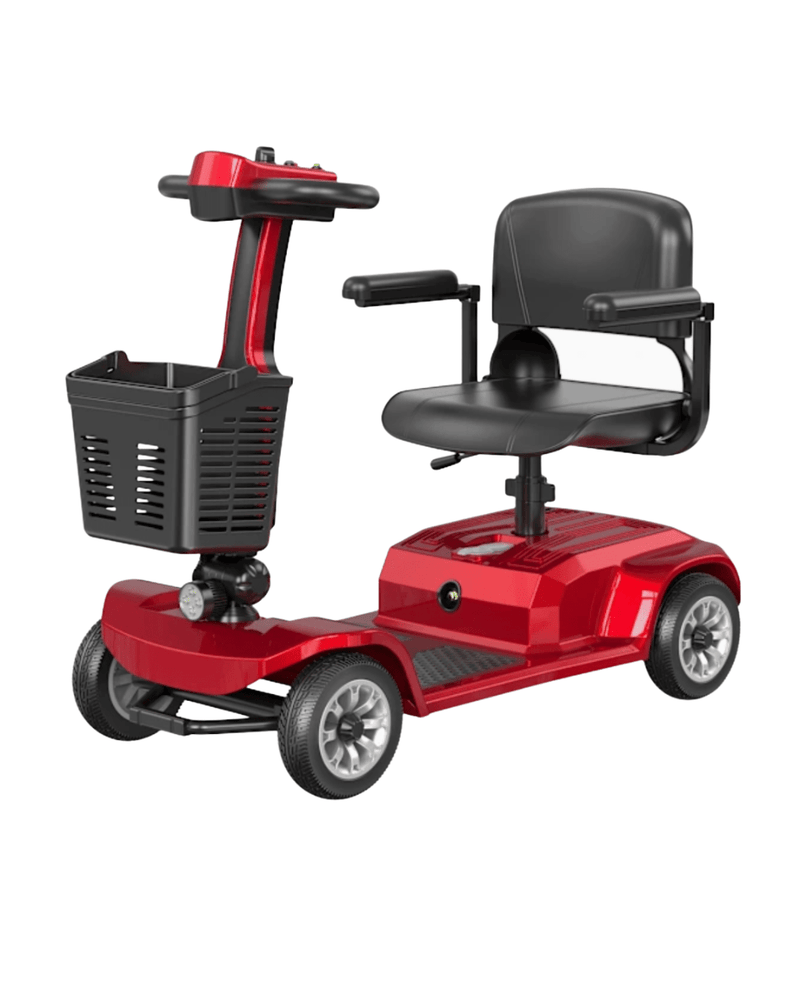
If you don’t want to pedal at all, or if it’s balance rather than stamina that holds you back, there are vehicles where you stay seated the whole time. A mobility scooter is driven seated with a handlebar, and an electric wheelchair is steered with a joystick and folds up. Both are a different choice from a bike – compare seat dimensions and maximum load on the product page.
Still torn between several e-bikes? Our guide to which electric bike to buy takes you further. Every e-bike and trike comes with a 2-year warranty from us, and you’ll find more buying advice in our guides.