
How much does an electric scooter cost? The price tag only tells half the story. This guide explains what each price band gets you, from kids’ models to extreme scooters, and what it costs to own one over time: electricity, wear parts, insurance, the battery and what it is worth when you sell.
Short answer: how much does an electric scooter cost?
A kids’ electric scooter costs roughly €250–450 and a basic adult model €400–650. Most commuters end up spending €650–1,100. Powerful dual-motor models cost €1,100–2,300 and extreme scooters go up to about €5,600. Electricity is almost free – wear parts and the battery are the real running costs.
Electric scooter price bands
| Price band | Typical top speed | Typical range | Weight | Best for |
|---|---|---|---|---|
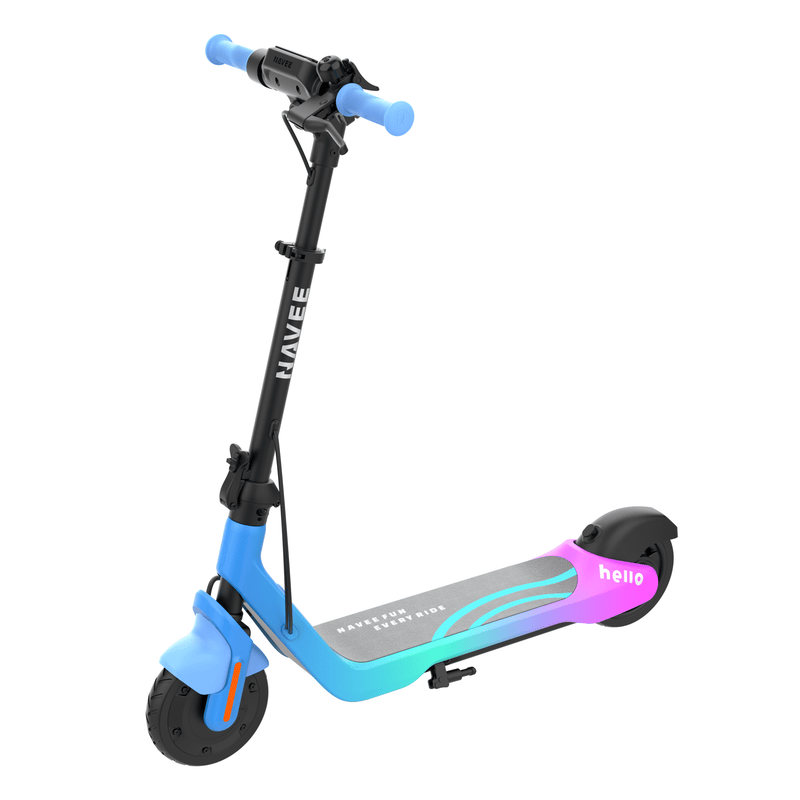
| €250–450 | 14–16 km/h | short trips | 6–10 kg | Children and young teens |
| €400–650 | 25–45 km/h | 25–55 km | 15–25 kg | Short trips, to the station |
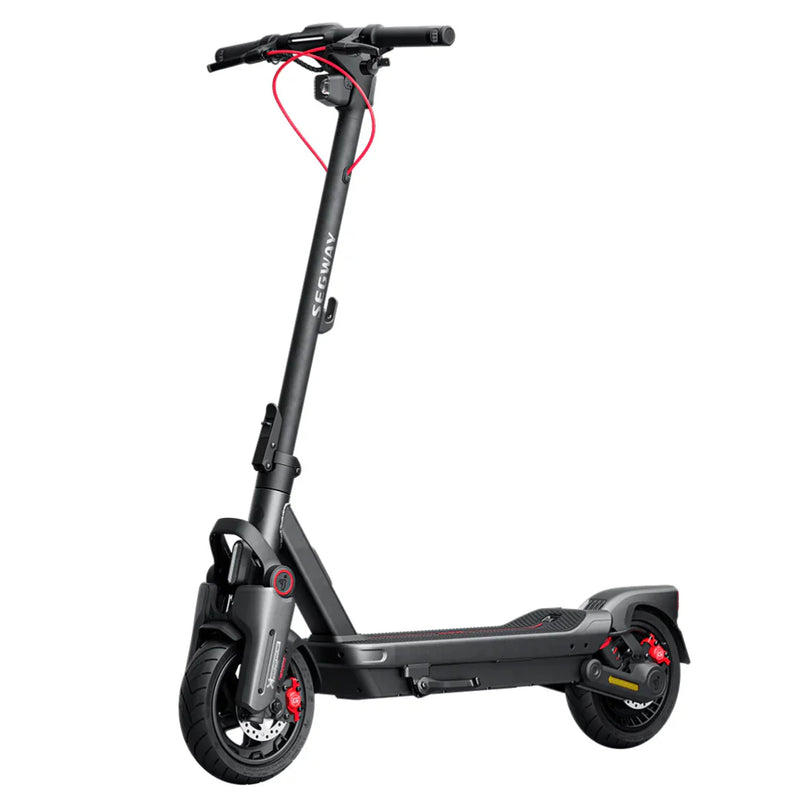
| €650–1,100 | 25–60 km/h | 40–75 km | 20–33 kg | Daily commuting |
| €1,100–2,300 | 45–85 km/h | 65–120 km | 28–56 kg | Long distances, gravel and hills |
| €2,300–5,600 | 70–120 km/h | 115–200 km | 36–67 kg | Private land and enthusiasts |
The bands are our own rounded summary of the range in November 2026. Speed, range and weight are typical values from Wheelyshop product data, November 2026 – real range is shorter. When Cleanrider measured real-world range (in French), it was up to 57 per cent below the claimed figure, and Tom’s Guide warns that advertised range assumes a light rider on flat roads.
€250–450: electric scooters for kids
The lowest band covers kids’ electric scooters. Small batteries, low speed and low weight mean a child can handle them alone. The money goes into safe basics: brakes a child can reach, a sturdy frame and often a speed limit that a parent can set. Check the maximum rider weight – a scooter rated for 50 kg will not suit a growing teenager.
€400–650: entry-level adult models
Here you find light models for short trips, such as from home to the station. The battery is smaller, the tyres are often 8.5–10 inches and suspension is basic or missing. That is fine for a few kilometres a day on good tarmac. For longer distances or rough roads you quickly run short of battery and comfort.
€650–1,100: the commuter class
This is where most adults land. You get a bigger battery, better brakes – often disc or drum brakes with an electronic motor brake – and tyres that handle kerbs and gravel. Many models have suspension and an app with riding modes. For specific models in this class, see our comparison of electric scooters under 1000 euros.
€1,100–2,300: power and range
This band brings two motors, larger batteries and serious suspension. These scooters climb hills with a heavy rider and have the range for long rides. The trade-off is weight: 28–56 kg is common, which you will notice on a flight of stairs. A higher design speed can also affect insurance and where you may ride.
€2,300–5,600: extreme electric scooters
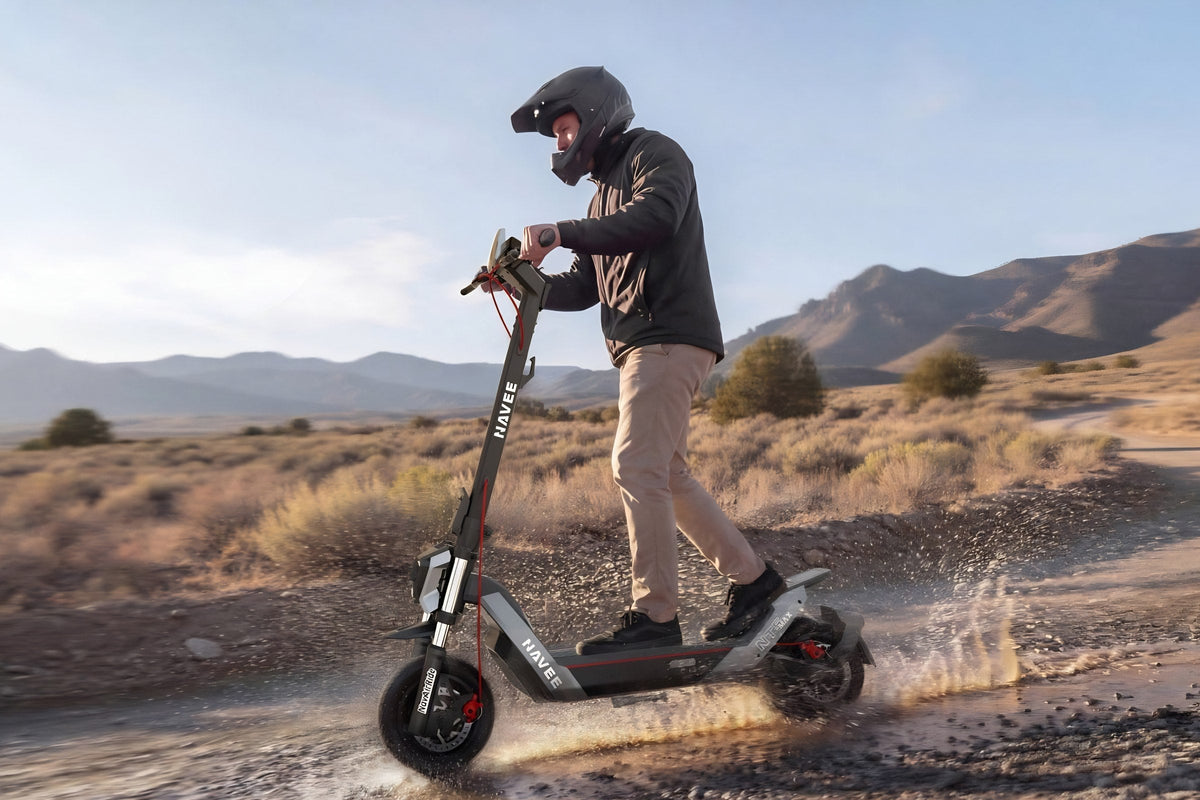
At the top sit fast electric scooters from brands such as Dualtron, Kaabo and Teverun, with batteries of several kilowatt-hours and top speeds of 70–120 km/h according to our product data. They weigh as much as a small motorbike and are built for private land and enthusiasts. You pay for motors, battery, hydraulic brakes and adjustable suspension.
What drives the price?
- The battery: the single most expensive part. Capacity in watt-hours (Wh) sets the range, and cells from well-known makers cost more.
- Motors and controller: one motor or two, and how much current the controller delivers.
- Brakes and tyres: hydraulic discs and wide tubeless tyres cost more than drum brakes and solid tyres.
- Suspension and frame: adjustable suspension and a solid folding joint raise the price, but also comfort and lifespan.
- Service and spare parts: a brand with parts you can actually buy is worth more than it looks in the shop.

What does an electric scooter cost to own?
The purchase is the biggest item, but there are running costs too. Here is what they look like.
Electricity: a few euros per 1,000 km
In Cleanrider’s measurements the scooters used about 11–18 Wh per kilometre, so 1,000 km takes 11–18 kWh. The EU average household electricity price was €0.28 per kWh in the first half of 2026, which makes 1,000 km cost roughly €3–5. Want to use your own tariff? See how much it costs to charge an electric scooter.
Wear parts and servicing
Tyres, inner tubes and brake pads wear fastest. How often they need replacing depends on how much and where you ride – gravel and rain wear parts faster than dry tarmac. For comparison, Cycling UK puts a standard bike service at £25–50 for e-bikes. Check tyre pressure regularly, re-tighten the folding joint and replace pads before they are worn through. Many parts are available among our spare parts.
The battery: the big long-term cost
A lithium-ion battery loses capacity over the years. Battery University notes that makers often specify 300–500 charge cycles for batteries in consumer products, but care makes a big difference. At 25–40 km of real range per charge, that is roughly 7,500–20,000 km. Replacing the battery is not cheap: ADAC says (in German) that swapping a built-in battery through the manufacturer costs €120–800. Read more about how long electric scooters last.
Insurance
Rules differ by country. In France a private e-scooter needs liability insurance even though it is limited to 25 km/h, according to Service-Public (in French). In Spain the RACE explains (in Spanish) that liability cover became mandatory under Law 5/2025, and in Italy Altroconsumo reports (in Italian) that compulsory third-party insurance has applied since 16 July 2026. Details per market are in our electric scooter insurance guide.
Resale value
An electric scooter loses most of its value in the first years, and the battery condition decides almost everything when you sell. Keep the receipt, charger and original box – it supports the price and shows the scooter is yours. Buying used yourself? Check the battery and be wary of scooters sold without a charger. More checks are in our guide to buying a used electric scooter.
Worked example: three years of commuting
Say you buy a commuter model for €850 and ride 2,000 km a year for three years – 6,000 km in total.
- Electricity: 6,000 km × 11–18 Wh = 66–108 kWh, about €18–30 at €0.28 per kWh.
- Wear parts: expect at least a set of new tyres or tubes and new brake pads over the period.
- Battery: 6,000 km is often within the battery’s lifespan if you charge sensibly.
- Insurance: mandatory liability cover in some countries adds a yearly premium.
The purchase is what really costs money. Electricity hardly matters, and with good care you can push a battery replacement far into the future.
How to keep the cost down
Most of the cost of ownership comes down to how you treat the scooter:
- Charge often, avoid running flat: Battery University says shallow discharges give more charge cycles than draining the battery, and partial charging is fine.
- Charge and store indoors: heat ages lithium-ion batteries faster and cold reduces the energy they deliver. Room temperature is best.
- Keep the right tyre pressure: under-inflated tyres roll worse, cut range and puncture more easily.
- Replace wear parts in time: fully worn brake pads can damage the disc and make the repair dearer.
- Lock it properly: a stolen scooter is the biggest cost of all.
Per kilometre the picture is clear: a commuter model for €850 that covers 6,000 km costs about €0.14 per km in purchase price. Ride 10,000 km on the same battery and it drops to around €0.09 – with electricity still well under a cent per kilometre.
Common mistakes when comparing prices
- Trusting the advertised range: it is usually measured at low speed with a light rider. Compare battery size in Wh instead.
- Buying the cheapest for a long commute: a small battery means charging every day and faster wear.
- Paying for speed you cannot use: a faster scooter is heavier, more expensive and may need insurance.
- Forgetting accessories: a helmet and a proper lock belong in the basic budget.
- Ignoring spare parts: a scooter that cannot be repaired gets expensive the day something breaks.
How to choose the right price band
Start with distance and surface. Under 5 km on smooth tarmac, a basic model is enough. For 10–20 km a day the commuter class is right, and with hills, gravel or heavy bags the more powerful models are worth the money. Then compare battery capacity in Wh, weight and brakes – not just the price. All our electric scooters come with a 2-year warranty.