
How much does a mobility scooter cost? The honest answer is: anything from a few hundred to several thousand, depending on the type. A small folding pavement scooter and a large road-going model are very different machines. Below we go through price ranges, sizes and weights, where you may ride and how help with the cost can work.
Short answer: how much does a mobility scooter cost?
A new mobility scooter usually costs about €900–1,800 in our range. Simple four-wheelers at walking pace sit at the lower end, while ultralight travel models and large scooters with long range sit at the top. If you need a powered wheelchair for a long-term condition, public services may provide one instead.
Mobility scooter or powered wheelchair?
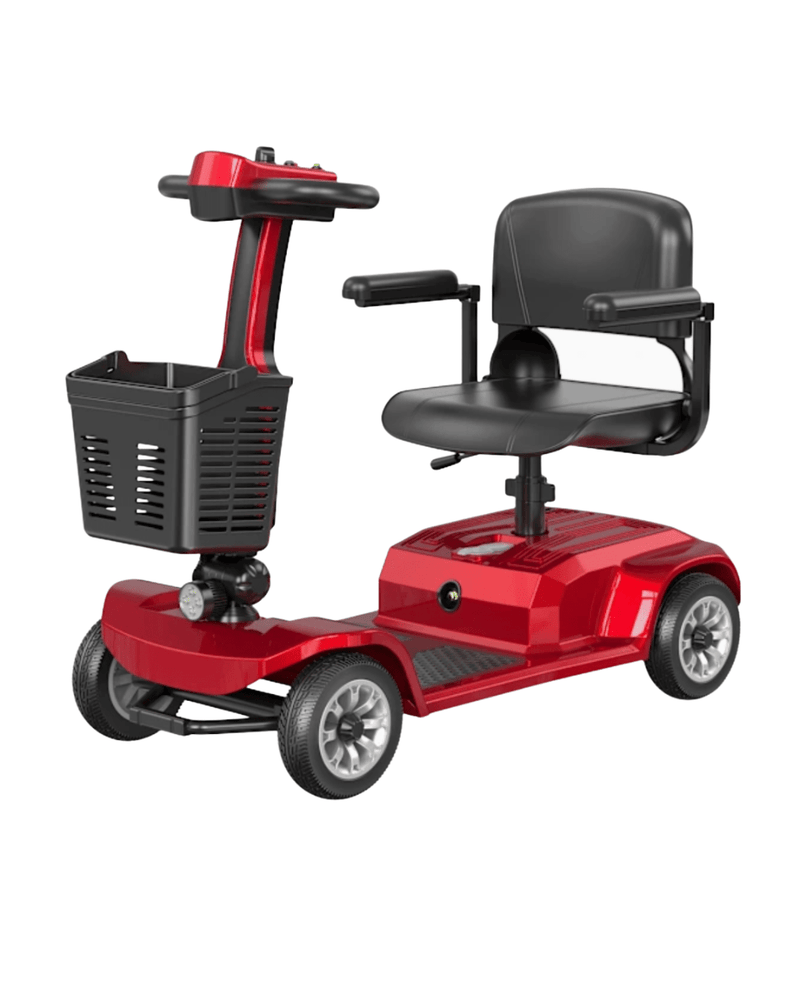
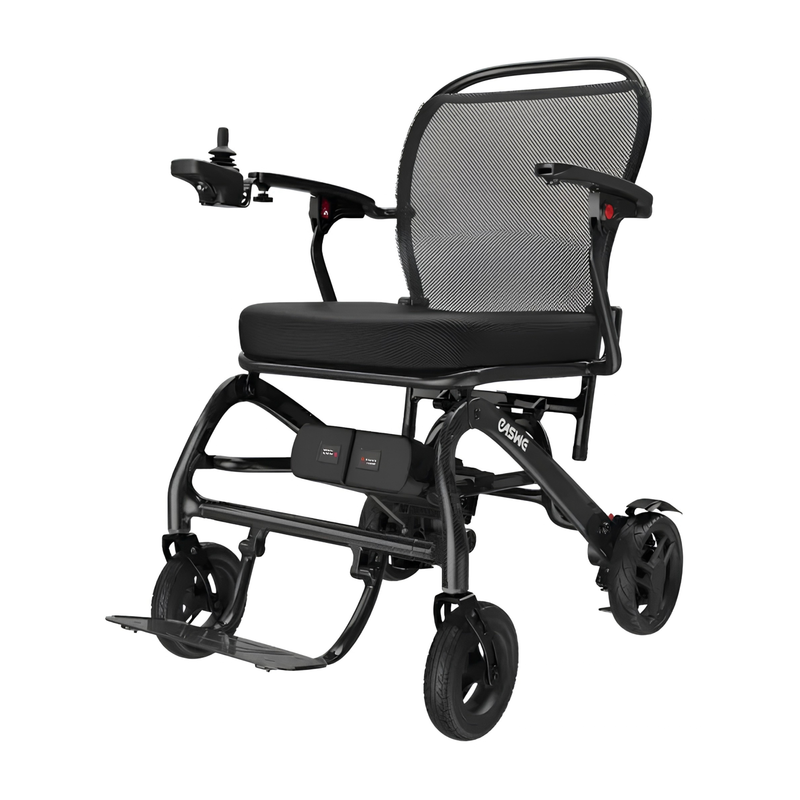
A mobility scooter has a tiller with handlebars, a seat and usually a basket. It suits people who can sit upright, steer with both hands and get on and off on their own. A powered wheelchair is steered with a joystick and is often adjusted to the user’s body. The two are priced very differently, so make sure you compare like with like.
In everyday Swedish, people often call any mobility scooter a “permobil” – after a Swedish brand of powered wheelchairs. Wheelyshop does not sell that brand; our range consists of mobility scooters from other manufacturers.
Mobility scooter price ranges in 2026
| Type | Approximate price | Top speed | Range | Weight |
|---|---|---|---|---|
| Basic scooter at walking pace | under €1,100 | 6–6.4 km/h | 15–25 km | approx. 35–45 kg |
| Folding with large or dual battery | €1,100–1,400 | 6–8 km/h | 25–50 km | approx. 30–45 kg |
| Faster three- or four-wheeler | €1,000–1,400 | 8–18 km/h | 30–50 km | approx. 35 kg |
| Ultralight travel model or large four-wheeler | €1,400–1,800 | 6 km/h | 15–25 km | approx. 20–52 kg |
The table is based on manufacturers’ figures for the models in our range in November 2026. Range is measured in good conditions; hills, cold weather and heavy loads shorten it.
For comparison, the NHS says mobility scooters in the UK range from £500 to more than £5,000, and that a basic electric wheelchair costs around £2,000. Which? lists tested models from about £1,300 for a Class 2 pavement scooter (with VAT relief) to over £4,000 for a Class 3 road scooter (with VAT).
Under €1,100 – for short errands
Here you find simple four-wheelers at walking pace with a basket, lights and puncture-proof tyres. They suit trips to the shop or pharmacy on tarmac and paving.
€1,100–1,400 – more range and smarter batteries
Mid-range scooters often have bigger or dual batteries, an electromagnetic brake and better suspension. Some carry two batteries that charge separately, so you can ride further without waiting.
€1,400–1,800 – easy to travel with or extra comfortable
The top of the range covers two extremes: ultralight folding models around 20–25 kg that fit in a car boot, and large scooters with air tyres, a wide seat and a high load limit.
What makes a mobility scooter more expensive?
- Battery: volts times amp-hours gives capacity. A 24 V 20 Ah battery stores roughly twice the energy of a 24 V 10 Ah one.
- Weight and folding: light frames and clever folding mechanisms cost more to build.
- Brakes and tyres: an electromagnetic brake that holds when you release the throttle, air tyres and suspension raise both price and comfort.
- Maximum load: models for 136–190 kg need a stronger frame and motor.
- Top speed: faster scooters usually have a larger motor and battery.
How wide and how heavy is a mobility scooter?
According to the manufacturers of our range, compact mobility scooters are usually 45–60 cm wide and 87–118 cm long. Weight runs from just over 20 kg for the lightest folding models to around 50 kg for large four-wheelers, and the maximum load from 120 to 190 kg.
Width decides whether you fit through doors and lifts; weight decides whether you can lift the scooter into a car. Many models split into parts or have a removable battery, which makes the heaviest piece manageable.
Where can you ride a mobility scooter?
Rules depend on the country. In the UK, the Highway Code separates Class 2 vehicles, limited to 4 mph (6 km/h) and designed for pavements, from Class 3 vehicles, limited to 8 mph (12 km/h) and equipped for the road. On pavements all of them must keep to 4 mph and give pedestrians priority. GOV.UK’s guide to mobility scooters and powered wheelchairs explains that the class also decides whether you need to register or insure the vehicle. Elsewhere in Europe, mobility scooters at walking pace are usually treated like pedestrians – check your national rules before you ride.
Help with the cost
The NHS says mobility scooters are not generally available through it, while wheelchairs, including powered ones, can be provided locally for long-term needs. Charities and schemes such as Motability may help some people, and in the UK disabled people can often buy mobility aids without VAT. In other countries, ask your doctor or occupational therapist what support exists before you buy.
Running costs after you buy
- Electricity: a 24 V 20 Ah battery stores just under half a kilowatt-hour, so a full charge costs very little.
- Battery: the battery wears most. Over time it gives less range and eventually needs replacing.
- Tyres and servicing: puncture-proof tyres need the least care; air tyres need the right pressure.
- Storage: the scooter should be kept dry and charged indoors.
- Insurance: check that your home insurance covers the scooter and damage you might cause.
Three wheels or four?
A three-wheeled scooter turns more tightly and suits narrow hallways, lifts and shops, but it is less stable sideways. A four-wheeler stands more firmly on uneven pavements, on slopes and when you get on and off. If you feel unsure about your balance, four wheels are usually the safer choice; if you mostly ride indoors or in shopping centres, three may feel handier. Check seat height and armrests too: flip-up armrests make it easier to slide across from a chair, and a swivel seat helps when you get off at a table.
New or second-hand?
Used mobility scooters are often cheap, and Which? recommends visiting the seller, taking a test drive and checking the warranty terms before you buy. Pay special attention to the battery: ask how old it is, ride a longer distance and see whether the range holds up. A new battery can cost a noticeable share of the scooter’s value. Look for cracks in the frame, worn tyres and make sure the brake holds when you release the throttle. Buying new gives you a warranty, a manual in your language and a battery whose history you know.
Worked example: what does a mobility scooter cost per year?
Say you buy a scooter for €1,200 and use it for six years. That is about €200 a year for the purchase itself. Charging is a small item even if you ride every day. Add a replacement battery at some point and perhaps a set of tyres. The example shows that the purchase price is only part of the picture – battery life and how you store the scooter affect the total just as much.
Common mistakes when buying a mobility scooter
- Looking only at range: long range usually means more weight. If you lift the scooter into a car, weight may matter more.
- Forgetting storage: measure the door to your shed or hallway and check for a socket.
- Choosing too low a load limit: the limit includes you and everything in the basket.
- Buying speed instead of stability: on short errands four wheels and a wide seat matter more than top speed.
A practical checklist before you choose
Write down your usual trips: distance, surface and any hills. Measure doors, lifts and storage, and weigh yourself with what you normally carry. Decide whether the scooter needs to go in a car. That quickly shows whether you need a light travel model, a standard four-wheeler or one with longer range. Ride slowly at first and practise turning and reversing in an empty space.
Compare models in our mobility scooter collection, or browse folding electric wheelchairs if you prefer joystick control. Thinking of a bike instead? Read our guide to electric bikes for seniors. All vehicles from Wheelyshop come with a 2-year warranty.