
An electric scooter with 50 km range sounds easy to find – plenty of models promise more than that on the box. But the figure almost always applies to ideal conditions. Here we explain how range is measured, what independent tests show and which models still have a margin for 50 km when you ride at 25 km/h. We compare four electric scooters from four brands using figures from Wheelyshop’s product data.
Short answer: which ones really make 50 km?
The figure on the box usually applies at low speed, so allow a margin. According to our product data, the NAVEE XT5 Max has 110 km (899 Wh), the Segway Ninebot MAX G3 80 km, the KuKirin M4 Max 64 km and the Dualtron Togo Plus 50 km. Expect less in cold weather, on hills or with a heavier rider. All have a 2-year warranty.
Four electric scooters from four brands in numbers
| Model | Claimed range | Range at higher speed | Battery | Top speed | Weight | Max load | Price range |
|---|---|---|---|---|---|---|---|
| NAVEE XT5 Max | 110 km | not stated | 899 Wh | 50 km/h (limiter 25 km/h) | 35.6 kg | 150 kg | €1,300–1,400 |
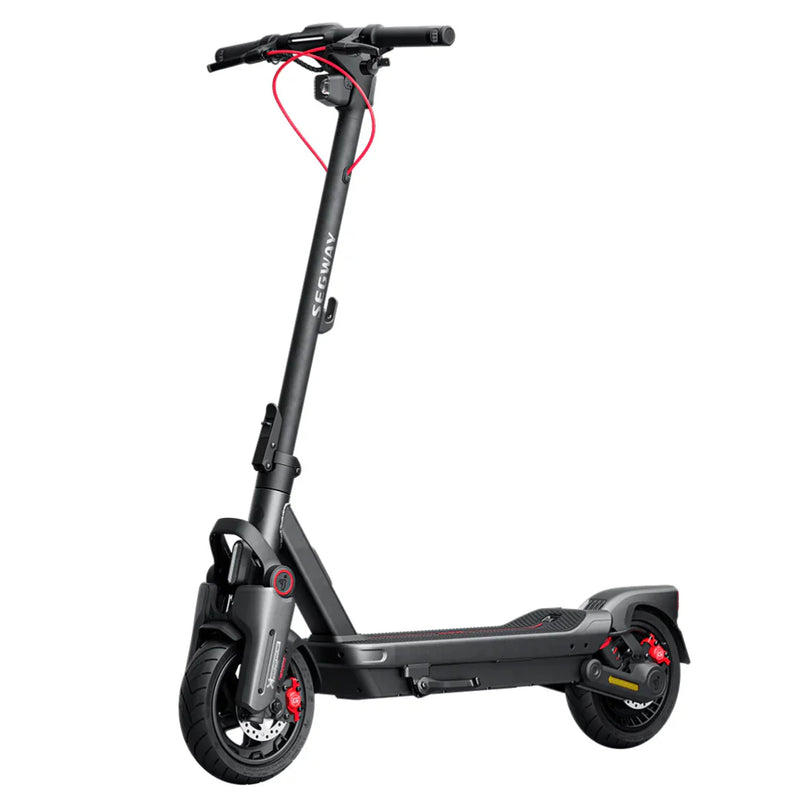
| Segway Ninebot MAX G3 | 80 km | not stated | 597 Wh | 45 km/h (limiter 25 km/h) | 24.6 kg | 130 kg | €1,200–1,300 |
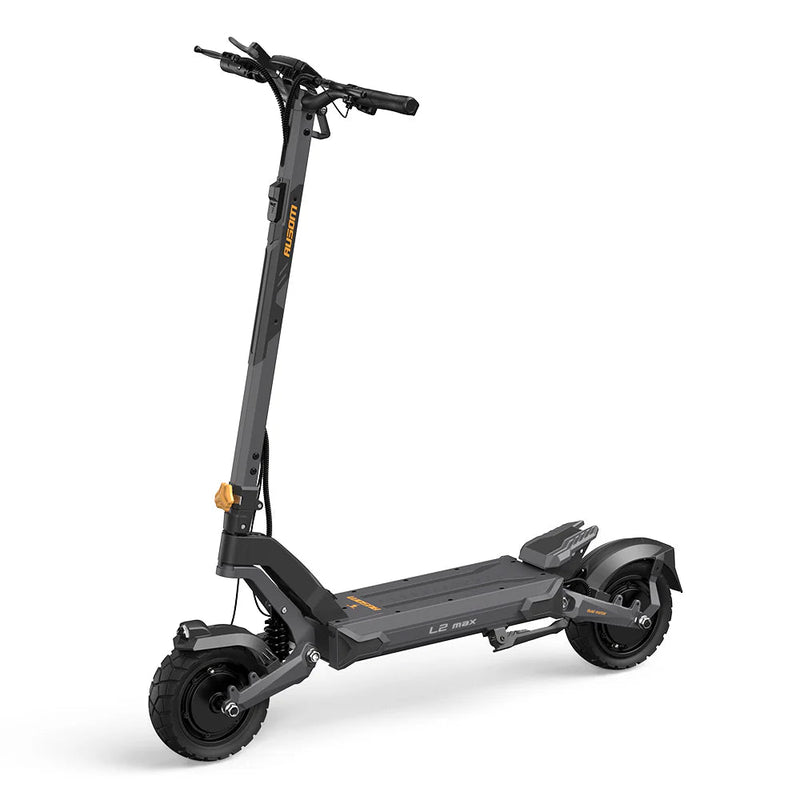
| Dualtron Togo Plus (48 V 15 Ah) | 50 km | not stated | 720 Wh | 40 km/h | 24.4 kg | 100 kg | €1,000–1,100 |
| KuKirin M4 Max | 64 km | not stated | approx. 874 Wh | 45 km/h (limiter 25 km/h) | 24 kg | 120 kg | €700–800 |
Source: Wheelyshop product data, November 2026. Range at higher speed is not stated in our product data. We calculated battery watt-hours from volts and amp-hours. Top speed is the model’s maximum; several have a 25 km/h limiter. Price ranges are for November 2026.
How range is measured – and why the figures differ
There is no common standard for measuring the range of an electric scooter. That is why figures cannot be compared one-to-one between brands, and why the small print matters.
The manufacturer’s test conditions
Most manufacturers measure with a 75 kg rider at a steady speed, on flat dry tarmac at 20–25 °C. According to Cleanrider’s analysis (in French), the headline figure is often measured in eco mode at around 15 km/h, without stopping at junctions and sometimes indoors on rollers. Consumer group Que Choisir (in French) says the claimed range should be treated as a theoretical figure. So expect less range at the speeds most people ride in town.
What independent tests show
Cleanrider rode five electric scooters round the same city loop with a 75 kg rider. Real range was 20 to 57 per cent shorter than claimed, and consumption was about 11–18 Wh per kilometre. A Dualtron Togo with a claimed 30 km (a smaller battery than the Togo Plus in our table) managed 24 km and lost the least.
The German motoring club ADAC measures range on a test bench but under more realistic conditions: a 90 kg rider, lights on and full speed, which for the tested models was 20–22 km/h. In the ADAC test 2026 (in German), range came out between 33.8 and 47.9 km, and ADAC notes that the gap to the manufacturers’ figures is often large. None of the tested models reached 50 km under those conditions – a good reason to choose a bigger battery than you think you need.
Do the maths: how big a battery do you need for 50 km?
The battery’s energy in watt-hours (Wh) tells you more than the biggest kilometre figure. If you only have volts and amp-hours, multiply them: 48 V × 15 Ah = 720 Wh. With Cleanrider’s measured 11–18 Wh per km, it works out roughly like this:
- 600 Wh: about 33–54 km
- 720 Wh: about 40–65 km
- 870–900 Wh: about 49–82 km
The low figure is for cold, hills, high speed and a heavier rider; the high figure for relaxed riding on smooth tarmac. Que Choisir recommends choosing a scooter that covers about 50 per cent more than the distance you plan. If you ride 50 km a day, that means a claimed range of around 75 km at your riding speed – or charging at work.
Who is each model for?
NAVEE XT5 Max – the biggest margin
With 899 Wh, the XT5 Max has the largest battery here and the longest range, 110 km. The 12-inch off-road tyres and 150 kg max load make it good on gravel and for heavier riders. The price is 35.6 kg, so it suits you if you have room for it in a hallway, garage or shed. See more among our NAVEE electric scooters.
Segway Ninebot MAX G3 – for long commutes
The MAX G3 has 80 km of range and 597 Wh. Charging takes 2.5–3.5 hours, so it is easy to top up during a working day. Puncture-resistant 11-inch tyres, front and rear suspension and a 130 kg max load make it a solid choice for long commutes. More models are among our Ninebot electric scooters.
Dualtron Togo Plus – for lighter riders
The Togo Plus has 48 V 15 Ah (720 Wh) and 50 km of range according to our product data. It weighs 24.4 kg and has front and rear suspension, but the max load is 100 kg. If you weigh more than that, pick one of the others. See more models among our Dualtron electric scooters.
KuKirin M4 Max – the biggest battery for the money
The M4 Max has a 48 V 18.2 Ah battery, about 874 Wh, and is the cheapest of the four. Its range is 64 km according to our product data. It has front and rear disc brakes, suspension and 10-inch off-road tyres. Charging takes 9–10 hours. More models are among our KuKirin electric scooters.
Common mistakes when comparing range
- Comparing the biggest number: 110 km at 15 km/h and 50 km at 25 km/h can mean almost the same battery. Compare at the same speed, or compare Wh.
- Counting Ah instead of Wh: 15 Ah in a 36 V battery is 540 Wh; in a 48 V battery it is 720 Wh. You need the voltage too.
- Forgetting winter: the London Fire Brigade says cold weather reduces range and makes the battery lose charge more quickly. A trip with a comfortable margin in May can be too long in January.
- Buying exactly 50 km for a 50 km ride: batteries lose capacity over the years. According to Que Choisir, performance drops 10–15 per cent a year even when the scooter is not used.
- Forgetting the weight: more range means a bigger battery and more kilos. If you carry the scooter up stairs or onto a train, a lighter model plus charging at work may be smarter.
How to make the range last in daily use
How you ride affects range as much as battery size. These habits usually make the biggest difference:
- Ride in a lower mode: eco mode, with a lower top speed and softer acceleration, gives the most kilometres per charge.
- Keep tyre pressure right: too little air increases rolling resistance. Check the pressure every two weeks, more often when it gets cold.
- Keep the battery indoors: a warm battery delivers more energy than a cold one. Let a cold battery reach room temperature before charging.
- Charge sensibly: according to Battery University, a lithium-ion battery lasts longer if it is not left fully charged in the heat and if you avoid running it completely flat. If the scooter will stand for a long time, store it half charged.
- Charge safely: use the original charger, never charge unattended or while you sleep, and unplug when the battery is full, as the London Fire Brigade recommends.
A simple rule of thumb: ride your usual route a few times and note how many per cent it uses. You will quickly see whether you have a margin for the winter months. More tips are in how to increase your range, and more models among our long range electric scooters. Speed limits differ between countries – see electric scooter laws in Europe.