
Which fat tire e-bike you should choose depends mostly on where you ride: loose snow and sand, gravel roads in the forest, or mainly tarmac with the odd trail. Here we compare three models with figures from Wheelyshop’s product data and look at what wide tyres can – and cannot – do.
Short answer: which fat bike should you choose?
If you want to fold the bike and put it in the car, the ENGWE EP-2 Pro is the lightest choice. For long rides on gravel and forest roads the ENGWE M1 with two batteries goes furthest, and the ENGWE E26 with 26-inch wheels rolls easiest when there is tarmac in between. All have a 2-year warranty.
Three fat bikes in numbers
| Model | Range | Top speed | Weight | Max load | Price range |
|---|---|---|---|---|---|
| ENGWE EP-2 Pro | 120 km (pedal assist) | 40 km/h (limiter 25 km/h) | 30 kg | 150 kg | €1,000–1,500 |
| ENGWE M1 (one battery) | 90 km | 25 km/h | 34.5 kg | 150 kg | €1,000–1,500 |
| ENGWE M1 (two batteries) | 170 km | 25 km/h | not stated | 150 kg | €1,500–2,000 |
| ENGWE E26 | 140 km | 32 km/h (limiter 25 km/h) | 34.5 kg | 150 kg | €1,500–2,000 |
Source: Wheelyshop product data, November 2026. Range is a guide figure and drops in the cold and on soft ground. Price ranges apply to November 2026.
Who is it for?
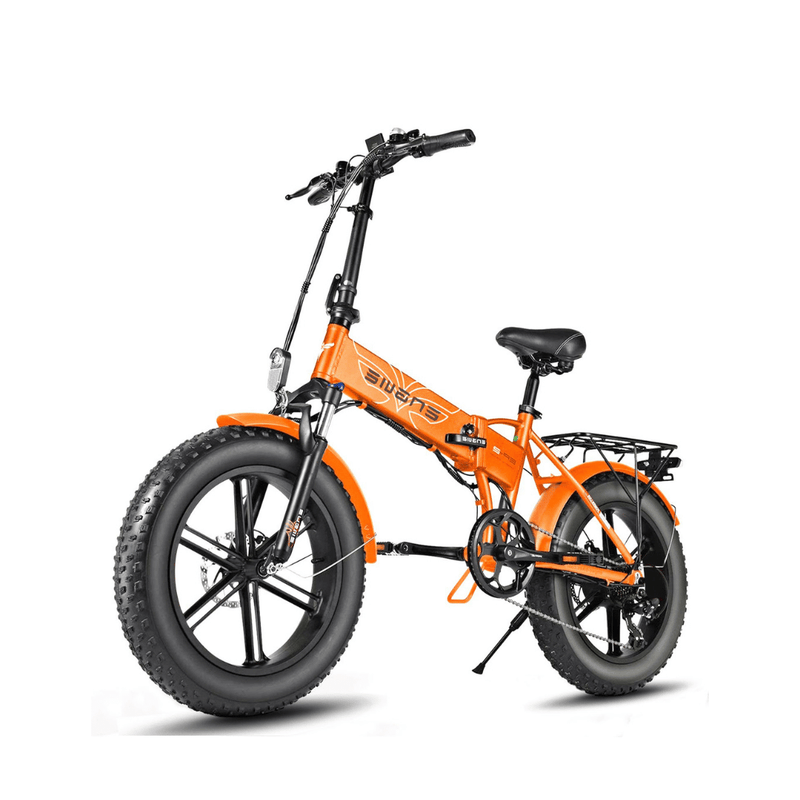
ENGWE EP-2 Pro – folding fat bike on 20 × 4.0 tyres
The EP-2 Pro has 20 × 4.0-inch tyres, disc brakes and a 48 V 13 Ah battery, and it folds for the car or storage room. At 30 kg it is the lightest of the three. It suits you if you want grip on gravel and snow but also need to lift and transport the bike.
ENGWE M1 – for long rides
The M1 has a steel frame, 65 Nm of torque and comes with one or two batteries. With two batteries the range is 170 km (90 km with one), but the extra battery makes the bike heavier. A good choice for long days on forest roads where you do not want to think about charging – less so if it has to be carried.
ENGWE E26 – big wheels, calmer on tarmac
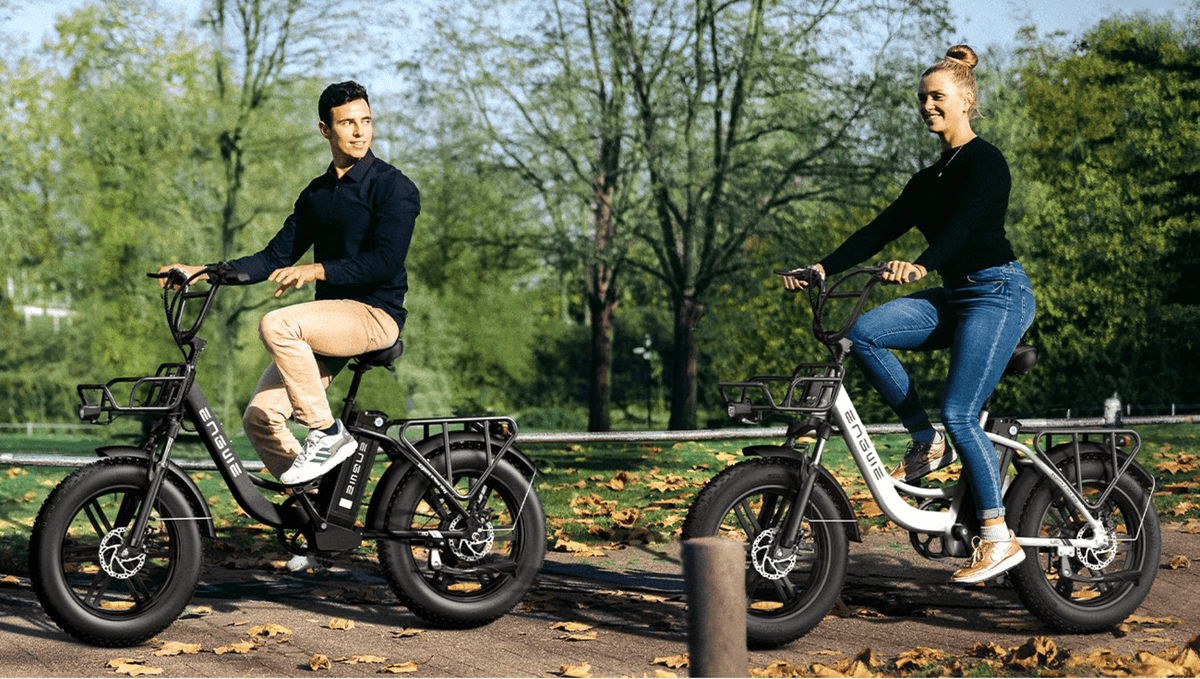
The E26 has 26-inch wheels, an aluminium frame, 70 Nm and a 48 V 16 Ah battery. Big wheels roll more calmly over roots and kerbs and feel less sluggish on tarmac. It also comes as a step-through (E26 ST). It suits you if you mix commuting with weekend trail rides.

In short: choose by storage and transport and you’ll often end up with the EP-2 Pro, choose by range and it’s the M1, and choose for mixed riding with lots of tarmac and it’s the E26. All three are among our ENGWE electric bikes.
What is a fat bike – and what do the wide tyres do?
A fat bike has extra-wide tyres – 4 inches on these models. The large contact patch lets the bike float over soft snow, sand and mud instead of sinking in, and the tyres soak up bumps like extra suspension. BikeRadar explains that fat bike tyres are often run at 5–15 psi off-road, and its guide to cycling in snow notes that fat bikes were originally designed for snowy and icy conditions. The downside is weight and rolling resistance: these three models weigh 30–34.5 kg and feel slower than a normal e-bike on dry tarmac.
Tyre pressure: finding the right number
Tyre pressure is the easiest adjustment and the one that makes the biggest difference. Always stay within the range printed on the sidewall. Start from that figure and adjust for the surface:
- Soft snow and sand: drop the pressure slightly for a bigger contact patch.
- Gravel and forest tracks: a middle setting – grip without the tyre folding in corners.
- Tarmac: higher pressure within the marking rolls more easily and saves battery.
Remember that an e-bike is heavy. BikeRadar’s guide to e-bike tyres points out that the extra weight of motor and battery generally calls for slightly higher pressures than on a normal bike. A pump with a gauge makes it easy to get back to the same number every time.
Fat bikes in winter: snow, ice and studs
Wide tyres help on packed and soft snow, but not on smooth ice. Cycling UK’s guide to winter tyres explains that studded tyres can carry over 240 studs and weigh close to 1 kg each, that you can run them a little softer on icy days so more studs bite, and pump them up on non-icy days to reduce stud loss. It also warns that if there is a lot of snow on top of ice, the studs may not reach the ice layer. Check in good time that studded tyres exist in your size, and that there is clearance if the bike has mudguards.
When the roads are slippery, brake gently and lean on the rear brake rather than the front, because a rear-wheel slide is easier to correct, says BikeRadar’s snow guide.
Battery and range in the cold
A lithium-ion battery delivers less energy in the cold, so store it indoors and charge it at room temperature – let a cold battery warm up before plugging it in. Expect the range figures in the table to drop on a cold day with snow under the tyres. When you charge indoors, follow London Fire Brigade’s advice: many e-bike fires happen in homes while batteries are charging, and buying compliant products from reputable sellers significantly reduces the risk. More tips on cold and ice are in electric scooter and e-bike in winter.
Gravel, sand and forest trails
Soft ground is where a fat bike makes the biggest difference. On gravel roads and forest trails the wide tyres give calm grip over roots and stones, and on sandy beaches you keep moving where narrow tyres dig in. Think about weight on steep climbs: 34.5 kg on the M1 is a lot to push uphill if the battery runs out. Plan longer rides with a margin and try a shorter loop first.
Care after salt and snow
Winter salt and grit are hard on the chain and gears. road.cc’s winterproofing tips recommend full-length mudguards to keep moisture, muck and road salt off you and the bike, and winter tyres for extra grip and puncture protection. Rinse the bike, especially the lower parts and drivetrain, lube the chain and wipe off excess oil. BikeRadar’s winter commuting guide also covers lights and keeping the drivetrain clean. If the fat bike stands still over the coldest months, read how to store an electric scooter and e-bike over winter.
Fat bike or regular e-bike?
A fat bike is the right choice if you often ride in snow, on gravel, sand or forest trails, or want a comfortable bike with lots of grip. If you ride almost only on tarmac to and from work, a regular e-bike is lighter, rolls more easily and is simpler to carry. The middle ground is the E26 with 26-inch wheels, which handles trails but feels less sluggish on tarmac than the smaller fat bikes.
Transport and storage
Weight shapes everyday use more than you might think. The EP-2 Pro folds, so it is the easiest to get into a car boot or a small shed. The M1 and E26 don’t fold and take up as much room as any large bike, only with wider tyres. If the bike goes on a car rack, check the rack’s maximum weight per bike and that the wheel holders take 4-inch tyres – and remove the battery for the journey. At home, ground-level storage or a bike room without steps is worth a lot when the bike weighs 30–34.5 kg.
Checklist before your first winter ride
- Check tyre pressure and adjust it to the surface.
- Charge the battery indoors and fit it just before you leave.
- Test the brakes somewhere quiet before heading onto slippery ground.
- Make sure front and rear lights work and are charged.
- Plan a shorter loop the first time and expect less range.
Common fat bike mistakes
- Too much pressure in snow: rock-hard tyres lose the float – drop it within the marking.
- Thinking wide tyres handle ice: on sheet ice you need studs, whatever the width.
- Forgetting the weight: 30–34.5 kg has to be lifted into a car, shed or stairwell.
- Leaving the battery outside: cold means less range, and a cold battery should not be charged straight away.
- Skipping the wash: salt attacks the chain and gears within weeks.
More wide-tyre models are among our fat bikes. To see the whole ENGWE range compared, read which ENGWE e-bike should you buy. The rules for riding an e-bike are summed up in electric bike laws in Europe. All three come with a 2-year warranty – keep the original box, as the bike is packed in it if it needs to be sent in.