
How many years has an electric scooter got left? The honest answer is that it rarely wears out all at once. It's made of parts that age at very different rates – and almost all of them can be replaced. Below we go through it part by part: what usually lasts, what wears, and how to tell when it's time.
How long do electric scooters last? The short answer
The battery usually decides. A lithium battery is typically rated for a few hundred to around 1,000 full charge cycles – charge fully twice a week and 500 cycles last almost five years. The motor often outlives that. Tyres, tubes and brake pads are wear parts: as long as the frame is sound, the rest can be replaced.
Electric scooter lifespan, part by part
There's no fixed mileage for any single part. It depends on rider weight, road surface, weather and how you ride. The table shows where wear usually shows up and what to keep an eye on.
| Part | What wears | Signs it's time | What to do |
|---|---|---|---|
| Battery | capacity, from cycles and age | less range in the same weather, cuts out on hills | charge smart, replace the battery or cells |
| Hub motor | bearings, the cable at the axle | grinding noise, play, jerky power, error code | workshop or a new motor wheel |
| Tyres and tubes | tread, rubber | worn tread, cracks, frequent punctures | right pressure, new tyre and tube |
| Brakes | pads and disc | lever travels further, scraping noise | replace pads in time |
| Frame and folding joint | latches and locking parts | play or knocking at the stem | tighten, replace worn parts |
The battery: charge cycles and age
A charge cycle is one full charge from empty to full, so charging from 50 to 100 per cent twice uses one cycle. Battery life is measured in charges rather than years: BikeRadar's guide to how e-bike batteries work notes that Shimano guarantees its STEPS batteries keep at least 60 per cent of their capacity after 1,000 charges, while Bosch guarantees 60 per cent after 500 charges or two years. Electric scooters use the same kind of lithium-ion cells, so those figures are a fair guide.
An example: if you commute 10 km a day on a scooter that manages around 30 km in real life, you use about a third of the battery a day – just under two cycles a week. It takes years to reach 500 cycles. Ride less and the battery still ages with time, fastest when it sits full, empty or hot. Battery University's guide to prolonging lithium batteries explains why heat and a high state of charge wear a battery more than cycling does. So a battery left unused in the shed wears too.
A battery doesn't die after its last cycle. It loses capacity gradually, and the first sign is that you charge more often. Your charging habits make the biggest difference: around 80 per cent for daily use, charging at room temperature and no long spells completely full or empty. How to do that in practice – and how to spot a worn battery – is in our guide on how to charge an electric scooter battery.
The motor usually lasts longest
Most electric scooters have a brushless hub motor inside the wheel. There are no brushes to wear out, so what usually fails is the bearings, the cable where it enters the axle and sometimes the small Hall sensors that read the motor's position. Watch for grinding or humming noises, play in the wheel, jerky power or an error code that comes back after a restart.
Water and hard knocks shorten a motor's life the most. Don't ride through deep puddles, never pressure-wash the wheel and don't drop off kerbs. If the motor fails, the usual fix is a complete motor wheel – bearings and cable are a workshop job.
Tyres, tubes and brakes are wear parts
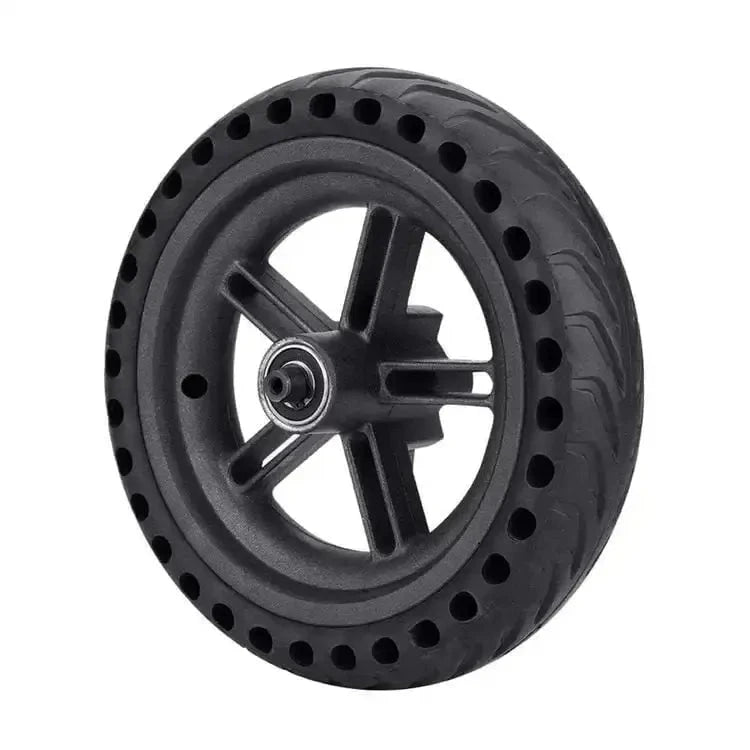
How long a tyre lasts depends more on pressure and road surface than on mileage. Running too soft makes the tyre flex, wear on the sides and puncture more easily. Check the pressure every week – how to find the right value is in our guide to electric scooter tyre pressure. Replace the tyre when the tread is worn, when you see cracks in the rubber or when punctures start coming often. Solid tyres skip the tube but still wear like any other tyre.
We walk through the job step by step in our guide on how to change an electric scooter tyre, and tyres and tubes for many models are under tyres & wheels.
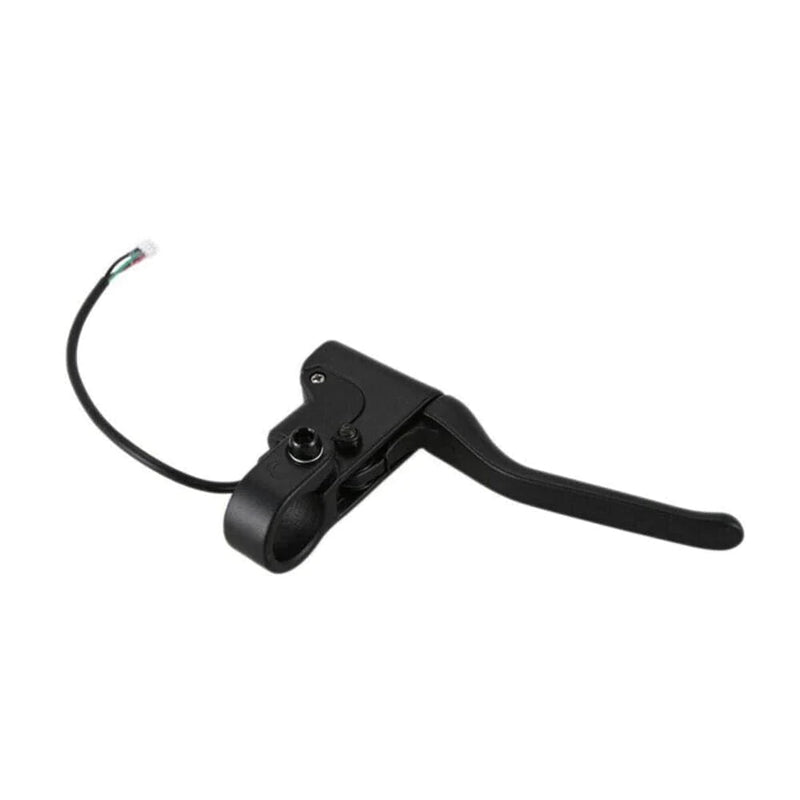
Brake pads wear fastest if you brake a lot – on hills, in the rain and with a heavy load. BikeRadar's guide to changing disc brake pads lists the signs: weak braking, a scraping howl when braking in the dry and a lever that travels further than it should. Replace the pads before it's metal on metal, or you'll be replacing the disc too. If your model has an electronic motor brake (E-ABS), gentle braking takes load off the pads. Pads and discs are under electric scooter brakes.
Frame, stem and folding joint
The frame rarely wears out on its own, but the stem and folding joint get shaken every day. A small amount of play that's left to grow wears out the locking parts. Go over the bolts once a month using our maintenance checklist, and replace worn latches instead of tightening harder. Cracks in the frame, the stem or around the welds are a different matter – stop riding.
How to make your electric scooter last longer
- Charge to about 80 per cent day to day and leave the battery around half full if the scooter will stand for a long time.
- Pump the tyres every week. The right pressure saves tyres, tubes and range.
- Ride smoothly. Hard starts and late braking wear the battery, motor and pads.
- Keep it dry. Wipe it with a damp cloth, never pressure-wash it, and let it dry indoors after a wet ride.
- Store it frost-free. Cold and road salt are hard on both the battery and the bolts – see our guide to the electric scooter in winter.
- Stay under the maximum load. More weight means more wear on everything from tyres to the folding joint.
- Listen for new noises. Clicking, scraping or grinding almost always means something has worked loose or worn.
Repair or buy a new electric scooter?
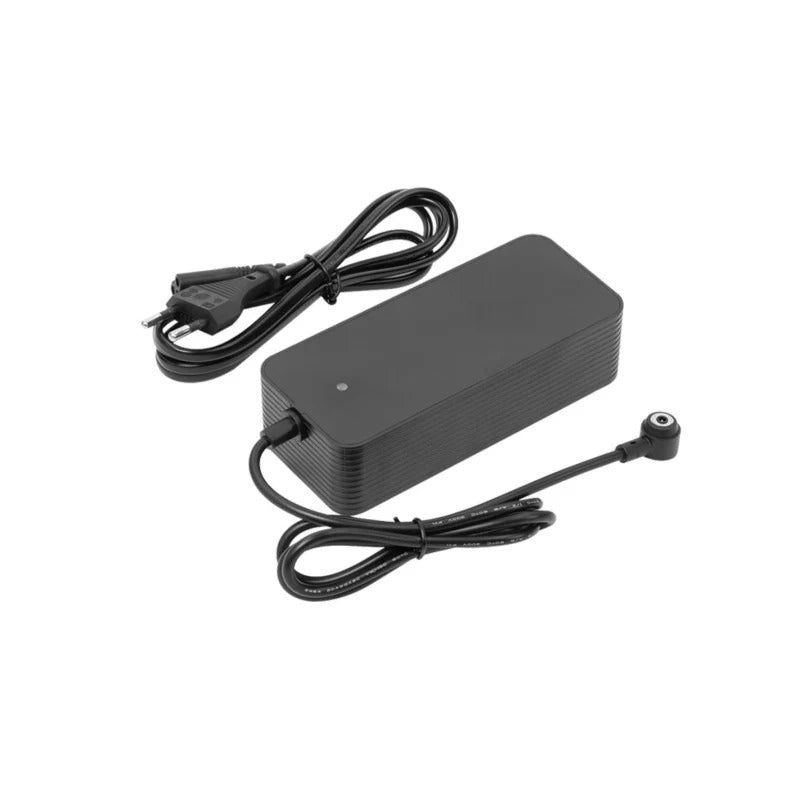
Almost everything can be replaced: tyres, tubes, brakes, charger, controller, motor wheel and battery. The question is what it costs compared with a new scooter. The battery is usually the most expensive part, so get a price for the exact battery for your model before you decide. Some battery repairers can also replace worn cells in the pack.
A simple rule of thumb: if the frame is sound and the repair costs less than half the price of an equivalent new scooter, repairing usually pays off. If you bought the scooter from us, it comes with a 2-year warranty – report the fault to us before you take it to a workshop or replace parts.
What you can fix yourself and when it's time for a workshop is covered in our guide to electric scooter repair. Search for parts by model name in our spare parts portal, and you'll find batteries under electric scooter batteries.
Is it the same for an e-bike?
Largely, yes. An e-bike uses the same kind of lithium battery – the charge-cycle figures above actually come from e-bikes. The difference is that an e-bike also has a chain, cassette and gears that wear, while its bigger wheels usually cope with potholes better than a scooter's small ones. You'll find more care tips and comparisons in our guides.