
Most things that go wrong on an electric scooter give you a warning first. A little play in the handlebar, a brake lever that pulls further than it did last week, a new clicking noise over bumps. Catch it early and you usually avoid both the fall and the expensive repair. E-bikes get their own section further down.
Electric scooter maintenance – what do you need to do?
Mostly quick checks. Squeeze the brakes and look at the tyres before every ride, and check the tyre pressure once a week. Once a month, go over the bolts on the handlebar, folding mechanism and wheel axles, check the brake pads and cables, and look over the charging cable. Clean the scooter with a damp cloth instead of a hose, keep oil away from the brake disc, and leave bleeding hydraulic brakes, noisy bearings and anything inside the battery to a workshop.
Before every ride: a 30-second check
In the user manual for its ES series, Segway-Ninebot tells riders to check for loose fasteners and damaged parts before every ride, and to stop riding straight away if the scooter makes abnormal sounds or signals an alarm. That sounds like a lot, but in practice it takes half a minute:
- Squeeze both brake levers. They should bite firmly well before the lever reaches the handlebar.
- Look at the tyres. Does a pneumatic tyre look a bit flat, or is there a stone or a piece of glass stuck in the tread?
- Hold the front brake and rock the handlebar back and forth. Nothing should knock or wobble at the folding mechanism.
- Switch on the lights and check that the rear light gets brighter when you brake, if your model has a brake light.
- Check the battery level, so you don’t ride the last few kilometres on an almost empty battery.
Schedule: weekly, monthly and before the season
How often you need to do what depends on how much you ride. If you commute every day, the table is a good rule of thumb. If you ride less, you can space things out – but do the big check before every season and after a fall.
| When | What to check | Keep in mind |
|---|---|---|
| Before every ride | Brakes, tyres, play in the handlebar, lights, battery level | Half a minute – see the list above |
| Once a week | Tyre pressure in pneumatic tyres | Air leaks out even when the scooter is standing still |
| Every month | Bolts in the handlebar, folding mechanism, wheel axles and mudguards, brake pads and cables, tyre wear, charging cable and plug | Tighten with feel – not as hard as you can |
| Before the season | Everything above, plus bearings, the cables at the handlebar, the charging port’s rubber cap and software updates in the app | Clean it first – cracks and wear are easier to spot on a clean scooter |
| After a fall or a wet ride | Handlebar, folding mechanism and brakes – and dry it off | After rain: wait until everything is dry before you charge |
Where to find the right pressure for your model, and how to pump up without going over the maximum, is covered in our guide to electric scooter tyre pressure. What happens in the rain, and why charging should wait, is explained in our guide to electric scooters in the rain and IP ratings.
Bolts, stem and folding mechanism
This is the electric scooter’s own weak spot. Small wheels on rough tarmac shake bolts loose, and the folding mechanism is opened and closed hundreds of times a year. A little play in the stem quickly becomes a bigger one – and that’s exactly where you don’t want anything to let go at speed.
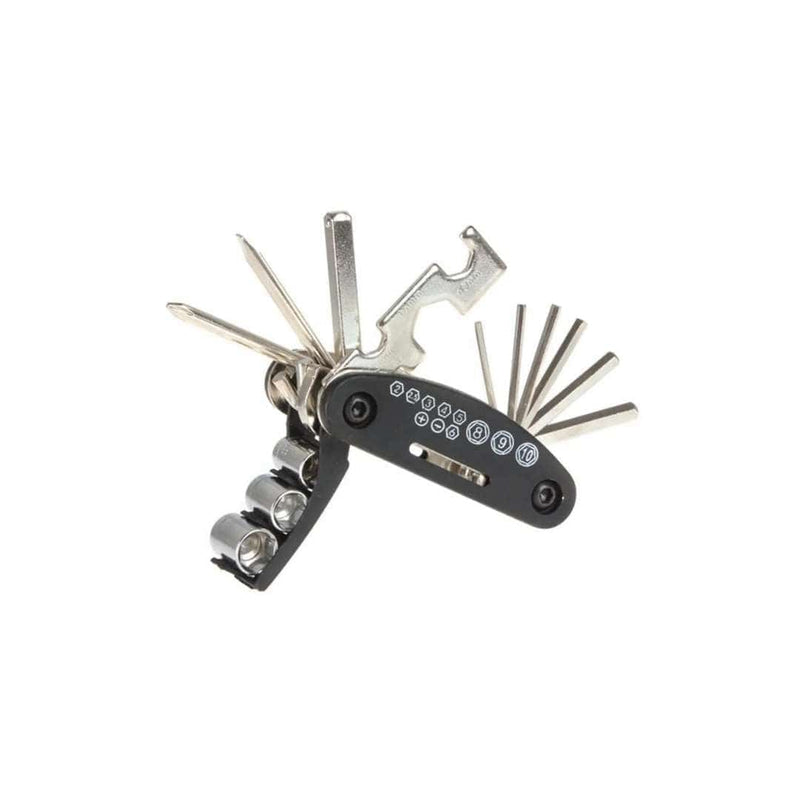
Go over the bolts in the handlebar, around the folding mechanism, at the wheel axles and in the mudguards with an Allen key that fits exactly. Tighten with feel: threads in aluminium can only take so much, and a worn key easily rounds off the bolt head. If the manual gives a tightening torque, a torque wrench is worth the money, and if it says a bolt needs threadlocker, apply fresh threadlocker every time you’ve taken it apart. Multitools, pumps and a brake pad adjustment tool are among our electric scooter tools.
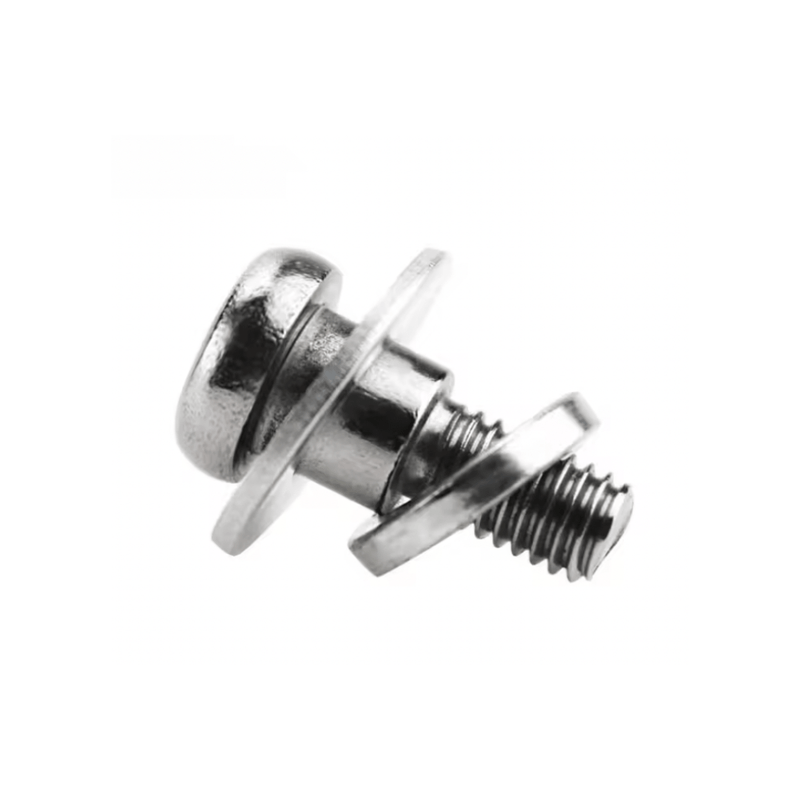
If the play is still there once the bolts are tight, it’s usually a worn locking ring, locking hook or folding latch. Tightening harder won’t help – replace the part. You’ll find the parts under e-scooter folding mechanisms and electric scooter screws, and in the spare parts finder you pick your model and see what fits.
Brakes: feel, listen and look
The brakes are what you should be most careful with, and most problems can be seen and heard in good time. BikeRadar lists the typical signs of worn or contaminated disc pads: weak braking, a loud howl when you brake in the dry, and a lever that travels further than it should.
- The lever pulls further and further. On cable brakes, the cable has stretched or the pads have worn. Unscrew the barrel adjuster at the lever or the caliper a little at a time, half a turn at a time, until the brake bites earlier. Check that the wheel still spins freely without rubbing, and test the brake. If adjusting isn’t enough, it’s time for new pads or a new cable.
- It scrapes or squeals. Look at the pads. If there’s only a thin layer of braking material left, or you hear metal on metal, replace them straight away – otherwise the disc wears too.
- The disc rubs. A rhythmic scraping as the wheel turns usually means the caliper has shifted, or that the disc is bent. Loosen the caliper’s two mounting bolts slightly, squeeze the brake lever, tighten the bolts while you hold it and spin the wheel again. If it still scrapes after a couple of tries, the disc is probably bent and needs to be straightened or replaced.
- Drum brakes. If the brake sits inside the hub, you adjust the cable tension – you don’t open the drum itself.
- Hydraulic brakes. If the lever feels spongy, there may be air in the system. Bleeding them is a workshop job unless you’ve done it before.
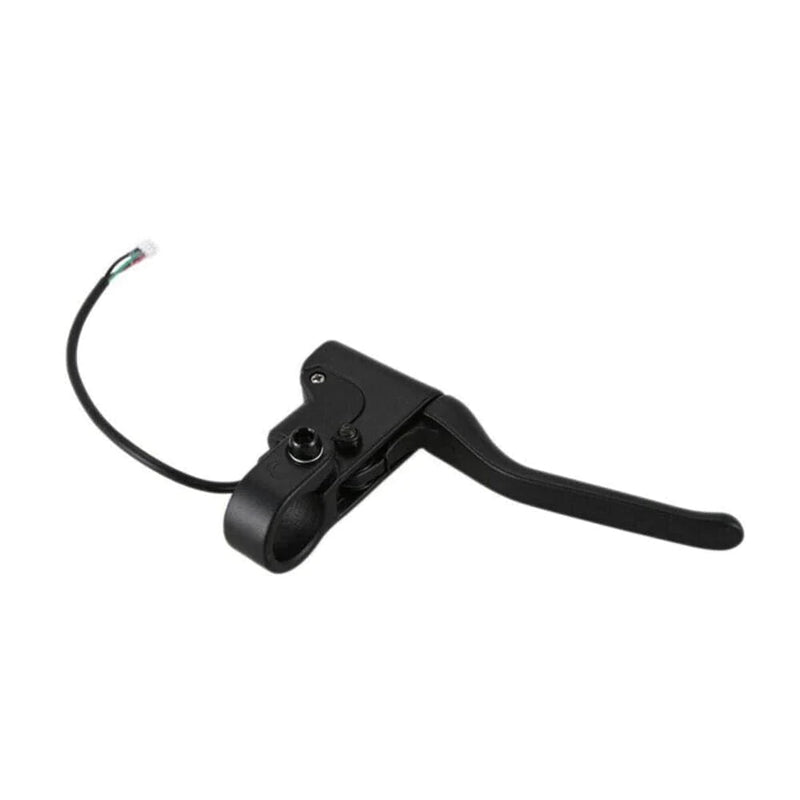
Oil and lubricant never belong on the disc or the pads. Contaminated pads brake worse and often have to be replaced. Always test the brakes after you’ve worked on, cleaned or lubricated anything near them. Pads, cables and brake levers are among our electric scooter brake parts.
Tyres: pressure, wear and what gets stuck
Pneumatic tyres lose air even when the scooter is standing still, and low pressure means both more punctures and less range – more on that in our guide on how to increase your electric scooter’s range. Pump to the pressure in the manual. It should be within the range printed on the tyre sidewall and never above the maximum.
Also look for worn tread, cracks in the rubber, and small stones or glass stuck in the tread – pick them out before they work their way through to the inner tube. Solid tyres don’t need a pump, but they wear like any other tyre. When it’s time for a new tyre or inner tube, our guide on how to change an electric scooter tyre walks you through it step by step. Thinking of switching tyre type? We compare solid and pneumatic tyres in a buying guide.
Cleaning an electric scooter – damp cloth, not a hose
A common way to damage an electric scooter while looking after it is water under pressure. In the same manual, Segway-Ninebot says plainly that the scooter must not be washed with a power washer or a hose, nor with alcohol, petrol, acetone or other solvents. For bikes, BikeRadar warns against a powerful jet wash because the water can force its way past the seals – a bucket or a low-pressure hose is fine there. On the scooter, leave the hose alone. Do this instead:
- Switch the scooter off, unplug the charging cable and check that the rubber cap on the charging port is tightly closed.
- Wipe the frame, handlebar and mudguards with a well wrung-out cloth and a little mild soap.
- Clean connectors and cable entries with a dry cloth or brush.
- Dry it off, let the scooter stand indoors for a while and test the brakes before you ride.
Road salt is a story of its own. How to keep rust away when the roads are slushy is covered in our guide to riding an electric scooter in winter.
Lubrication – a little, in the right places
An electric scooter needs less lubrication than you might think. Wheel bearings and the motor are usually sealed and shouldn’t be sprayed. What benefits from a drop of oil or a little grease is whatever moves freely: the folding mechanism’s hinge and latch, the kickstand spring and the brake lever pivots. Wipe off the excess, because surplus oil attracts dirt.
If the folding mechanism creaks even though it’s lubricated, a worn part is more likely than a dry joint. And keep two things away completely: oil on brake discs and pads, and degreaser in bearings – it dissolves the grease that’s meant to stay in there.
Electrics: battery, charger, cables and app
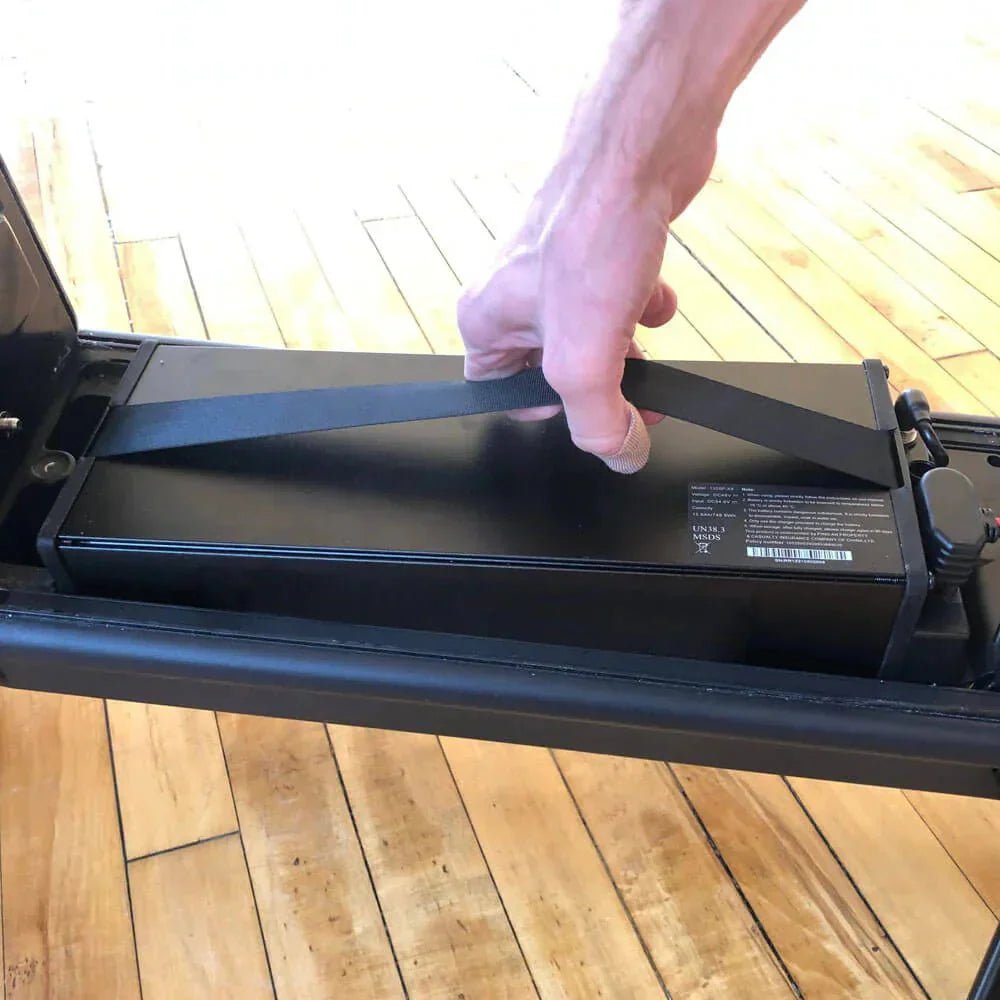
The battery is happiest with good charging habits: around 80% day to day, room temperature and the original charger. How to charge, how to store it over winter and how to tell when the battery is getting tired is covered in our guide on how to charge an electric scooter battery. At the monthly check, look at what sits around the battery:
- Charging cable and plug. Cracks, kinks and scorch marks mean the charger needs replacing. Don’t use it in the meantime.
- The charging port’s rubber cap. If it’s cracked or loose, it lets water in.
- The cables at the handlebar and folding mechanism. They bend every time you fold the scooter, and a chafed spot in the insulation can cause a loose connection.
- Software updates. Many electric scooters and e-bikes get updates through the manufacturer’s app. Check now and then.
An error code is often the first clue. If you have a Xiaomi, the explanations are in our guide to Xiaomi scooter error codes. Never open the battery yourself: Segway-Ninebot warns of a fire risk and says there are no user-serviceable parts inside.
E-bikes: chain, gears and motor
An e-bike is basically looked after like a regular bike, but the motor puts extra force through the drivetrain. BikeRadar points out that the chain, cassette, cranks and freehub wear faster than on a bike without assistance. This is what matters most:
- The chain. Brush off the dirt, lube where the chain runs freely and wipe off the excess. Make sure no lubricant ends up on the brake discs.
- Chain wear. A worn chain doesn’t just skip – it also wears out the chainrings and cassette faster, so check it regularly and replace it in time. Riding in the same gear on the highest assistance level all the time wears it out noticeably faster.
- Washing. Switch the system off, unplug the charger and keep the charging port closed. Use a bucket or a low-pressure hose, never a pressure washer, and don’t wash the bike upside down, so water doesn’t run into the electrics. Whether the battery should come out first differs between manufacturers – follow your manual.
- Motor and battery are not for opening yourself. Updates and troubleshooting of the motor system are done in the manufacturer’s app or at a workshop that works with that particular system.
For the basics, Cycling UK’s maintenance advice has short video guides on adjusting brakes and gears, fixing a puncture and repairing a broken chain. If a wheel is buckled, the gears keep skipping or the brakes don’t bite properly, it’s time for the workshop.
Storage between rides and over winter
Keep the scooter somewhere dry and don’t leave it outdoors for long periods. Sunlight and extreme heat or cold age the plastic parts faster and can shorten battery life, according to Segway-Ninebot. If it has to stand outside, a rain cover is better than nothing, but it won’t make the scooter waterproof. Covers and charging port protectors are part of our electric scooter protection range.
If it’s going to stand over winter: clean and dry it first, leave the battery at around 60% and check the level once a month, just as in the charging guide. Before the first ride in spring, do the full monthly check – the tyres will have lost air over the winter, and the brakes need testing before you head out into traffic.
Common mistakes
- A pressure washer – or a hose on the scooter. Water gets past the seals and into bearings and electronics.
- Oil or spray lube on the brake disc. The brake works worse, and the pads are often ruined.
- Riding on with play in the handlebar. The play grows and wears the folding mechanism even more.
- Tightening bolts as hard as you can. Aluminium threads give way, and bolt heads round off.
- Only pumping when the tyre looks flat. By then the pressure has been too low for a while.
- Ignoring new noises. Clicking, scraping or knocking almost always means something has come loose or worn.
- Opening the battery. There’s nothing inside you can fix yourself, and the fire risk is real.
What to leave to a workshop
If you bought the vehicle from us: report the fault to us first, before you take it in or replace any parts – we can’t cover a repair that was done before we approved the claim. How it works is explained on our warranty page, and all our products come with a 2-year warranty. Keep the original box. If the vehicle needs to be sent in for repair, it must be packed in its original box – we don’t send out new boxes.
You can handle a lot yourself with an Allen key and a pump. These jobs are still worth handing over:
- Hydraulic brakes that need bleeding.
- Bearings that are noisy or have play, in the headset or in the wheels.
- Error codes that come back after a restart, and anything where the motor, controller or battery needs to be opened or repaired.
- After a crash, when you don’t know what took the hit.
- When you’re unsure. Brakes and steering are not the place to learn.
What you can fix yourself, how to find a workshop that takes electric scooters and when it makes more sense to buy new is covered in our guide to electric scooter repair. You’ll find parts for your model in the spare parts finder, and if you’re unsure which part fits, you can ask our customer service.