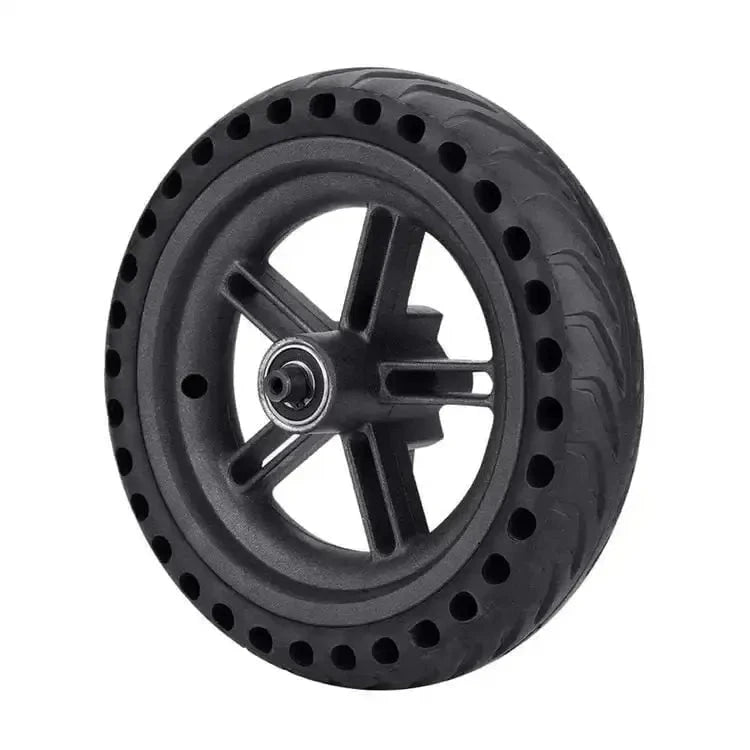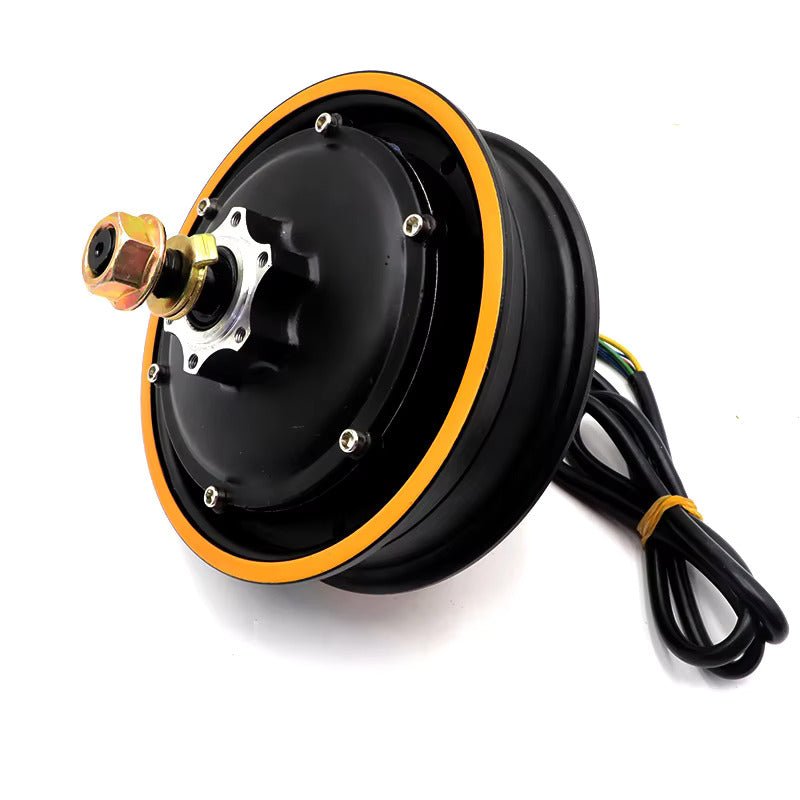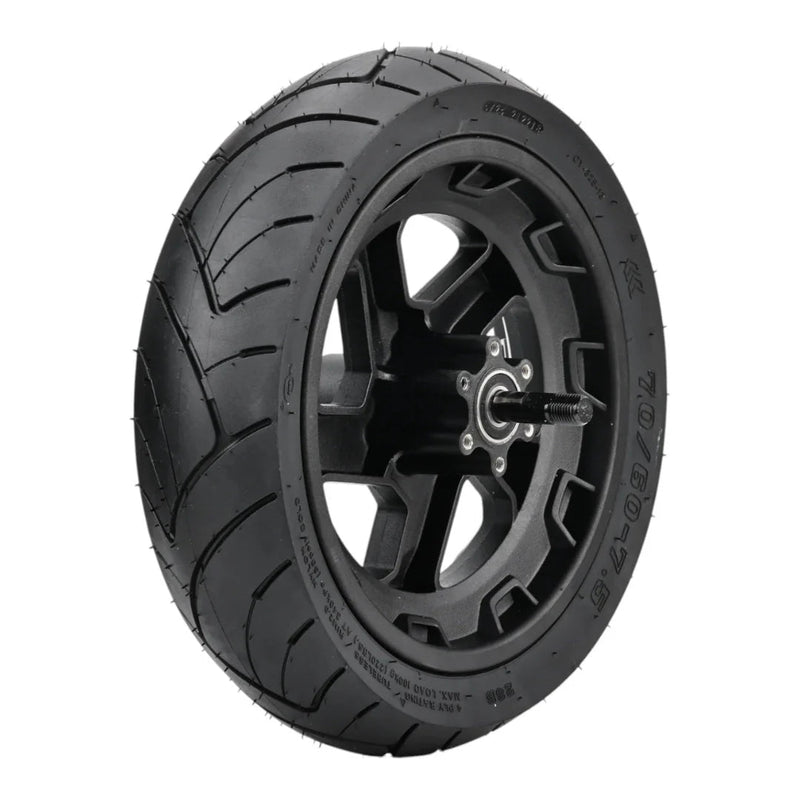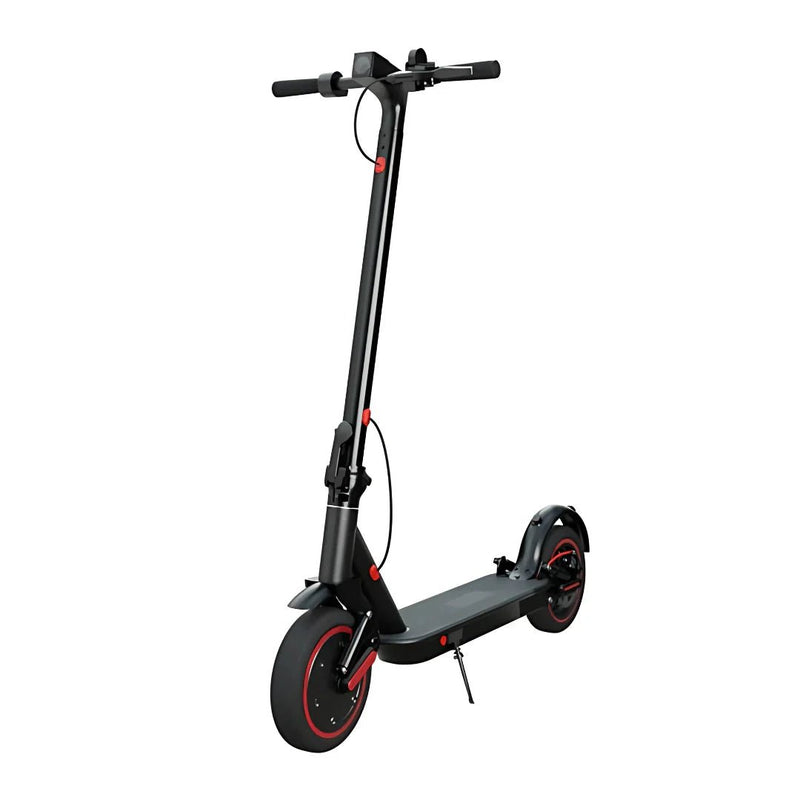

Electric scooter tyre size is one of the most common questions we get when someone is about to change a tyre for the first time. The numbers on the sidewall look like a code, shops mix inches and millimetres, and a tyre that “looks the same” suddenly does not fit the rim. Here we go through how to read the marking, which sizes are common in our range and what decides whether a new tyre will actually go on.
Which tyre size does my scooter have? The short answer
Read the sidewall. It shows either an inch size like 10x2.5 (10 is the outer diameter, 2.5 the width in inches) or a metric size like 90/65-6.5 (90 mm wide, 65 per cent profile, 6.5-inch rim). Most scooters in our range use 8.5, 9, 10, 11 or 12 inches. The rim diameter must match exactly; the width has some leeway.
How to read the marking on the sidewall
Electric scooters inherited their tyre sizes from the bicycle and moped world, so the same three notations turn up. BikeRadar explains that the definitive size is the ETRTO number moulded into every tyre: the width in millimetres, a hyphen and the rim's bead-seat diameter in millimetres. The inch and millimetre figures around it are approximations.
The inch size: 10x2.5, 10x2.125, 8.5x2
The first figure is the tyre's approximate outer diameter in inches, not the rim's – tyre maker Michelin writes in its guide to bicycle tyres that the inch size gives the whole diameter including the tyre. The second figure is the width in inches. Sometimes a third figure follows, 10x2.5-6.5, and that is the rim diameter. ERideHero points out that almost all electric scooters fall between 6 and 10 inches in outer diameter, with exceptions in both directions, and that a bigger wheel buys you ride height, comfort and load capacity while a smaller one keeps the scooter compact. One trap the classic cycling site Sheldon Brown calls Brown's law: two tyres with mathematically identical sizes, one written as a decimal (2.50) and the other as a fraction (2 1/2), are not interchangeable. So read it exactly as it is written.
The metric size: 90/65-6.5
Here the first figure is the width in millimetres, the second the profile height as a percentage of the width and the last the rim diameter in inches, the same reading order Michelin describes for motorcycle tyres. 90/65-6.5 therefore means a 90 mm wide tyre with a 58 mm high sidewall on a 6.5-inch rim, which gives roughly 11 inches of outer diameter. 70/65-6.5 is narrower and lower and corresponds to a 10-inch tyre. Motorcycle tyres use the same logic, which is why the format turns up on the heavier electric scooters.
Other markings
- TL means tubeless, TT that the tyre needs an inner tube.
- The pressure figure, in psi or bar, is the pressure the manufacturer recommends or a maximum. More on that in our guide to electric scooter tyre pressure.
- An arrow shows the direction of rotation on tyres with a directional tread.
- The production date is often a four-digit code, week and year, as on car tyres: 2325 means week 23 of 2025.
Common sizes in our range
| Size | Example models | Tyre type per the specification | Suited to |
|---|---|---|---|
| 7 inch | NAVEE K100 Max | Solid tyres | Light, folding city models |
| 8.5 inch | iScooter W7 | Pneumatic | Short trips on smooth tarmac |
| 9 inch | KuKirin G2 Pro, iScooter W8 (9.3 inch) | Off-road, pneumatic | Mixed surfaces, gravel |
| 10 inch | KuKirin G2, G2 Max, G2 Master and G3 Pro, Ninebot E2 Pro, iScooter i9 Max, iX3, iX4 and W10, NAVEE V25i Pro II, ST3 and G5 | Pneumatic, off-road or puncture-resistant depending on the model | Commuting and all-round use – the most common size |
| 10.5 inch | NAVEE NT5 Max and NT5 Ultra X | Off-road, pneumatic | Commuting on poorer roads |
| 11 inch | KuKirin G4, Ninebot MAX G3 and GT3, iScooter W12 and GX3 Pro | Pneumatic or puncture-resistant | Longer rides, higher speed, rough ground |
| 12 inch | NAVEE XT5 Max, XT5 Pro and XT5 Ultra, iScooter i12 | Pneumatic or off-road | Comfort, stability, rough ground |
Source: Wheelyshop product data (Size and Tyres rows in the specification), November 2026. The size gives the tyre diameter as the manufacturer states it; read the exact size and width on the sidewall. The same model can also have different tyres front and rear, and some models are sold in several versions, so always check both wheels before you order.
Tube, tubeless, solid or honeycomb
The size says nothing about which type of tyre is fitted. Pneumatic tyres with an inner tube are the easiest to repair, tubeless pneumatic tyres seal against the rim and cope with lower pressures, solid tyres never puncture but ride harder, and honeycomb tyres are solid tyres with air channels. ERideHero, which has tested more than 70 scooters, recommends pneumatic tyres for the great majority of riders: in its view solid tyres send every vibration into the frame and grip poorly in the wet, with much longer braking distances, and honeycomb is too stiff to cushion anything. Rider Guide adds that tubeless tyres are usually found on the more expensive models and that mixed set-ups, pneumatic at the front and solid at the rear, are common because the rear tyre carries more weight and punctures far more often. Which type suits you is covered in our guide to solid versus pneumatic tyres. One thing to bear in mind: ERideHero notes that switching from solid to pneumatic on the same rim is often not possible, because rims for solid tyres are built differently.
What decides whether the new tyre fits
- Rim diameter. It has to match exactly, which is why the ETRTO number or the third figure in the inch size matters most. Cyclingnews puts it as the bead diameter needing to precisely match the rim, while the width has some leeway.
- Inner rim width. Sheldon Brown's guideline is that the tyre width should be 1.45 to 2 times the rim's inner width, and BikeRadar's guide to rim width stresses that it is the inner width, where the bead sits, that governs safe compatibility. Too narrow a tyre on a wide rim can come off; too wide a tyre on a narrow rim gets wobbly.
- Clearance. International standards allow for 6 mm of clearance around the tyre against fork and mudguard, according to Cyclingnews. A coarser off-road tyre or a studded winter tyre is both taller and wider than a slick, so you may need to go down a width if you have mudguards.
- The hub motor. On most models the rear wheel is built into the motor, so changing the rear tyre means disconnecting the cable. We describe it step by step in how to change an electric scooter tyre.
- Split rims. Rims bolted together in two halves make the change far easier, and Rider Guide advises looking for them. If the manual says nothing, the bolts around the hub give it away.
- Same size front and rear. Different tyre types front and rear often work, but not all models allow different sizes.

When is it time to change the tyre?
The rear tyre almost always wears first, because it carries most of your weight and does the driving. ERideHero recommends changing when the tread starts to go bald and uses 1 mm of tread depth as a guide value; a worn tyre gives less grip and a longer braking distance, especially in the wet. Age matters too. Tyre maker Michelin describes how a tyre hardens and cracks over time even if it is hardly used, and advises storing tyres cool and dry, out of direct light and away from temperature swings; on an electric scooter that stands outside, the sidewalls usually crack long before the tread is gone. If the casing shows through the tread, or the tyre punctures again and again, it is time.
Tyre pressure – as important as the size
A tyre of the right size at the wrong pressure behaves like the wrong tyre. The principle is simple: higher pressure means easier rolling, less wear and fewer punctures, lower pressure means more grip and comfort, and the right value is on the sidewall or in the manual. In a GPS-measured test, ERideHero found that every psi below the recommended pressure cost roughly 3 per cent of range, and that running 42 per cent too low cost nearly 30 per cent; over-inflating by a fifth gained only a few per cent and made the ride harsh. Too little pressure also lets the tube pinch against the rim on kerbs, the most common puncture on tubed tyres. Check the pressure every other week if you ride daily, and more often when it turns cold.
Common mistakes
- Buying on the inch size alone. “10 inch” comes in several widths and on rims of different diameters. Read the whole marking.
- Mixing fractions and decimals. 2 1/2 and 2.50 are not the same tyre.
- Choosing the chunkiest tyre without measuring. Off-road tread is taller and wider and can catch on the mudguard.
- Forgetting the tube. The valve must fit the hole in the rim and be angled so the pump can reach it past the motor.
- Fitting a solid tyre on a rim made for pneumatic tyres. It often does not work, and the other way round is harder still.
- Riding on old tyres because the tread is still there. Cracks in the sidewall mean a change.
How we handle the question
When customer service gets the question “which tyre fits my scooter?” we always ask for two things: a photo of the sidewall and the model name. Nine times out of ten the photo settles it, because the size is right there. If it is gone, we measure the rim: the diameter where the tyre sits and the inner width between the flanges. Then we ask about the motor: on a rear wheel with a hub motor the cables have to be disconnected for a tyre change, and where the connector sits decides how fiddly the job is, so find that out before you order tools. In our tyres and wheels section the tyres are sorted by size and model, KuKirin owners will find theirs under KuKirin spare parts, and the rest of the parts are in electric scooter spare parts. All spare parts come with a 2-year warranty, and if you are unsure of the size, customer service will help you read the photo.