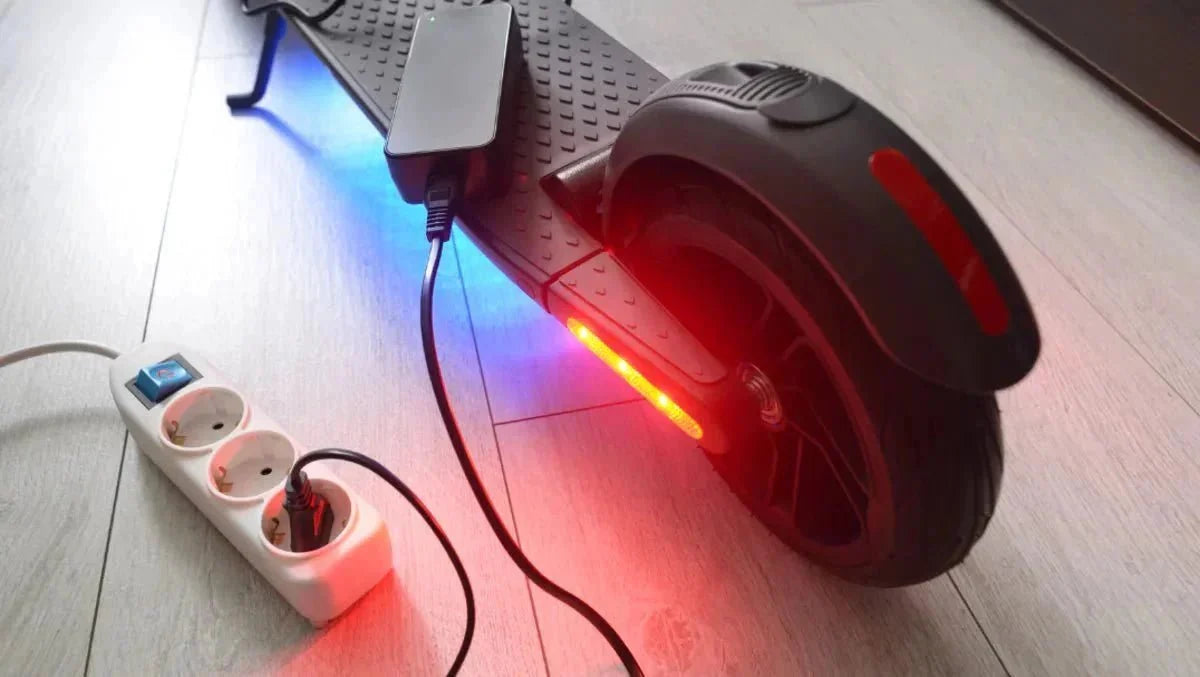

The battery is the most expensive and most sensitive part of an electric scooter. It decides how far you get, how well the scooter climbs and how many years it lasts. Here we explain how an electric scooter battery works, what the numbers on it mean, how long it lasts and when it is time to replace it.
Short answer: how does it work and how long does it last?
The battery is a pack of many lithium-ion cells with a protection system (BMS) that watches over them. Its energy content is given in watt-hours and drives the range. A good pack typically lasts several hundred to around a thousand full charges before range drops noticeably. Heat, sitting fully charged and deep discharge cause the most wear.
Volts, amp-hours and watt-hours explained
The battery label or manual usually shows three figures. Volts (V) are the voltage; higher voltage gives the motor more to work with. Amp-hours (Ah) describe how much charge the battery holds. Watt-hours (Wh) are the stored energy, calculated as volts times amp-hours. As BikeRadar explains, the higher the Wh rating, the more energy the battery can store – so Wh is the figure to compare when you want to know which scooter goes furthest.
| Battery | Energy | Typical use |
|---|---|---|
| 36 V × 7.8 Ah | approx. 280 Wh | light commuter scooters for short trips |
| 36 V × 10 Ah | 360 Wh | everyday city scooters |
| 48 V × 15 Ah | 720 Wh | stronger scooters for longer commutes |
| 60 V × 20 Ah | 1,200 Wh | dual-motor scooters |
| 72 V × 35 Ah | 2,520 Wh | the largest off-road scooters |
These are common combinations in manufacturers’ specifications for scooters in our range. Two scooters with the same Ah do not have the same range: a 48 V 10 Ah battery holds a third more energy than a 36 V 10 Ah one.
Cells, battery packs and the BMS
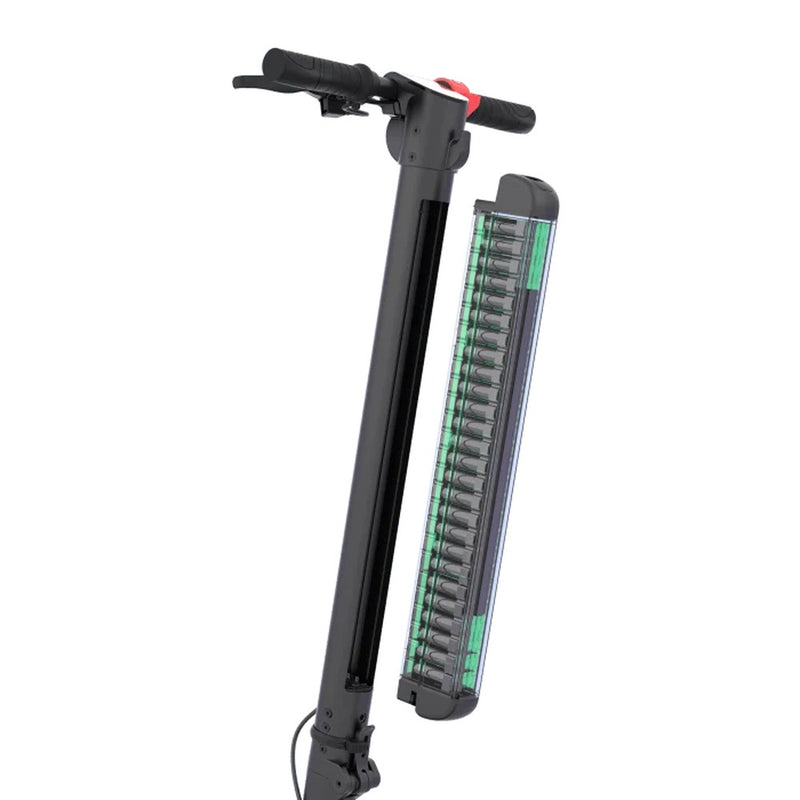
An e-scooter battery is really a pack of dozens of small cylindrical lithium-ion cells. One cell has a nominal voltage of about 3.6 V, so ten cells in series make 36 V. Several of these strings are then connected in parallel to add capacity. Everything is joined with welded nickel strips and sits in a protective case in the deck or stem.
The brain of the pack is the BMS, or battery management system. It measures cell voltages, balances them and cuts power if the battery is overcharged, discharged too deeply, short-circuited or too hot. Cycling UK notes that good-quality e-cycles are more likely to have reliable BMS units that help prevent over-charging and over-discharging – and warns to be wary of cheap batteries with suspiciously high claims for life and charge cycles. When a single cell fails, the scooter can behave oddly and cut out even though the display shows charge left.
Charge cycles and lifespan
A charge cycle is one full charge from empty to full – two half charges count as one cycle. Many lithium-ion packs for light electric vehicles are rated for several hundred to around 1,000 full cycles. After that the battery still works, but capacity has dropped and range is shorter.
A worked example: a scooter with 720 Wh that covers about 40 km per charge in real life will travel roughly 20,000 km over 500 full cycles before range drops noticeably. Riding 10 km a day, that is many years. Cells also age with time even when the scooter is parked, so calendar age counts too. For the scooter as a whole, see our guide to how long electric scooters last.
What wears a battery out
- Heat: according to Battery University, a lithium-ion battery dwelling above 30 °C is at elevated temperature, and heat combined with a full charge ages cells fastest. Don’t leave the scooter in the sun or a hot car.
- Sitting fully charged: Battery University also notes that partial charges and partial discharges reduce stress and prolong life.
- Deep discharge: don’t run the battery completely flat, and never leave it empty for weeks – the cell voltage can drop so low that the BMS locks the pack.
- High currents: full throttle up steep hills with a heavy load stresses the cells. Smooth acceleration saves both range and battery.
- Knocks: hard impacts on the deck can damage cells and welds.
Cold weather and winter range
Cold does not wear the battery the way heat does, but it lowers capacity temporarily, so winter range is shorter. Keep the scooter or battery at room temperature between rides, and let a cold battery warm up before charging. The London Fire Brigade also advises letting batteries cool after use before charging and protecting them from extreme heat or cold.
Signs that the battery is wearing out
- Range is clearly shorter than before in the same conditions.
- The charge indicator drops fast at the start of a ride or jumps around.
- The scooter cuts out under acceleration or on hills despite showing charge.
- The battery gets noticeably warmer than usual when charging.
Swelling, leaks, a cracked case, a chemical smell or hissing sounds are different – they are warning signs. The London Fire Brigade lists a swollen or bulging battery, unusual heat, strong chemical smells and hissing or cracking sounds as signs of a failing battery. Stop using and charging it straight away. Our guide on how to charge an electric scooter battery covers everyday charging habits.
Replacing the battery – when is it worth it?
When range no longer covers your usual trips, it is time to think about a replacement. It is often worth it if the rest of the scooter is in good shape, since the battery is the part that wears fastest. Keep in mind:
- Same voltage: a 36 V system needs a 36 V battery. The wrong voltage can damage the controller.
- Same connector and size: the pack must fit the space and use the same plugs as the original.
- Quality and BMS: choose a battery made for your model, with a working BMS.
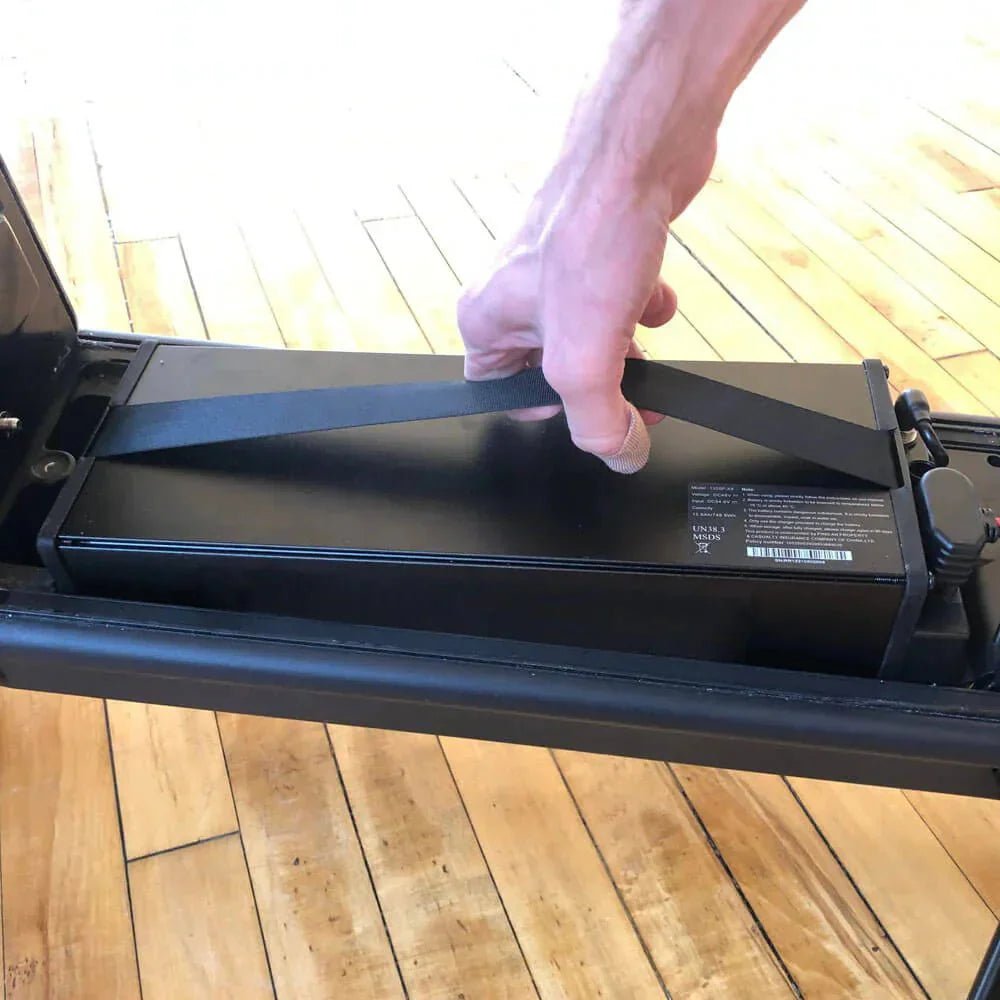
- Removable or built-in: a removable battery swaps in seconds; a built-in one requires opening the deck – use a workshop if unsure.
Replacement batteries and chargers are in our electric scooter battery and charging collection.
Charge safely
The London Fire Brigade advises fitting a smoke alarm where you charge, letting batteries cool after use before charging and never leaving a battery charging unattended or while you are asleep. A battery that has been dropped or damaged should not be used. Read more in our article on electric scooter fire risk.
When the battery is finished: recycling
Lithium-ion batteries must not go in your regular rubbish or recycling bins. The London Fire Brigade explains that they may cause a fire if damaged and recommends checking your local authority’s website for the safe way to dispose of them. Tape over the terminals before you hand the battery in, so they cannot short-circuit.
Common battery mistakes
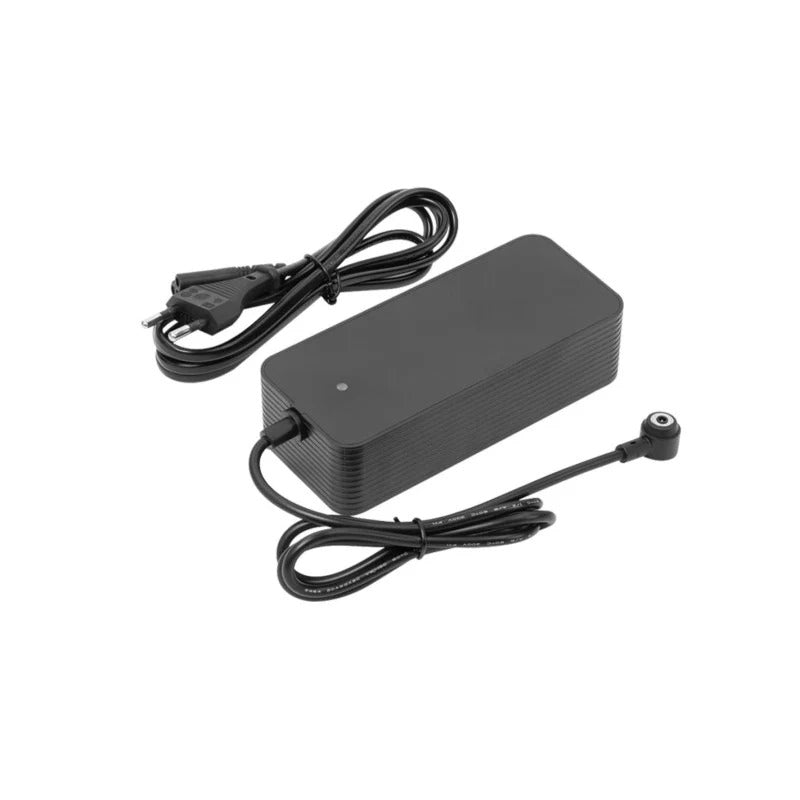
- Using a different charger: use the original charger or one approved by the manufacturer.
- Charging straight after a cold ride: let the battery reach room temperature first.
- Storing it empty or full over winter: aim for about half charge and check the level monthly.
- Comparing Ah instead of Wh: voltage has to be part of the comparison.
- Riding on with a damaged battery: after a hard knock or a cracked case, have it checked.
Habits that make the battery last longer
The habits that matter most are simple. Charge to around 80 percent for everyday riding and fully only when you need the full range. Charge at room temperature and unplug when the battery is full. Accelerate smoothly on hills and avoid running the battery completely flat. Before a winter break, store the scooter dry and cool with the battery about half charged. All electric scooters from Wheelyshop come with a 2-year warranty that covers battery defects – but care decides how many years the battery lasts after that.