
Headlines about electric scooter fires make plenty of riders nervous about charging at home. The risk is small if you look after the battery – but it is not zero, and it helps to know where it comes from.
Can an electric scooter catch fire? The short answer
Yes, but it is rare. The lithium-ion battery can overheat and catch fire, and most fires start while it is charging. The risk rises with the wrong charger, a battery that has taken a knock or one that has swollen. Charge with the original charger on a hard surface, while you are at home and awake.
How often does it happen – and why?
London Fire Brigade points out that most fires involving e-bikes and e-scooters happen while the battery is charging: charging puts the battery under stress, and an incompatible charger or a damaged pack can make it overheat.
At the same time, tests show that a healthy battery can take a lot. ADAC stress-tested the batteries of six e-scooters with rain, cold, vibration and deep discharge – and could not make any of them catch fire. Problems usually start when a battery is damaged or charged the wrong way.
What happens in a fire is called thermal runaway: one cell becomes unstable, its temperature climbs faster and faster and the heat spreads to the next cell. It can go from a little white smoke to open flames very quickly.
The most common causes
- The wrong charger: a charger with a different voltage or current than the battery was built for can overheat it.
- Knocks and falls: a crash, a fall or a hard kerb can damage cells inside the pack without any visible sign.
- Heat: charging straight after a long ride, in strong sun or next to a radiator.
- Modifications: tuned controllers and unknown, unmarked replacement batteries.
- Water: moisture in the charging port or battery casing can cause a short circuit.
How to charge safely at home
- Use the charger that came with the scooter or one made for your model.
- Charge on a hard, flat surface – not on a bed, sofa or rug – and never cover the charger.
- Keep the scooter away from your hallway and escape route.
- Fit a smoke alarm where you charge.
- Never leave it charging unattended or while you are asleep.
- Let the battery cool down after a ride before you plug it in.
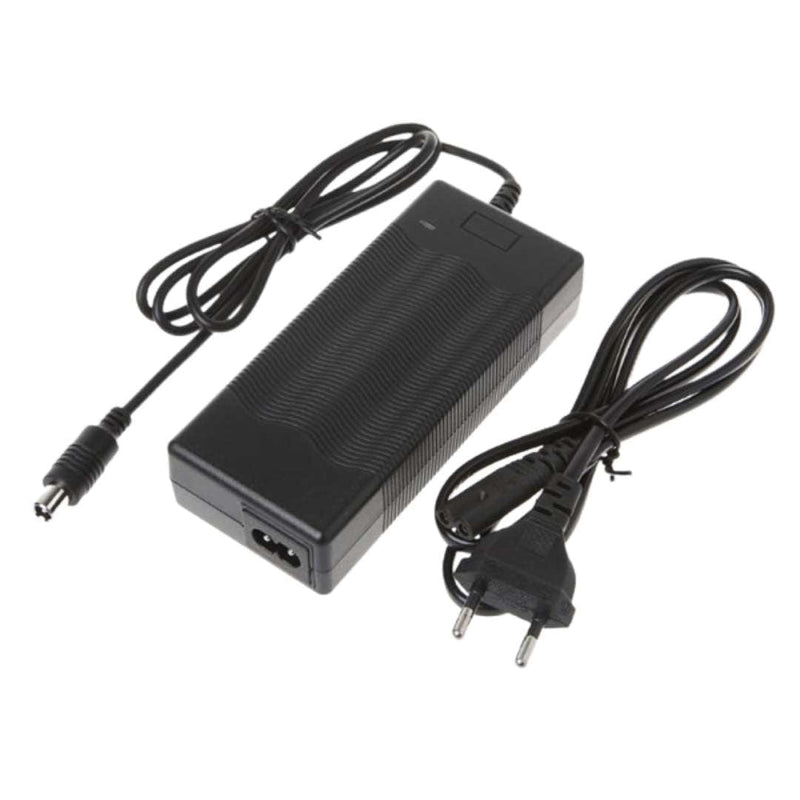
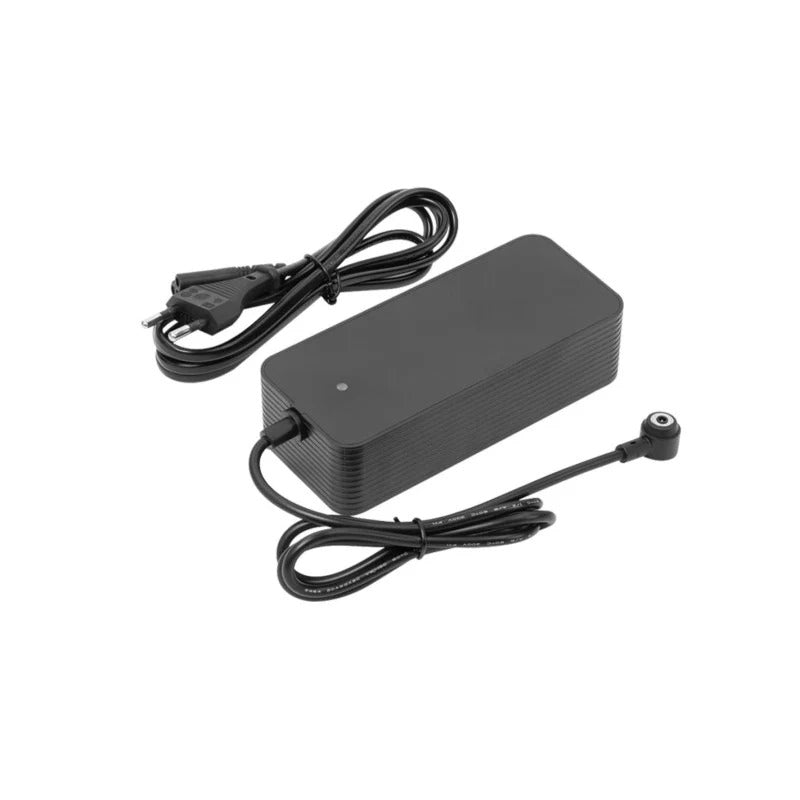
If your charger has broken, replace it with one that suits your exact model – we stock electric scooter chargers. For charging habits that make the battery last longer, read how to charge an electric scooter battery.
Warning signs: stop using the battery straight away
London Fire Brigade lists the warning signs of a failing battery:
- It gets unusually hot when charging or riding.
- The casing is swollen, bulging or cracked.
- It leaks or gives off a strong chemical smell.
- It makes hissing or crackling sounds.
Unplug the charger and do not use the battery again. A swollen battery should not be kept indoors. If it needs replacing, choose one made for your model from our electric scooter batteries, and ask customer service if you are unsure which one fits.
Storage, winter and second-hand scooters
Laying the scooter up for winter? Keep it dry and above freezing, ideally outside your living space, with the battery at around half charge. More in how to store an electric scooter over winter.
Buying second-hand means you don’t know how the battery has been treated. Ask for the original charger and look for damage to the casing – the checklist is in buying a used electric scooter.
If it does catch fire
Don’t try to put out a battery fire yourself. Get out, close the door behind you and call 112. A lithium fire can flare up again after it seems to be out, and the smoke is toxic – don’t breathe it in.