
Is a bike helmet enough on an electric scooter? The answer depends less on what you ride and more on how fast it goes. A helmet that is perfect on a 20 km/h commuter scooter is the wrong choice on a model that pulls away at moped speed. And even the best helmet protects poorly if it sits on the back of your head with the strap undone.
What helmet do you need for an electric scooter?
If your e-scooter tops out at 20–25 km/h, or you ride an ordinary e-bike that assists up to 25 km/h, a good bike helmet marked CE and EN 1078 does the job. If it goes faster, the helmet has to handle more. A speed pedelec is legally a moped in almost every EU country, and that usually means a moped helmet – the Netherlands also accepts a certified speed pedelec helmet (NTA 8776); our guide to electric bike laws in Europe has the details per country. On a fast e-scooter that reaches moped speed, an E-marked moped helmet – ideally a full-face helmet with a chin bar – is the sensible choice too. Bike helmets carry the CE mark, while moped and motorcycle helmets are approved under the UN ECE Regulation 22 and carry an E mark instead.
Helmet by speed – three levels
Go by the highest speed you actually reach, not the one you plan to keep to. An e-scooter that can do 45 km/h goes faster than you think on a long descent.
| You ride | Helmet | Label to look for |
|---|---|---|
| E-scooter up to 20–25 km/h, e-bike with assistance up to 25 km/h | Bike helmet, ideally with rotation protection | CE and EN 1078 – for young children EN 1080 |
| Speed pedelec – e-bike with assistance up to 45 km/h, a moped in most countries | Moped helmet | E mark to ECE 22.06 |
| Fast e-scooter, electric dirt bike and anything else at moped speed | Moped or motorcycle helmet, ideally full-face | E mark to ECE 22.06 (or the older 22.05) |
Not sure which row you belong in? Check the top speed in the manual or on the product page. If you have a fast electric scooter that reaches moped speed, the bottom row applies. For helmets on an electric dirt bike, see our comparison electric vs petrol dirt bike. And on an electric unicycle, many riders switch to a full-face helmet with a chin bar as their speed goes up – see our guide electric unicycle for beginners.
Why a bike helmet isn't enough at moped speed
A bike helmet is built and tested for the knocks you take on a bicycle. The Dutch NTA 8776 standard for fast e-bikes shows how much more is needed once speed goes up: e-bikes are faster and heavier than pedal bikes, which means more impact energy in a crash, so NTA 8776 requires tougher testing than the standard bike-helmet tests, as BikeRadar explains. The faster you go, the more energy the helmet has to absorb.
The small wheels on an e-scooter are easily upset by gravel, potholes and kerbs, and when the front wheel stops dead, you keep going forward. A bike helmet covers the top and sides of your head but leaves your face and chin exposed. SHARP, the UK government's helmet safety scheme, points out that open-face helmets don't give the same face and chin protection as full-face helmets.
There is a downside. A full-face helmet is heavier, warmer and less ventilated than a bike helmet, and you hear less of the traffic around you. On a 20 km/h commuter scooter it's rarely worth it. On a scooter that does 50, the choice is easy.
How to read the label
The label is the one thing you can check yourself before you buy. Here's what the right marking looks like:
- Bike helmet: the CE mark and the standard number – EN 1078, or EN 1080 on a helmet for young children – on a label or sticker inside the helmet.
- NTA 8776: a Dutch standard for fast e-bike helmets. Such a helmet is tested harder than an ordinary bike helmet, but it is not an E-marked moped helmet. If the box says "e-bike helmet" but the label shows neither NTA 8776 nor an E mark, the helmet has at best been tested as an ordinary bike helmet.
- Moped and motorcycle helmet: a fabric label inside, usually on the chin strap, with a large E and a number in a circle – the number shows where the approval was granted, so E11 is the UK and E3 Italy. It's followed by a code that starts with 06 for ECE 22.06 or 05 for the older 22.05, and a letter for the helmet type: J for open-face, P for a protective chin bar and P/J for a flip-front helmet, SHARP explains.
- DOT: this is the US standard, not an ECE approval. A full-face helmet with only a DOT sticker is not an E-marked moped helmet, however solid it looks. The same goes for retro, cosplay and airsoft helmets without an E mark.
Size and fit – how a helmet should sit
A helmet that moves can twist or slide back just when you need it. Do this when you try one on:
- Measure your head with a soft tape held level just above your ears and eyebrows, and compare with the maker's size chart. Between two sizes? Try both – different models suit rounder or longer heads, as Cycling UK points out.
- Turn the dial at the back until the helmet sits snugly without pressing.
- Check the position. The helmet should sit level and cover your forehead, with the front edge one to two finger-widths above your eyebrows.
- Set the straps so they meet in a V just under your earlobes, and tighten the chin strap until only one or two fingers fit underneath, as BikeRadar recommends.
- Test it. Shake your head and try to push the helmet back. It should move with your head and stay put, and your forehead should stay covered.
A full-face helmet should feel snug all round. When you rotate it from side to side, your cheeks should move with the cheek pads, and it shouldn't slip when you tilt it forwards and backwards. SHARP advises keeping it on for a few minutes – pressure points or red marks mean it isn't the right fit. In winter, a helmet with an adjustable dial leaves room for a thin cap or a balaclava, but a thick hat pushes the helmet too high. There are more cold-weather tips in our guide to the electric scooter and e-bike in winter.
Rotation protection and tests – what protects best?
Many bike helmets now have rotation protection such as MIPS – a low-friction layer that lets the helmet slide 10–15 mm in any direction to reduce the rotational forces on the brain in an angled impact. The European standards behind the CE mark don't include a rotational impact test, BikeRadar notes, which is why independent tests are worth a look. The best known is Virginia Tech's star rating, which also measures angled impacts and hits on the rim of the helmet. MIPS helmets dominate the top of its lists, though partly because most helmets now have MIPS – BikeRadar's summary shows the top-rated models. Price isn't the whole story either: when Imperial College London rated 30 popular helmets on the UK market, a £40 helmet performed as well as a £130 one, ETSC reports. Look at independent tests rather than the box.
For moped and motorcycle helmets, the standard makes the difference. ECE 22.06 raised the bar over 22.05 with tests that are closer to real crashes, and SHARP recommends 22.06 if you have the choice. Its own star ratings go further than the standard and are a good independent check when you compare full-face helmets.
Helmet lights – a useful extra
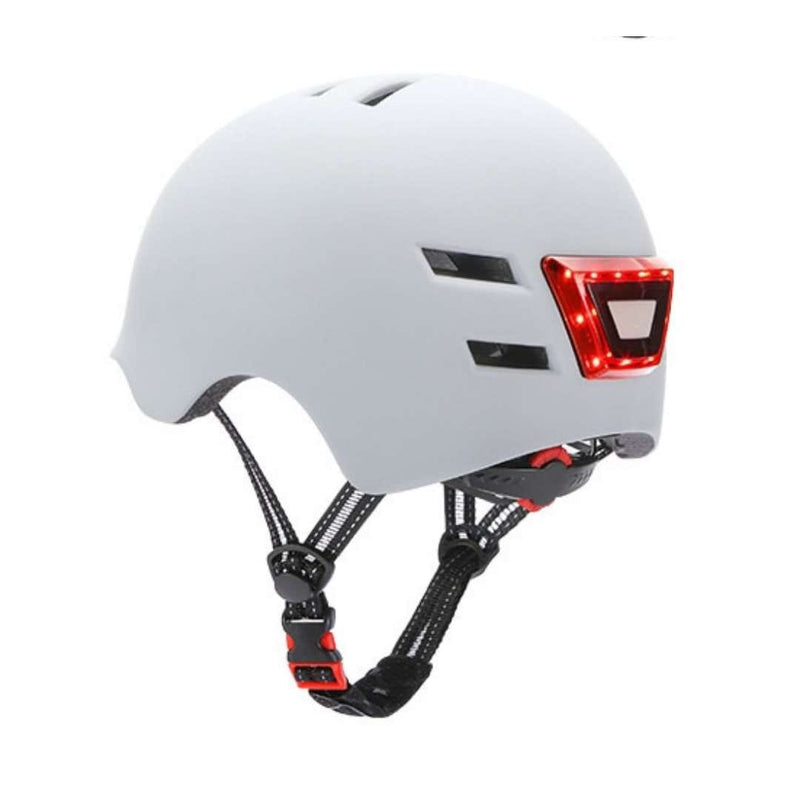
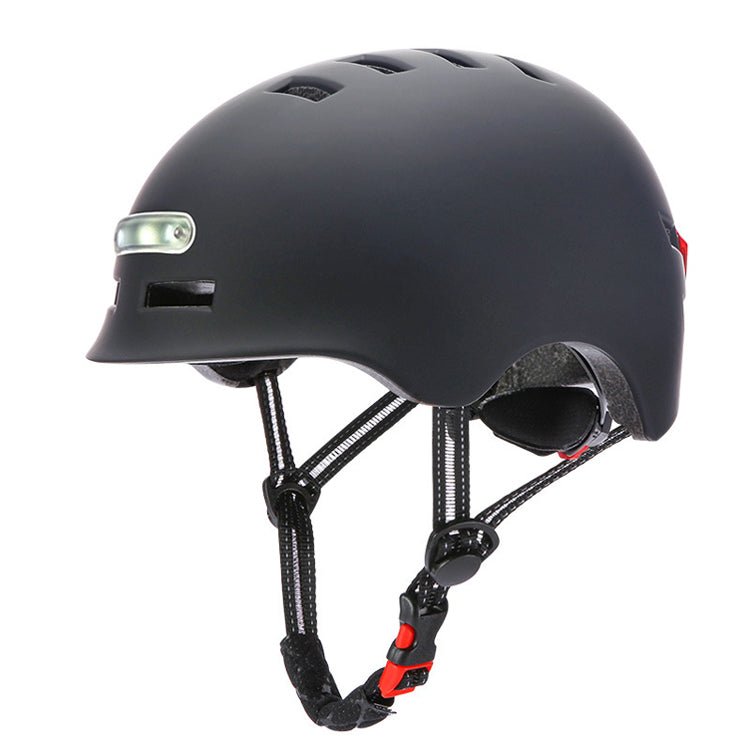
A helmet with built-in front and rear lights sits high and is seen above car bonnets, and a flashing rear light at eye level gets noticed when you wait at a junction. See it as an extra to the lights on your scooter or bike, not a replacement – and keep it charged, because a flat light helps no one. Be careful with clip-on lights and cameras, though: anything fitted to the outside of a bike helmet should snap free in a crash, otherwise it can snag the road and twist your head, Cycling UK warns. Lights and reflectors for the vehicle itself are under lights and reflectors.
When should you replace your helmet?
- After any hard knock, even if the helmet looks fine. The foam that absorbs the impact is crushed and protects less next time, and there may be hairline cracks you can't see.
- When the manufacturer says so. Follow the maker's guidance. Manufacturers typically suggest three to five years for a bike helmet, which Cycling UK calls a fair guideline, and SHARP gives the same range for motorcycle helmets – sooner if you wear yours every day, because the lining compresses and the fit gets looser.
- Don't buy second-hand. You can't know whether a used helmet has been dropped, and the liner moulds to its first owner's head, so it will never truly fit you, SHARP says.
- Don't modify a moped helmet yourself. Only fit accessories that the manufacturer approves for that helmet.
- Watch out with the helmet on the handlebar. If the scooter tips over with the helmet hanging on the bar, the helmet has taken a hit too – SHARP's advice is to replace a helmet that has fallen onto a hard surface as soon as possible.
Helmets for children – the essentials
Helmet rules for children vary between countries – our guide what age can a child ride an electric scooter covers ages and helmets country by country. Young children need a helmet made for them to EN 1080, with a strap designed to release if the helmet gets caught. Buy the right size now rather than one to grow into, and let your child help choose – a helmet they like is easier to get on. Knee and wrist guards are in our safety range.
Common helmet mistakes
- The helmet tipped back with the forehead exposed – an exposed forehead is an unprotected one.
- A loose chin strap because it rubs. The helmet can come off when you fall.
- A bike helmet on a speed pedelec or on an e-scooter that reaches moped speed.
- A full-face helmet that looks like a moped helmet but has no E mark.
- A thick hat under a bike helmet, lifting it too high.
- A children's helmet to grow into.
- A second-hand helmet, or one that has been dropped hard but "looks fine".
- Riding with the chin bar up on a flip-front helmet approved only as P. Only a P/J helmet may be ridden open – and even then it protects like an open-face helmet, SHARP explains.
Not sure about the size, or which helmet suits your model? Get in touch with customer service. You'll find bike helmets among our helmets – check the certification on the product page before you choose.