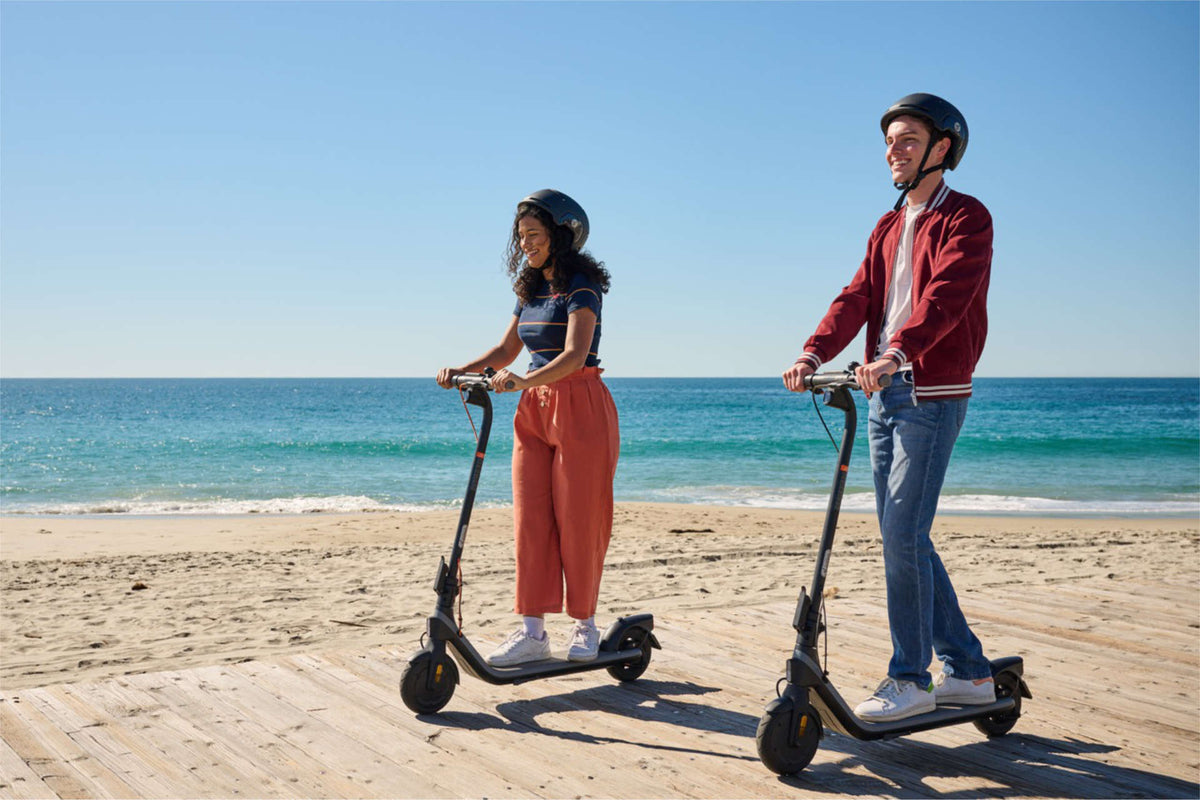

The question usually comes up when a classmate turns up on an electric scooter: is my child old enough, and may they ride it on the street? The answer depends less on the child than on two other things – the country you are in and how fast the scooter goes. Here is what applies across Europe, with the official source for every country.
What age can a child ride an electric scooter?
In most European countries a rider must be 14–16 to use an electric scooter on public roads: 14 in France, Germany and Italy, 15 in Denmark and Finland – and in Spain from 1 October 2026 – and 16 in Belgium, Ireland and the Netherlands. Ireland raises its limit to 18 on 2 October 2026. Sweden and Portugal have no minimum age for e-scooters that count as bicycles, and in Austria children may ride alone from 12. Below the minimum age, an e-scooter belongs on private land. A toy that goes no faster than walking pace is different: several countries, including Sweden, France, Germany and Spain, don’t treat it as an e-scooter at all.
Toy, e-scooter or not road legal – how it’s classed
What counts is how the scooter is built – its top speed and motor power – not what the box says. National e-scooter rules start above 6 km/h, roughly walking pace, and stop at a national limit, usually 20 or 25 km/h.
| Class | Top speed | What it means for your child |
|---|---|---|
| Toy | Up to 6 km/h | Not an e-scooter in countries such as Sweden, France, Germany and Spain. Keep younger children within sight. |
| E-scooter | Above 6 km/h, up to the national limit | The country’s minimum age, helmet and equipment rules apply on public roads. |
| Not road legal | Faster or more powerful than the national limit | Private or enclosed land only, whatever the rider’s age. |
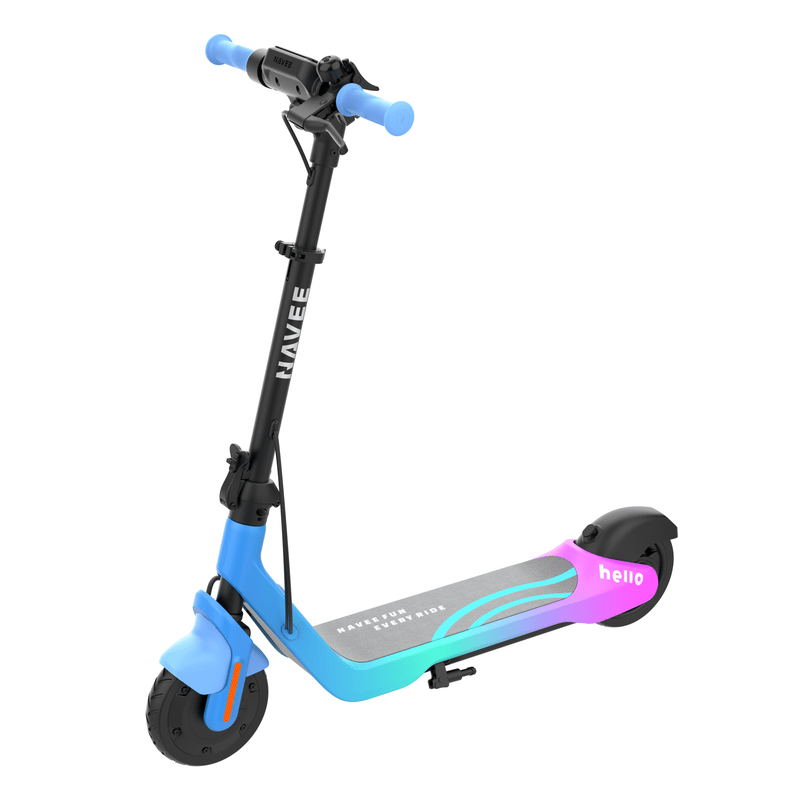
A speed limit set in an app doesn’t change the class – what counts is the speed the scooter is designed for. The e-scooters in our collection of kids’ electric scooters go 14–16 km/h, so in most countries they are e-scooters, not toys, and below the local minimum age they are for private land. The buying guide on the same page helps you choose a model for your child’s age and size.
Minimum age for electric scooters by country
When you travel with the scooter, the rules of the country you ride in apply. Checked against the official sources in September 2026:
| Country | Minimum age on public roads | Helmet |
|---|---|---|
| Austria | 12; younger children only supervised by someone aged 16 or over, or with a cycling licence | Under 16 |
| Belgium | 16; younger riders only on RAVeL greenways and in pedestrian zones | On e-scooters that can exceed 20 km/h |
| Denmark | 15; younger children only with an adult or in signposted play areas | All riders |
| Finland | 15 | All riders by law, but no fine |
| France | 14 | In Paris, several départements and on 80 km/h roads |
| Germany | 14; only models with German type approval (ABE) and an insurance sticker | Not required |
| Ireland | 16; 18 from 2 October 2026 | All riders, with high-visibility clothing |
| Italy | 14 | All riders |
| Netherlands | 16; only RDW-approved models, and most are not approved | Not required |
| Portugal | None | Not required |
| Spain | 15 from 1 October 2026 | All riders from 1 October 2026 |
| Sweden | None for e-scooters that count as bicycles | Under 15 |
Sources: oesterreich.gv.at (Austria), AWSR (Belgium), Færdselsstyrelsen (Denmark), Traficom and the Road Traffic Act, section 92 (Finland), Service-Public (France), eKFV (Germany), Department of Transport (Ireland), ACI (Italy), Rijksoverheid (Netherlands), Código da Estrada (Portugal), BOE (Spain) and Transportstyrelsen (Sweden). Speed limits, insurance and the other EU countries are in our overview of electric scooter laws in Europe.
Helmets: what the law says and how it should fit
The table shows how far apart the rules are: a helmet for every rider in Denmark, Ireland and Italy (and in Spain from 1 October 2026), for under-16s in Austria and under-15s in Sweden, and no requirement at all in Germany, the Netherlands or Portugal. Where it isn’t required, make it a family rule for every ride anyway.
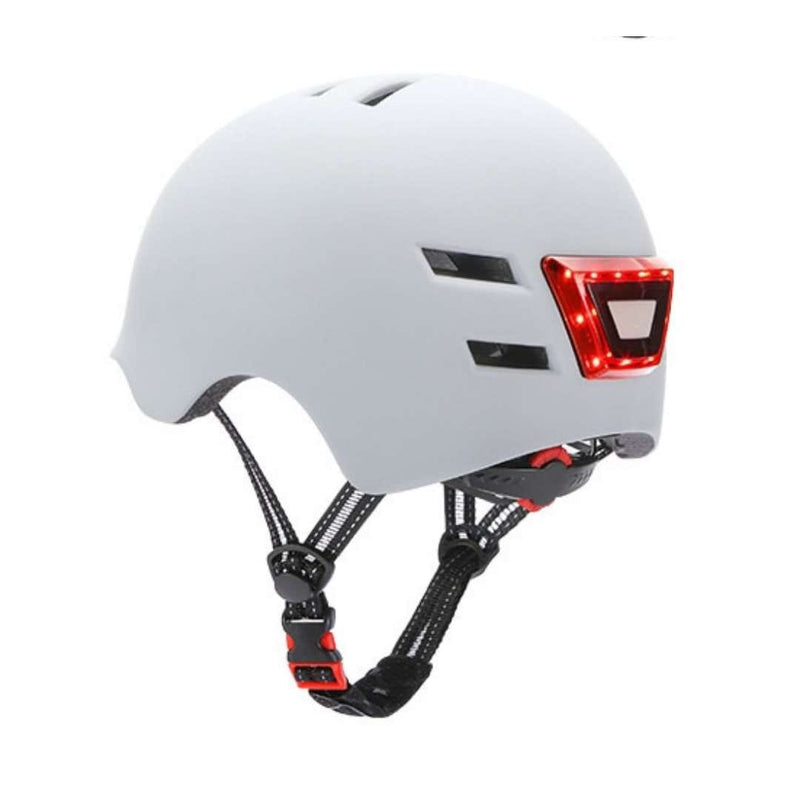
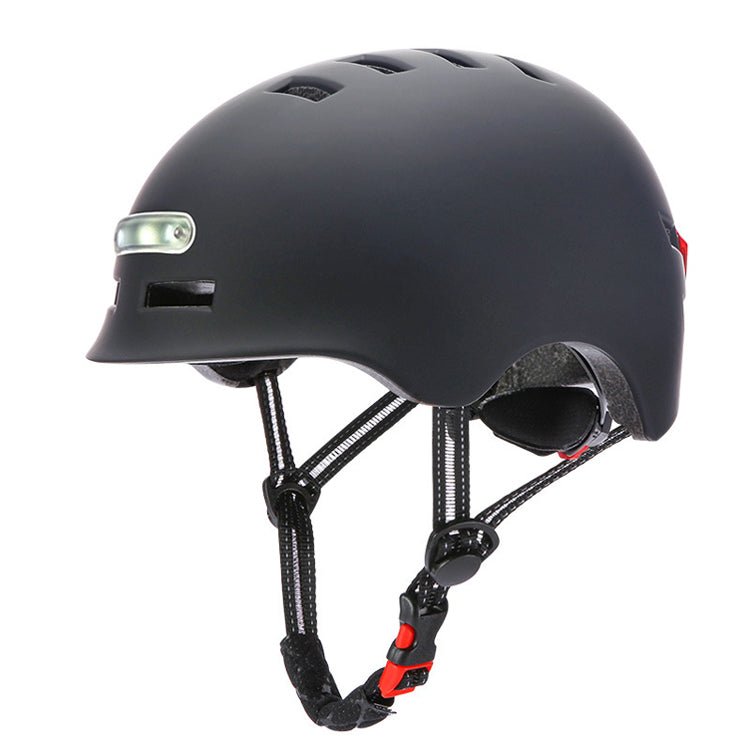
A bicycle helmet certified to EN 1078 – or EN 1080 for young children – is the usual choice, and Italy’s helmet rule names both standards. Fit matters as much as the label. BikeRadar recommends that the helmet sits level with its front one to two finger-widths above the eyebrows, the side straps meet just under the ear lobes and the chin strap is snug, with room for one or two fingers.
You’ll find bicycle helmets among our helmets – check the certification on the one you choose – and knee and elbow pads under safety gear. For sizes and helmet types, see our guide to choosing the right helmet.
Where can children ride an electric scooter?
- Cycle lanes and paths first. Where there are none, riders usually use the road.
- Not on the pavement in most countries.
- One rider only. An e-scooter is built for one person, so never with a sibling or friend on board.
- Below the minimum age, stick to private land away from traffic, such as a closed yard or a private track, with the owner’s permission – unless the country makes an exception for younger riders, as Austria, Belgium and Denmark do (see the table).
Brakes, bell, lights and reflectors
The details vary, but the basics are the same almost everywhere: effective brakes, a bell or horn, and front and rear lights with reflectors for riding in the dark. Denmark requires lights at all times, France requires reflective gear at night, and Spain a light or reflective element at night from 1 October 2026. Before the first ride, go through the scooter together – throttle, brakes, bell and lights. Anything missing can be found among our bells, reflectors and electric scooter lights.
What you are responsible for as a parent
- A scooter that is legal where it’s ridden. A model built for more than the national limit doesn’t become road legal because its speed is capped in an app – it stays on private land.
- Insurance where it’s required. Germany, France, Italy, Spain and the Netherlands require liability insurance for every e-scooter ridden on public roads. More in our guide to electric scooter insurance.
- Rental scooters. Sharing operators set their own minimum age. In Germany, for example, you must be 18 to rent an e-scooter, although you may ride your own from 14 (ADAC Stiftung).
Is your child ready? How to get started
An age limit is a minimum, not a readiness test. Your child should know the basic traffic rules and be able to brake, turn and stop safely before riding in traffic.
- Practise on private ground first: gentle acceleration, braking, stopping quickly and steering around an obstacle.
- Start in the lowest speed mode if the scooter has several.
- Ride the route to school or a friend’s house together before your child goes alone, and talk through junctions and who gives way.
- Make the helmet a rule for every ride, however short.
Rule changes to watch
Spain introduces a minimum age of 15 and helmets for all e-scooter riders on 1 October 2026, and Ireland raises its minimum age to 18 on 2 October 2026. In Sweden, the government has asked the Swedish Transport Agency to propose road safety measures for e-scooters by 13 January 2028. We update this guide when the rules change.
Not sure how a particular model is classed? Ask our customer service.