
Rain is on its way and your electric scooter is standing in the hallway. Can you still ride? The answer is in two places: the IP rating in the specifications and the manufacturer's manual – and the two don't always say the same thing.
Electric scooter in the rain: can you ride it?
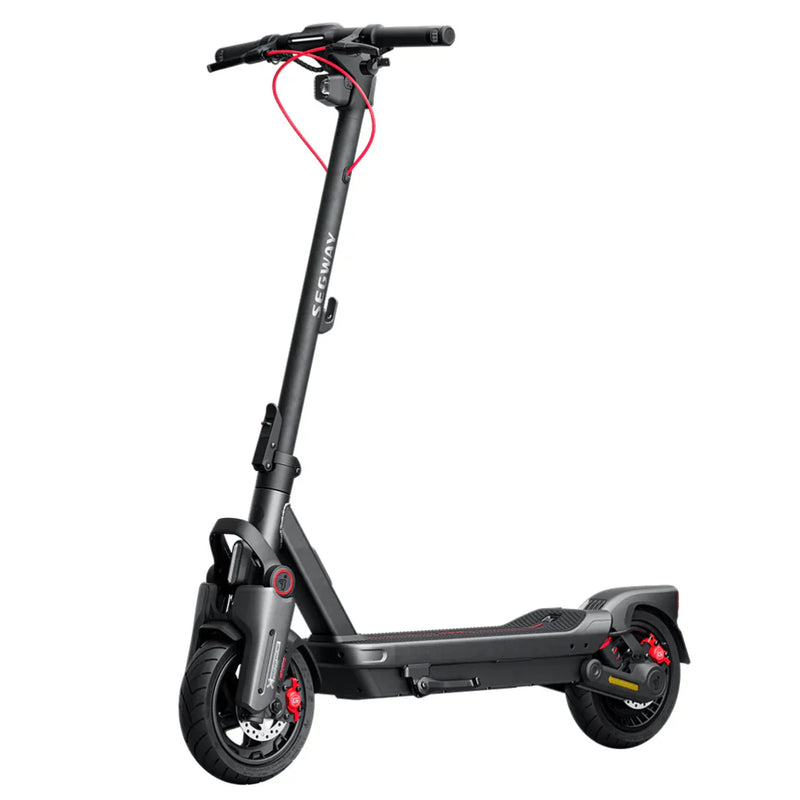
- The manual for your model decides, not just the IP rating. IPX4 and IP54 mean the electronics have passed a splash test in a lab – not that you may ride in the rain. Xiaomi prohibits riding the Electric Scooter 4 Pro Plus (IPX4) in the rain, as does Segway-Ninebot for the ES series (IP54), which should not be ridden on wet roads either.
- IPX5 and IPX6 have been tested against water jets. They can take more, but not riding through deep puddles or hosing the scooter down.
- None of the ratings on our electric scooters, e-bikes and electric unicycles (IPX4 to IP67) is tested for pressure washing, and none protects against the motor or battery ending up under water while you ride.
- After the rain: wipe the scooter down, let it dry at room temperature and only charge it once the charging port is completely dry.
How to read the IP code
The IP code comes from the international standard IEC 60529. It states how well an enclosure protects the electronics against solid objects and water. The first digit covers dust and dirt (0–6), the second covers water (0–9). An X means the manufacturer has not specified a value for that part. So IPX5 says nothing about dust – neither good nor bad.
| Code | What the standard tests | What it means in practice |
|---|---|---|
| 5 (first digit) | Dust-protected: some dust may get in, but not enough to interfere with operation | Copes with gravel paths and dry dust |
| 6 (first digit) | Dust-tight: no dust gets in | The best protection against dust and fine grit |
| IPX4 | Splashing water from any direction, about 10 minutes | Withstands splashing in the lab test – that does not mean you may ride in the rain. Follow the manual and avoid standing water. |
| IP54 | Dust-protected + splashing water from any direction | Same water protection as IPX4, plus a specified dust rating |
| IPX5 / IP55 / IP65 | Water jets from a 6.3 mm nozzle, 12.5 litres per minute, at a distance of 3 metres, for at least 3 minutes. IP65 = dust-tight + water jets. | Takes more water than IPX4, but the manual decides whether you may ride in the rain. Not made for deep puddles. |
| IPX6 / IP56 | Powerful water jets from a 12.5 mm nozzle, 100 litres per minute | Stronger water protection than IPX5. The manual still decides whether riding in the rain is allowed. Never pressure-wash the scooter. |
| IP67 | Dust-tight + temporary immersion, 1 metre for 30 minutes | Tested under water, but not necessarily against water jets. |
Two things are easy to miss. The scale is not cumulative above 6. Under the standard, a product rated IPX7 does not have to pass the IPX5 or IPX6 tests, because immersion and water jets are different tests. If a product passes both, it is marked with a slash, for example IPX5/IPX7. The test is done in a lab with fresh water, on a new product and for a limited time. It says nothing about salty water from winter roads, hours in a downpour or a scooter with a few years and a few repairs behind it.
How much rain can your electric scooter or e-bike take?
The electric scooters, e-bikes and electric unicycles in our range are rated anywhere from IPX4 to IP67. You will find the rating in the specifications on every product page for electric scooters, e-bikes and electric unicycles. Three things decide how much rain your vehicle can actually take:
1. What the manual says
The manual carries more weight than the IP code. Xiaomi, for example, states that the Electric Scooter 4 Pro Plus is rated IPX4 but must not be ridden outdoors when it rains. Segway-Ninebot's manual for the ES series says you should not ride in the rain or through puddles. A higher IP rating does not automatically mean you may ride in the rain: even for the Electric Scooter 5, rated IPX5, Xiaomi says not to ride in bad weather such as rain. Read the manual for your particular model and follow it – it is also the user guide the warranty is based on.
2. Which parts the rating covers
Sometimes the IP rating applies to the whole vehicle, sometimes only to the battery or the motor. "Battery IP67", for example, does not mean that the display, throttle or connectors can take as much. Check whether the figure covers the whole vehicle.
3. How old the scooter is
Seals dry out, screws work loose and a cable can get a small chafe mark. Water protection can deteriorate over the years and every time a housing has been opened. Check rubber plugs, the charging port cover and cable entries now and then, and replace anything that has cracked.
E-bikes and unicycles: e-bikes are often ridden all year round, and Bosch describes them as robust, even in winter. Bosch still rules out pressure washing, because water can get into the bearings of the motor and hubs. On an electric unicycle, the motor and battery sit in the same wheel that takes all the road spray, so ride around puddles there too. Follow the manufacturer's limits.
How to ride an electric scooter in the rain
Water protection is about the electronics. Getting there safely yourself matters at least as much:
- Slow down and brake earlier. Braking distances get longer on wet surfaces, and small wheels have a small contact patch. Brake gently with both brakes and not in the middle of a bend.
- Watch out for surfaces that get slippery. Painted lines, manhole covers, tram rails, metal plates and wet leaves. Ride straight over them without braking or turning.
- Ride around puddles. You can't see how deep they are or whether there is a pothole at the bottom – and that is where the water reaches the motor and connectors.
- Be seen in the dark and rain. Switch your lights on during the day too and wear reflectors. If you need a brighter lamp, take a look at our electric scooter lights.
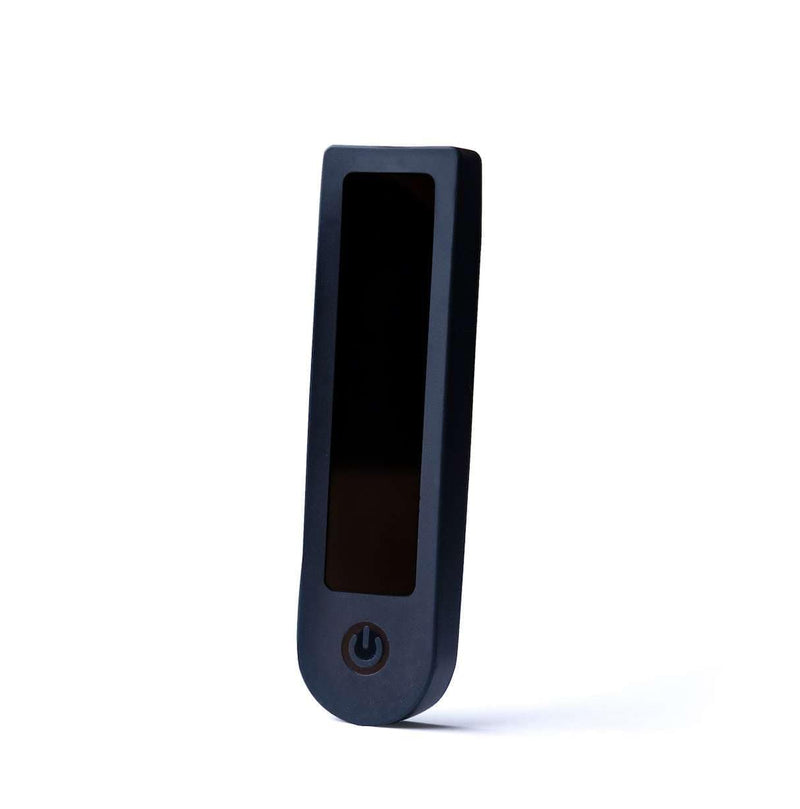
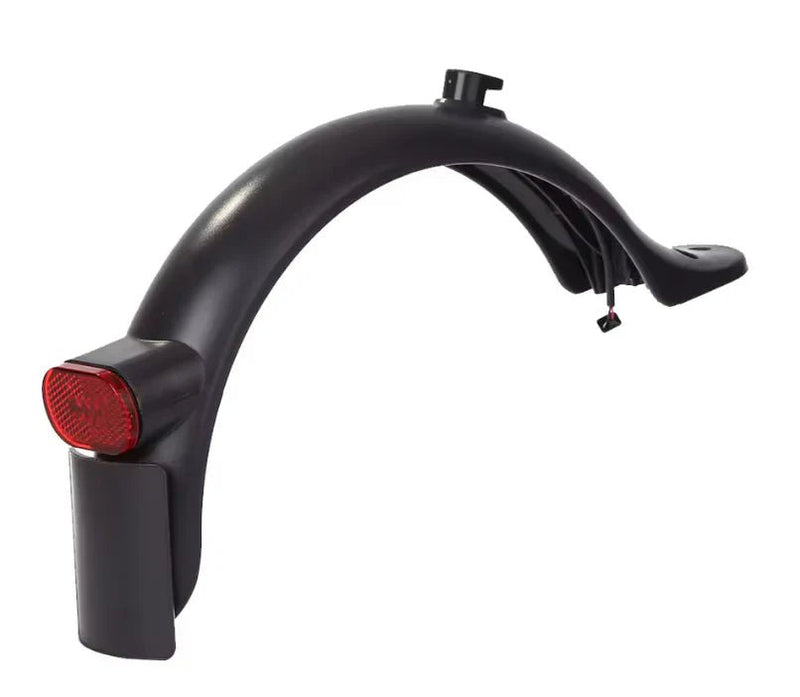
- Protect the most exposed parts. A mudguard reduces the water spraying up onto the deck. Our electric scooter protection range includes rubber covers for the charging port, rain covers and battery protection. Gloves give a better grip on the handlebar – see our electric scooter gloves.
- Expect a shorter range. Wet surfaces, wind and cold use more power. You'll find tips in our guide on how to increase your electric scooter's range. An extra charge only costs a few cents – see how much it costs to charge an electric scooter.
If it is pouring down or water is standing in the street, wait or take another route. No IP rating is built for riding through a flooded underpass.
After the rain: dry, wait, charge
- Wipe down the scooter with a soft cloth. Start with the display, throttle and brake levers, folding mechanism and charging port.
- Let it dry indoors at room temperature. Stand it upright so that water can drain out, and not directly against a radiator.
- Only charge once the charging port is dry. Charge in a dry place and never connect the charger to a wet port.
- Wash without high pressure. Bosch says pressure washers and steam cleaners are an absolute no-go for e-bikes, because water gets into the bearings and the motor. Use a sponge, mild soap and lukewarm water. Remove the battery first if you can.
- Rinse off road salt in winter with a little water and dry the scooter afterwards. Salt corrodes connectors, screws and brake discs.
- Test your brakes in the first few metres next time. Wet discs and pads grip less until they have dried.
Signs that water has got in
The display fogs up, the lights flicker, the scooter switches itself off, the throttle stutters or an error code appears. On Xiaomi scooters, for example, a communication fault between the display and the controller shows up as error 10 – see our guide to Xiaomi scooter error codes. If that happens, switch the scooter off, let it dry thoroughly at room temperature, ideally overnight, and start it again. Never open the battery yourself. If it smells burnt, or the battery is swollen or hot, put it somewhere safe and contact us. Damaged parts such as cables, chargers or displays can be found in our spare parts portal.
Water damage and the warranty
All our products come with a 2-year warranty. It covers manufacturing and material defects, including in the battery, motor, controller and display. It does not cover moisture or water damage caused by exposure beyond the conditions the model is designed to withstand – riding through deep water or pressure washing, for example. Contact with moisture does not in itself void the warranty. We assess whether the moisture caused the specific fault you report. Read the full terms on our warranty page, and contact us if you are unsure what your model can take.
Electric scooter in the rain: frequently asked questions
Can you ride an electric scooter in the rain with IPX4?
Not necessarily. IPX4 means the electronics have passed a splash test in a lab, not that you may ride in the rain. Several manufacturers prohibit riding in the rain at this level – for example Xiaomi for the Electric Scooter 4 Pro Plus (IPX4) and Segway-Ninebot for the ES series (IP54, same water protection). Follow the manual for your model.
What is the difference between IP54 and IPX4?
The water protection is the same: splashing water from any direction. IP54 also has a specified dust rating (5 = dust-protected). In IPX4, the X means that no dust rating has been specified.
Is IPX5 waterproof?
No. IPX5 means the scooter has withstood water jets for at least three minutes in a lab test. It is water-resistant, not waterproof. Don't ride through deep puddles and never pressure-wash it.
Can I charge my electric scooter straight after riding in the rain?
No, wait until the scooter and the charging port are completely dry and at room temperature. Wipe the port dry and charge in a dry place.
Does the warranty cover water damage?
The 2-year warranty covers manufacturing and material defects. Damage caused by exposing the scooter to more water than the model is designed to withstand is not covered. Contact with moisture does not in itself void the warranty – we assess each case.