
Everyone who has tried an electric unicycle remembers the first time: the wheel wants to go forwards, your legs want to go their separate ways and your hands search for handlebars that aren’t there. It passes, and usually faster than you think. But the wheel you start on and how you plan your first sessions decide whether it becomes your favourite ride or an expensive thing in the hallway.
Which electric unicycle should a beginner choose?
The best electric unicycle for beginners is a light 14–16-inch wheel without suspension, built for your weight with a margin and able to run slowly at first. It weighs around 13–20 kg, can be carried and forgives clumsy first attempts. Leave heavy suspension wheels for later: they are hard to lift and to hold when you step off.
What riding an electric unicycle feels like
You stand on two pedals, one on each side of the wheel, with your calves against its sides. Lean forwards and the wheel speeds up to keep its balance; lean back and it slows down. The wheel looks after balance front to back – side-to-side balance is up to you, just like on a bike. You turn by twisting your head, shoulders and hips the way you want to go and pressing slightly differently with your feet.
What takes getting used to is that there is nothing to hold on to. No handlebars, no brake lever, no throttle – everything goes through your body. That is why the first attempts often feel harder than expected, even if you ski or skateboard. Once it clicks, many riders compare the feeling to surfing or snowboarding on tarmac.
Your first wheel: weight matters most
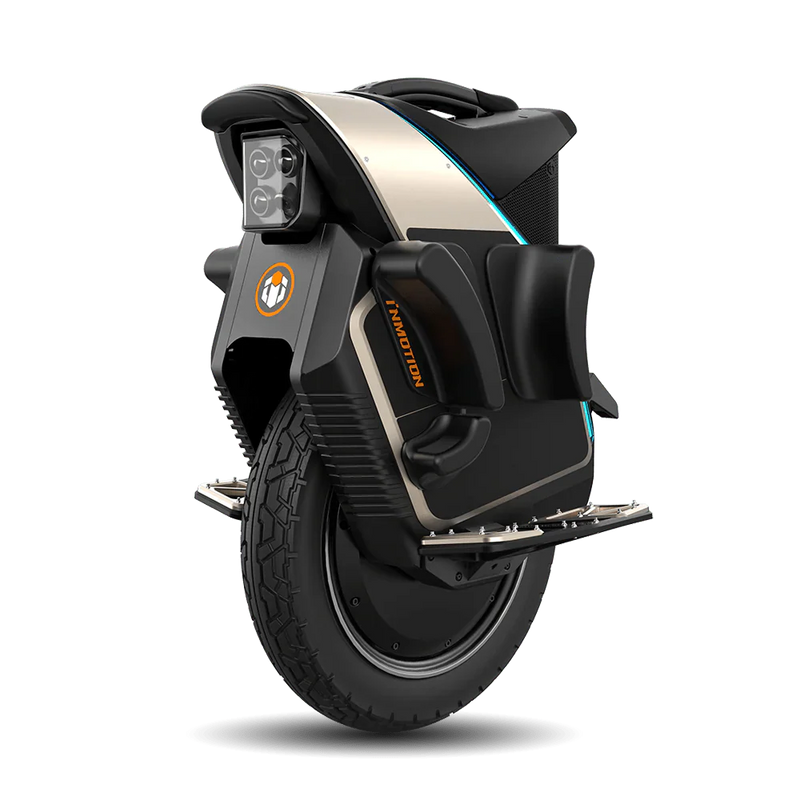
Tyre size affects how the wheel feels: smaller wheels are nimble and forgiving to learn on, larger ones roll more calmly over bumps. But it is the class – battery, motor, suspension – that decides the weight. The InMotion P6 has 14-inch tyres but weighs over 50 kg. Weight is what beginners underestimate most: you will lift the wheel, stand it back up after every dismount and carry it up stairs, many times per session.
| Type and examples in our range | Wheel and weight | Good for |
|---|---|---|
| Beginner wheels InMotion E20, InMotion V8S, Begode A2 | 14–16 in, approx. 13–20 kg | Learning, short rides, taking it along |
| Wheels with suspension InMotion V9, V11Y and V12S | 16–18 in, approx. 23–35 kg | Longer rides and rougher surfaces once you can ride |
| Heavy performance wheels Leaperkim Patton-S and Sherman-L, InMotion V14 and P6, Kingsong F22 Pro, Begode Race | 14–20 in, approx. 36–51 kg | Experienced riders and long rides |
The weights come from the specifications on our product pages. You’ll find the whole range among our electric unicycles.
The InMotion E20 is a special case. It has two 14-inch tyres side by side on the same hub, which makes side-to-side balance easier, and a 7 km/h beginner mode that you unlock to 15 and 20 km/h in the app. The price of that stability is that it doesn’t turn as tightly as a regular unicycle, as New Atlas found in its review of the E20. If you’d rather skip most of the balance training, the Ninebot Mini Pro 2 is in the same collection – but it has two wheels and a knee bar, so it isn’t a unicycle.
Speed, range and rider limit – what matters at first
The top speed on the spec sheet is the least important figure for a beginner. What counts is how much headroom the wheel has at the speed you actually ride. A more powerful wheel has more in reserve on climbs and when braking, but it weighs more. In the first weeks you will be riding at walking to jogging pace anyway. Whether an electric unicycle counts as a bicycle, a personal light electric vehicle or something else depends on the country and the speed it is built for – we cover it in our guide to electric scooter insurance in Europe.
Range is rarely the issue at first, because the sessions are short. Look at the rider limit instead. The lightest wheels are often built for lighter riders: according to the manufacturer, the InMotion E20 takes a maximum of 90 kg, and the Begode A2 is built for 100 kg. If you are close to the limit, or ride with a backpack, choose a wheel with a margin – the wheels with suspension in the table take 120–140 kg. Once you ride further, the same rules of thumb apply as for an electric scooter: speed, weight, cold and hills eat into the range. More on that in how to increase your range.
Protective gear from the very first session
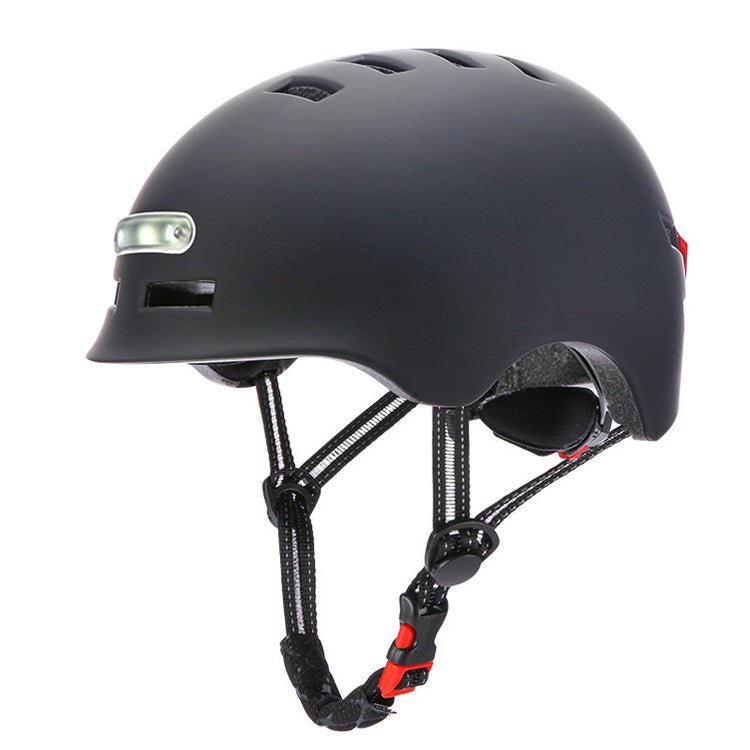
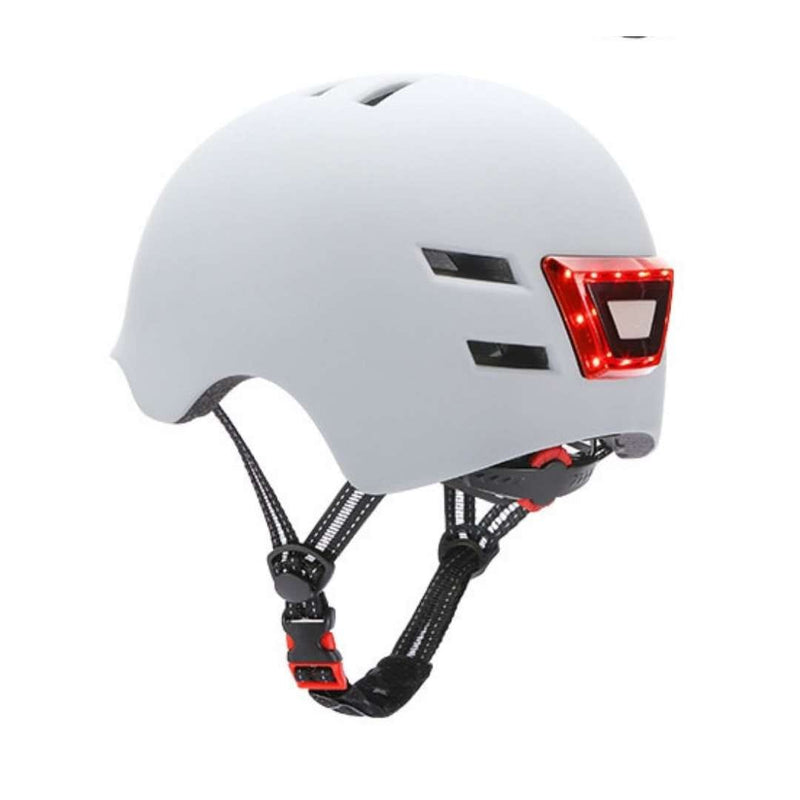
This one isn’t up for negotiation. On a unicycle there is nothing to hold on to when things go wrong, and if you step off forwards you usually land on your hands and knees. A helmet, wrist guards and knee pads are the minimum, and elbow pads are a sensible addition. Bear in mind, too, that a single tyre has a small contact patch and loses grip quickly on anything slippery. As speeds go up, many riders move to a full-face helmet with a chin bar, and on the heavy, fast wheels a full-face helmet approved to the motorcycle standard ECE 22 is the sensible choice.
A helmet should fit snugly and be replaced after a hard knock. If you want to compare how well different bike helmets protect, BikeRadar goes through the independent Virginia Tech ratings in its guide to the safest bike helmets. Sturdy shoes with good grip, ideally high-tops, protect your ankles.
Bike helmets for your first calm sessions are among our helmets – check the certification on the one you choose. Knee, elbow and wrist guards are under safety.
How to learn to ride – step by step
- Charge fully and read the manual, especially what the beeps and warning lights mean. If the wheel has a beginner mode or a speed limit in the app, set it low.
- Find a flat, smooth, closed-off area with no traffic or people, where you are allowed to ride – for example a fenced practice area or a sports hall. Avoid gravel, leaves and slopes.
- Put one foot on the pedal and keep the other on the ground, with one hand on a wall, a railing or a friend’s shoulder. Feel how the wheel responds when you press lightly with your toes and heel.
- Step up straight, without leaning forwards. Put your weight on the pedal foot and bring the other one up quickly. If you crouch and lean on the wheel, it often rolls off before you are ready.
- Roll along the wall a few metres at a time. Eyes ahead, not on your feet, and knees slightly bent.
- Let go of the support once you can roll straight. Just like on a bike, balance is easier with a little speed than at a crawl.
- Practise stopping. Lean back slowly until the wheel almost stands still, put one foot down and step off.
- Turns come last. Turn your head and shoulders where you want to go and press slightly differently with your feet, and the wheel follows.
How long does it take? Expect an hour or so before your first metres without support, and anything from a few days to a few weeks before it feels natural. Several short sessions do more than one long one – at first you tense your legs hard and tire quickly. Two tricks save both the wheel and your toes: switch the wheel off before you lift it, because a wheel that is switched on can start spinning when it leaves the ground, and use a safety strap on the handle so the wheel doesn’t run off when you step off.
Common beginner mistakes
- Too heavy a wheel straight away. A heavy performance wheel is hard to stand back up and takes more of a beating every time it falls over.
- Looking at your feet. You go where you look. Look ahead.
- Stiff legs. Keep your knees soft and let your ankles work – that lets the wheel move beneath you.
- Noise-cancelling headphones. The wheel warns you with beeps. You need to hear them.
- Gravel, wet leaves and wet cobbles too soon. Wait until you can stop and turn without thinking.
- Skipping the protective gear once it starts going well. Many falls happen when you have become a little too confident.
Beeps and pushback – when the wheel says stop
An electric unicycle can’t deliver more power than its motor and battery can handle. As you approach the limit – high speed, a steep hill, a low battery or leaning too far forwards – the wheel warns you with beeps, and many wheels also raise the front of the pedals so that you straighten up and slow down. This is called pushback or tiltback.
Take the warning seriously and slow down straight away. If you push the wheel beyond what the motor can manage, it can no longer keep you balanced, and you go off the front. The same thing, known as a nosedive, was behind the recall of self-balancing Onewheel boards in the US in 2023. In the app you can usually choose the speed at which the wheel starts warning you. Set it low at first and raise it as you gain confidence. Ride more carefully towards the end of a ride, too – a nearly empty battery has less to give.
Carrying, storing and taking the wheel along
An electric unicycle takes up almost no floor space, but it is heavy for its size. Choose with your everyday life in mind: lift or stairs, car or bus, hallway or storeroom. Many wheels have an extendable handle so you can pull the wheel like a suitcase – the product page tells you. For the InMotion V8S there is a dedicated bag among our carry and storage bags.
Taking the wheel on a train or bus? Check the operator’s rules first: some city networks don’t allow e-scooters and similar battery-powered vehicles on board because of the fire risk from lithium batteries. How it works operator by operator is covered in our guide to taking an electric scooter on public transport. You charge and store the battery just as you would on an electric scooter – we explain how in charging the battery the right way.
Care and spare parts
An electric unicycle has few parts that wear, but the ones it has take a lot of punishment: tyre, inner tube, pedals and shell.
- Tyre pressure. Check it often and stick to the pressure in the manual and on the tyre sidewall. It affects both grip and how the wheel responds.
- Bolts. Retighten the pedal mounts and shell after the first few weeks of dismounts.
- Rain. The motor and battery sit in the same wheel that takes all the road spray. What the IP rating in the specifications means is covered in our article on IP ratings.
Tyres, inner tubes and other parts for several InMotion models are in our spare parts finder. If you can’t find the part, contact customer service with the model and what you need. How we approach repairs and spare parts is described on our environment page.
When is it time for a second wheel?
When you ride without thinking about balance, want to go further than the battery allows or notice the wheel warning on hills you ride often, it’s time. The next step is usually a 16–18-inch wheel with suspension, which handles bumps better and has more battery and power. The heavy performance wheels in the last row of the table are for riders who have been at it for a while. They weigh 36–51 kg and ask more of both your protective gear and your riding skills.
Your first wheel doesn’t become useless. Many riders keep it for short errands, or let it become the family’s practice wheel.