
From October most people ride at least one way in the dark. Two things decide how it goes: seeing potholes, kerbs and wet leaves in time – and making sure drivers, cyclists and pedestrians see you. The first is about your front light, the second about your rear light, reflectors and where you put them.
Electric scooter at night: the short answer
You need a front light that lights the road, a rear light that is on and reflectors visible from the side. Charge your lights before you leave, angle the front light down so you don't dazzle anyone, wear reflectors low on your body and slow down so you can stop within your light's reach.
What lights does your e-scooter have?
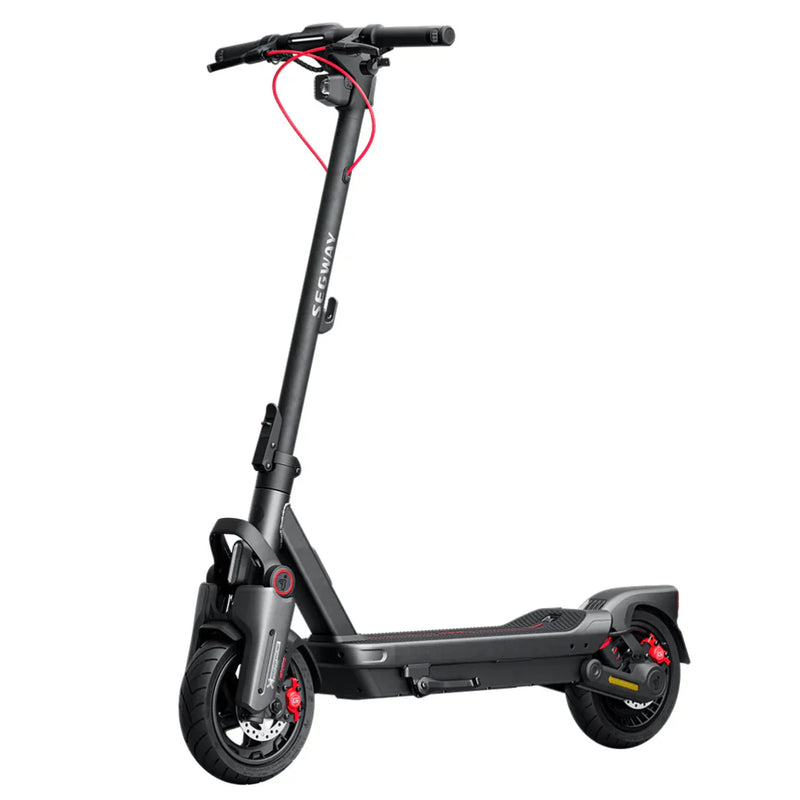
Start by checking what is actually fitted. On our product pages it is listed under Lights in the specifications. Most adult e-scooters have a front and a rear light, and many also have indicators – for example NAVEE ST3, iScooter W10 and ENGWE Y700.
- Front light: the only light that shows you the road ahead.
- Rear light: makes you visible from behind – also when you are waiting at a red light.
- Ambient light: coloured light strips under the deck or on the stem. They are visible from the side but do not light the road.
- Indicators: show a turn more clearly than an arm in the dark – as long as you remember to switch them off.
Kids' models often only have ambient light. GYROOR H30 Max and NAVEE K100 Max are two examples: fine for being seen in a playground, but without a front light that lights the way. If your child will ride after dark, add a separate light.
The front light often sits low on the stem. It lights the ground close to the wheel well but throws long shadows behind every edge. An extra light high on the handlebar gives a more even view of the surface – you'll find them among our electric scooter lights.
See the road: set your front light correctly
A strong light that points too high doesn't help you and dazzles everyone coming the other way. Cycling UK's guide to cycling in the dark suggests around 50 lumens is enough under streetlights, where the job is mainly to be noticed, and roughly 300–800 lumens on unlit roads, with a beam that lights the road at least 15 metres ahead. It also recommends a steady front beam rather than a flashing one, because flashing lights make it harder for others to judge your distance.
To set the angle, the German motoring club ADAC describes a simple wall test (in German): park 5 metres from a wall and mark the height of the lamp and half that height. The brightest spot should land on the lower mark.
Be seen: rear light, indicators and reflectors
At a junction a driver sees you from the side, where neither the front nor the rear light shows up well. That is why side reflectors matter as much as the lights.
- Keep the rear light on under streetlights too. From behind you are often the darkest thing on the road.
- Switch indicators off after the turn. An indicator left on confuses more than it helps.
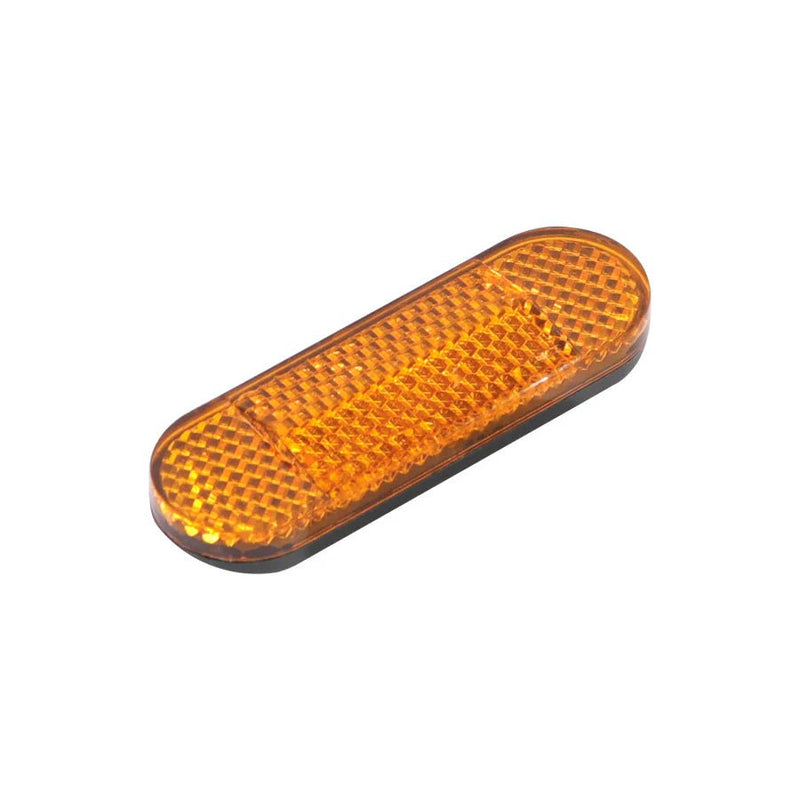
- Replace broken reflectors. Wheel covers and mudguards often carry reflectors that crack when the scooter falls over. We stock reflectors and reflective wheel covers for several common models.
Which lights and reflectors are required after dark depends on the country – see our overview of electric scooter laws in Europe.
Reflectors and clothing on you
The scooter's lights are not always enough: you stand upright, and your body hides the rear light from some angles. Reflectors are most visible low down, where car headlights point, and on something that moves – Cycling UK notes that the up-and-down motion of ankle bands and pedal reflectors is something drivers recognise. A reflective vest adds a large surface.
Reflective material gets weaker with age and washing. Hold an old reflector next to a new one in the dark and shine a torch at both: if the old one looks dull, replace it.
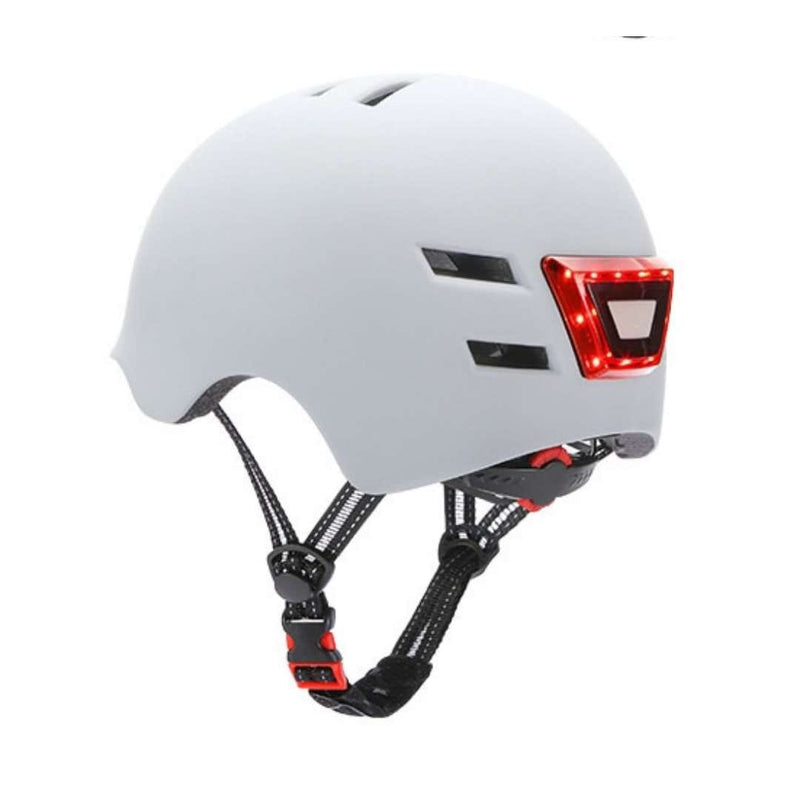
A helmet with a built-in rear light sits highest up and can be seen over cars and obstacles. How to choose a helmet in general is covered in what helmet to wear on an electric scooter.
How to ride in the dark
An e-scooter's small wheels are sensitive to potholes, kerbs and tram rails, and in the dark you see them later. A few habits make a big difference:
- Slow down. Ride so you can stop within the distance your light reaches.
- Pick a lit route when you can, even if it is a bit longer. Try new routes in daylight first.
- Watch out for wet leaves in autumn. They are as slippery as ice and hide potholes.
- Look at the edge of the road when a car with full beam comes towards you, so you are not dazzled.
- Expect pedestrians to be hard to see. People in dark clothes appear late in your beam.
Darkness and rain often come together. What your scooter can handle and how to ride on wet roads is in electric scooter in the rain and IP ratings.
Charge your lights – and carry a spare
Lights built into the e-scooter run on the main battery. Clip-on lights have their own batteries, and they tend to run out when you least want them to. Charge them together with the scooter and keep a small spare rear light in your bag. When it gets cold, both light batteries and the main battery last less long – more in electric scooter and e-bike in winter.
Checklist before an evening ride
- Front and rear lights switch on.
- The front light points down and doesn't dazzle.
- Reflectors at the front, rear and sides are intact and clean.
- Clip-on lights are charged, and you have a spare.
- You are wearing a reflector or reflective vest.
- You know the route, or have ridden it in daylight.