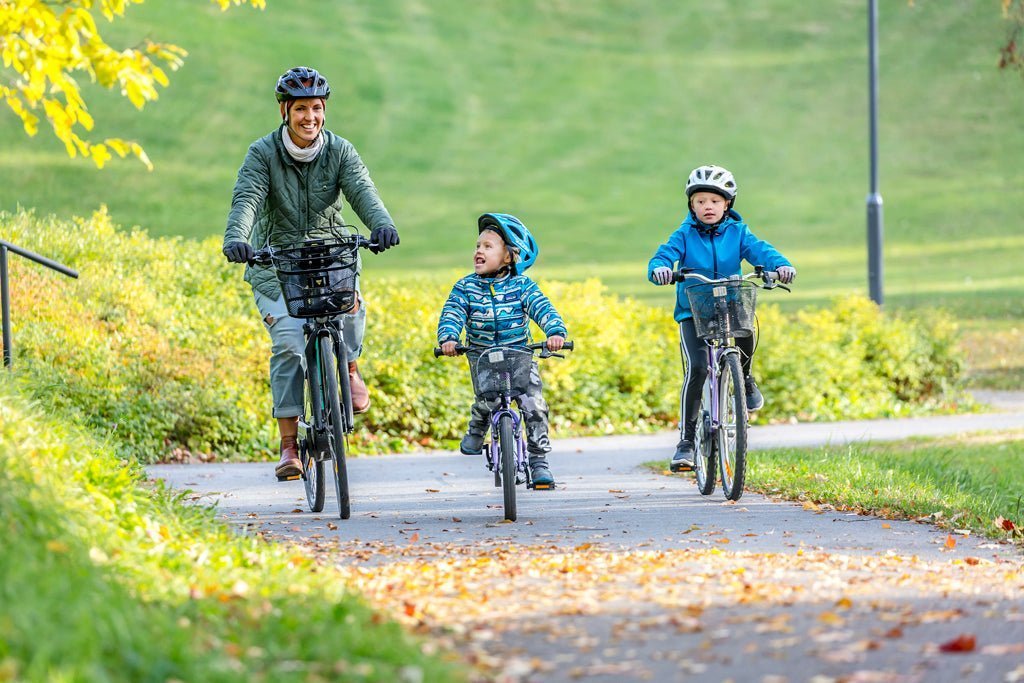

Two children need dropping off at nursery, the shopping has to come home, and the car feels like overkill for such short trips. Then the question comes up: box bike, longtail, trailer – or is a seat on the bike you already have enough? No single answer suits every family, so here we compare the options side by side and look at how each one works in everyday life.
Cargo bike vs trailer – which should you choose?
If you have one or two children and mostly ride on cycle paths, a child trailer behind the bike you already own is a simple, affordable start. If you carry the kids every day, have more than two or ride a lot among cars, a box bike is often worth the money: the children sit in front of you, where you can see them and talk to them. A longtail is the middle way – two children on the back of a bike that is almost as slim and easy to steer as a normal one. None of them is automatically the safe choice, so go by what your everyday life looks like. Cycling UK’s guide to cargo bikes starts in the same place: work out what you will carry and how far, then try several types before you buy.
Four ways to carry your kids – at a glance
| Option | Best when | Keep in mind |
|---|---|---|
| Child seat | One child from about 9 months, short trips and narrow cycle paths | Choose a seat tested to EN 14344 – most are rated up to around 20 kg. The bike is less stable when parked. |
| Child trailer | One or two children side by side, luggage and children who fall asleep on the way | Choose a trailer tested to EN 15918. It sits low in traffic – fit the flag and ride further out from the kerb. |
| Longtail | Two children on the back, commuting and narrow cycle paths | The children sit behind you. Older children need footboards and something to hold on to. |
| Box bike | Several children, lots of stops and streets with cars | Heavy and bulky. It needs its own parking space at ground level. |
The advice on seats and trailers draws on Cycling UK’s guides to child seats and child trailers. One detail matters more than it looks: according to Cycling UK, feet caught in the spokes account for half of all hospital admissions involving child seats, so choose a seat with secure foot straps. Always check what your particular model is approved for.
Box bike: the children in front of you
The big advantage of a box bike is that the children sit right in front of you. You can see them, you can chat all the way, and dropping them off at nursery is quick. Choose a box with proper seats and harnesses. For babies who can’t sit up yet, many box bikes take a mount for an infant car seat – Cycling UK calls a baby carrier in the box the only realistic way to take a baby that young along by bike.
Check these before you decide:
- The stand: a sturdy, built-in stand, so the bike doesn’t tip over while the children climb in and out.
- The brakes: a loaded box bike is heavy, so disc brakes are preferable.
- The frame: a solid frame around the box.
Also check whether there is a rain cover for the model. It decides how often the box actually gets used once the weather turns.
The downside is size. A box bike is long, heavy and takes up space – it needs to live at ground level and rarely fits in a lift.
Box bike with two or three wheels?
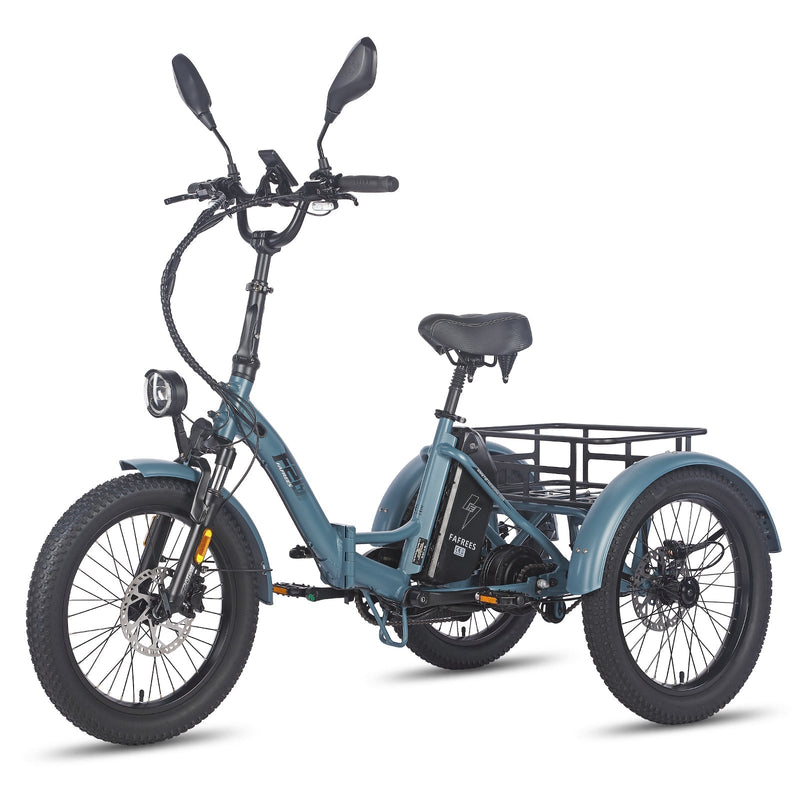
A two-wheeled box bike looks wobbly but often feels more stable than you expect once you are in the saddle, and it is nimbler on narrow cycle paths. A three-wheeler has the biggest box and stands up on its own while the children climb in, but it doesn’t lean into corners. You steer with the handlebar, take bends more slowly and need to be careful on sloping roads, where one wheel can lift. Check that the trike has a parking brake, so it stays put while the children get in and out.
The trikes in our range carry their load at the back. They suit you if you would rather not balance and want room for the shopping, but they are not box bikes with seats. Compare them among our tricycles.
Longtail: the cargo bike that rides like a normal bike
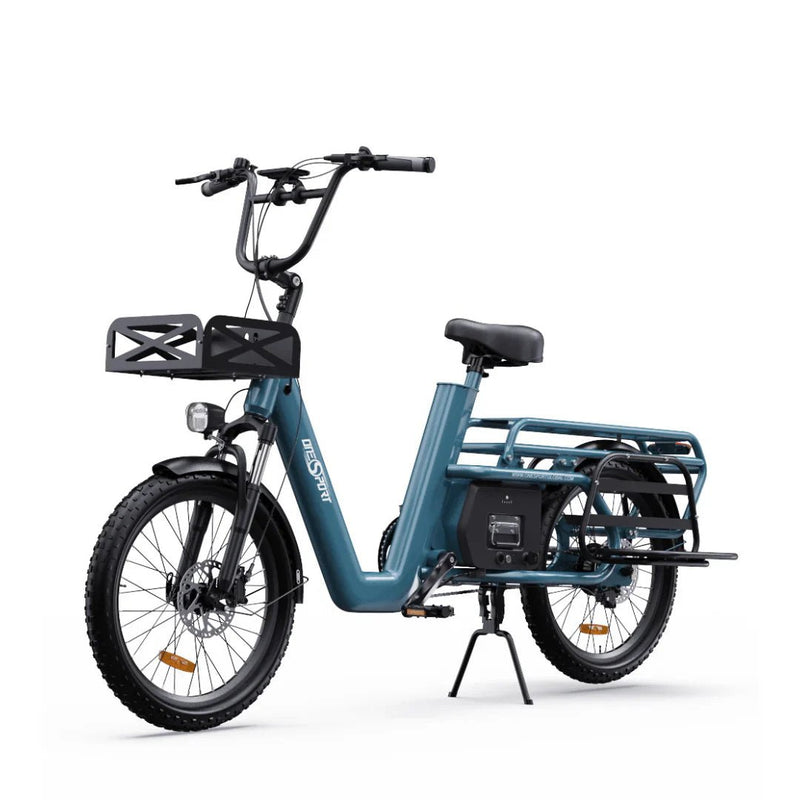
A longtail is a bike with a stretched rear end and a long, sturdy rack. With the right accessories it takes child seats or, for older children, footboards and handles to hold on to, and Cycling UK describes the ride as much like a normal bike, only longer. It is also easier to get into a hallway or down a side passage than a wider box bike. What you give up is the overview, because the children sit behind you. Never put a child straight onto an ordinary rear rack that isn’t built for it.
Among our electric cargo bikes you’ll find two-wheeled models with a rear rack and a basket. Check whether a child seat is included or has to be bought separately – and that the manual allows passengers. Look at the maximum load when you compare: it covers rider, children and luggage together, and on most of the two-wheeled models it is 120 kg.
Child trailer: an affordable start with your own bike
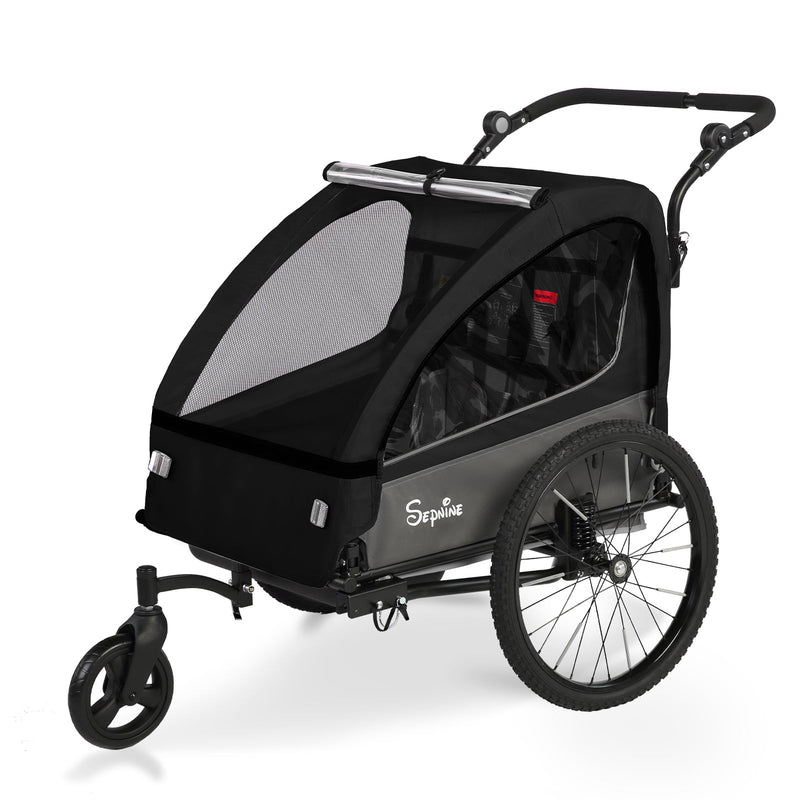
A child trailer hitches to the bike you already own. It takes one or two children side by side plus some luggage, and many models convert into a pushchair, so a sleeping child doesn’t have to be woken when you arrive. The children sit low and sheltered under a canopy. The flip side is that you are towing a wider load: Cycling UK’s cycling instructor advises riding further out from the kerb and at least a metre away from parked car doors, and it’s worth practising on a traffic-free route first.
Keep this in mind with a child trailer:
- Let your child try it with a helmet on, so you can see there is room to grow.
- Choose a trailer with a roll bar and a harness.
- Use the extra safety strap between trailer and bike as well as the hitch, and fit the flag.
- Bags in the pockets and the boot count towards the maximum load – an overloaded trailer can tip over on tight bends and kerbs.
According to the manufacturer, our child bike trailers are made for a maximum of 16 km/h behind a bike. That is worth remembering on an e-bike that happily rolls along at 25 km/h. Also check in your e-bike’s manual that it may tow a trailer. You’ll find trailers for children and dogs among our bike trailers. If the dog is coming too, a dog trailer is often easier than the box, because the dog can lie down and be clipped to a safety leash inside.
Cargo bike with or without a motor?
A box bike or longtail weighs a lot more than a normal bike, especially with two children and the shopping on board. That is why electric assistance is so practical: Cycling UK points out that slopes you barely notice on a normal bike turn into real hills once you are loaded up with two kids and their things. The heavier the load, the shorter the range, so plan with a margin and read our tips to get more range out of your e-bike. The weight also wears the brakes, so check the brake pads more often than on a normal bike. How to choose the motor and battery for hills and heavy loads is covered in our guide to which electric bike to buy.
Helmet rules for children differ from country to country – see our overview of e-bike laws in Europe.
Where will it live? Storage, theft and winter
Measure the shed door, the gate and the bike room before you decide. A box bike is longer than a normal bike, a trike is wider as well, and both are best kept at ground level. A longtail is long but slim, and a child trailer can often be folded and put away in the shed.
A cargo bike is an expensive bike to lose. Lock it to something solid with a proper lock – more in our guide to protecting your e-bike from theft. If the battery comes out, take it with you: as Cycling UK puts it, an e-bike without its battery is far less valuable to thieves. Also check what your home insurance pays out if the bike is stolen – see e-bike insurance. If you plan to ride all year round, a rain cover, studded tyres for icy roads and good lights make the biggest difference – more tips in riding an e-bike in winter.
Before you buy: test ride – with the kids
- Test ride several models and bring the children. You’ll notice how they sit and how the bike feels with a real load. If a friend or neighbour has a cargo bike, ask to borrow it for a ride.
- Practise without the children first, then with them. The extra weight means it takes longer both to get going and to stop. For a child seat, Cycling UK suggests a trial run with a 7–10 kg sack of potatoes in place of the child.
- Set the handlebar high on a box bike. That way you don’t fall forward towards the children if you have to brake hard.
- Never carry more children than the bike is built for and stay under the manufacturer’s maximum load.
- Helmets on the children from the very first ride – in a three-wheeled box bike too. Choose a children’s helmet that fits snugly.
Start simple – and switch when life changes
With one child and short trips, a seat or a trailer is often enough. When child number two arrives, or you want to replace the car for the daily trips, a box bike or a longtail becomes interesting. How much that can save you is worked out in what you save by leaving the car at home. Nothing goes to waste along the way either: a child trailer can carry the shopping once the children cycle themselves, and Cycling UK notes that a well-built box bike holds its value – you can get up to two-thirds of the price back when you sell it after a few years. Still wondering whether it should be an e-bike at all? Read electric scooter vs e-bike.