
The best e-bike for commuting is the one that covers your daily distance without you worrying about the charger – and that you can actually carry to where it lives. Here we compare four models with figures from our own product data, then go through what matters day to day: range, weight, trains, charging, security and winter.
Short answer: which e-bike suits commuting?
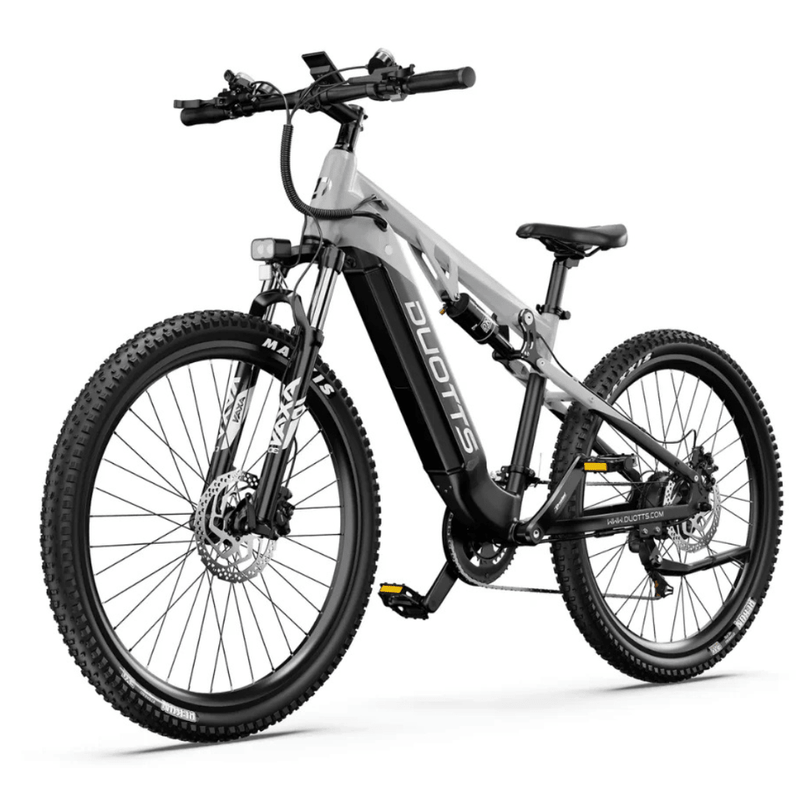
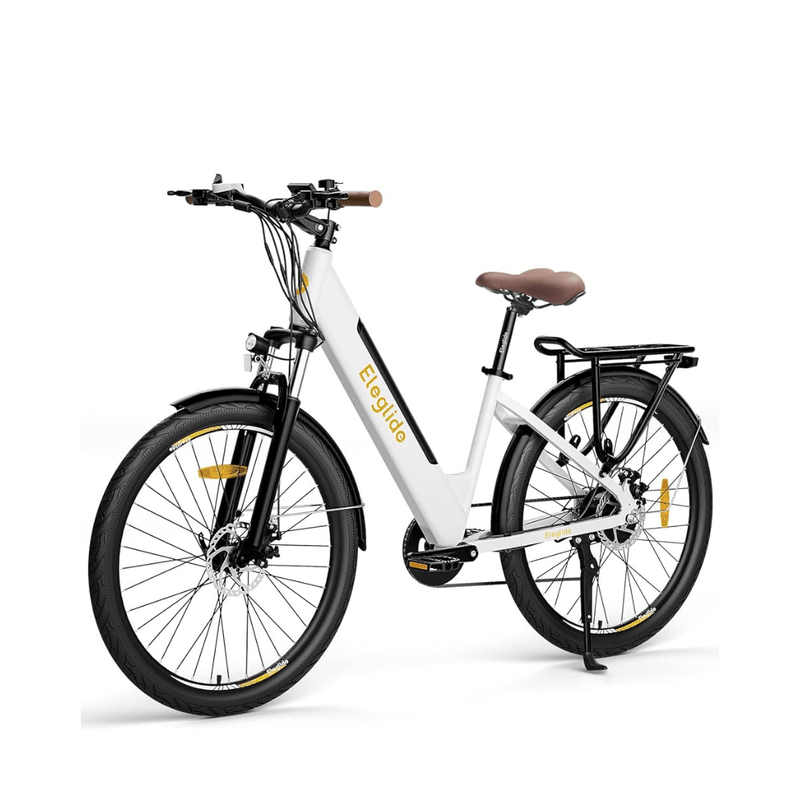
For a short commute with a train leg, pick the DYU C2 or DYU T1: both weigh around 23 kg and fold. For longer rides on cycle paths the DYU C6 with 26-inch wheels gives the most comfort for the money, and the ENGWE L20 Boost goes furthest. All have a 2-year warranty.
Four commuter e-bikes in numbers
| Model | Range | Top speed | Weight | Max load | Price range |
|---|---|---|---|---|---|
| DYU C2 | 40 km (pedal assist) | 25 km/h | 23.6 kg | 120 kg | under €1,000 |
| DYU T1 | 60 km (pedal assist) | 25 km/h | 22.5 kg | 120 kg | under €1,000 |
| DYU C6 | 80 km (pedal assist) | 25 km/h | 27 kg | 120 kg | under €1,000 |
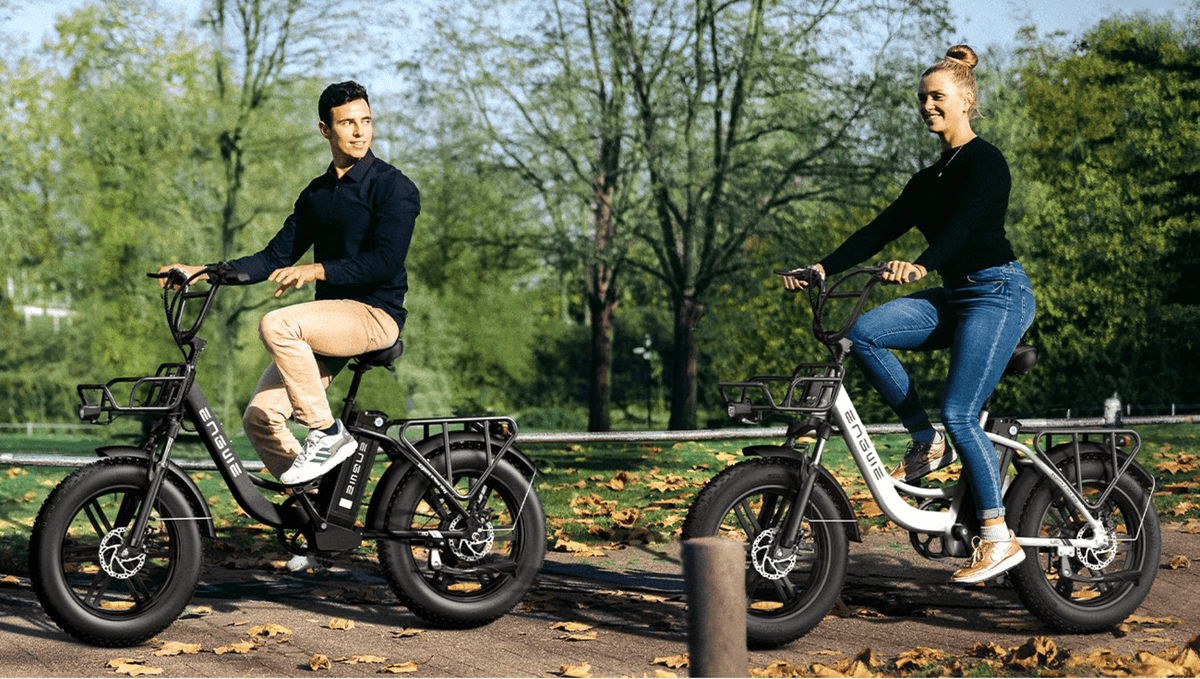
| ENGWE L20 Boost | 126 km | 25 km/h | 34 kg | 120 kg | €1,000–1,500 |
Source: Wheelyshop product data, November 2026. Range applies with pedal assist. Price ranges apply to November 2026. You’ll find every DYU model among our DYU electric bikes and the whole ENGWE range among our ENGWE electric bikes.
Who is it for?
DYU C2 – small and folding
The C2 has 16-inch wheels, weighs 23.6 kg and folds into a compact package. Its 48 V 7.5 Ah battery gives 40 km with pedal assist. It suits you if you ride a short stretch to the station and want the bike with you for the rest of the trip. Small wheels make it nimble in a crowded bike store, but you feel cobbles, tram lines and high kerbs more.
DYU T1 – light with more range
The T1 is the lightest of the four (22.5 kg), has 20-inch wheels and goes up to 60 km with pedal assist. It folds too, and its maximum load is 120 kg.
DYU C6 – city bike with big wheels
The C6 is a classic city bike with 26-inch wheels, front and rear disc brakes and cruise control. Big wheels roll more calmly over kerbs and cobbles. With 36 V 12.5 Ah it goes up to 80 km with pedal assist, and the max load is 120 kg. It weighs 27 kg, so it works best if it lives at ground level or in a bike store without steps.
ENGWE L20 Boost – the longest range
The L20 Boost has the biggest battery (48 V 13 Ah), seven gears and 126 km of range. It weighs 34 kg, so it is heavy to lift but stable to ride. A good choice if you commute far, perhaps between two towns, and want to charge as rarely as possible.
In short, the choice comes down to two things: how far you ride and how much the bike has to be carried. A short ride with stairs or a train points to the C2 or T1. A long door-to-door ride points to the C6 or L20 Boost, where big wheels and a bigger battery matter more than low weight.
Work out how much range you really need
The most common mistake is to compare your commute with the stated headline figure. Headline figures typically assume a light rider at a steady pace on flat roads, and extra luggage and the wrong tyre pressure both eat into range, as BikeRadar’s range guide explains. So work backwards from your own ride:
- 5 km each way: 10 km a day. The T1, C6 and L20 Boost cover a working week on one charge in a low assist mode, and the C2 roughly four days.
- 10 km each way: 20 km a day. The C2 lasts roughly two days on its lowest level; the T1, C6 and L20 Boost manage more.
- 15 km each way: 30 km a day. The C2 becomes a bike you charge every evening, while the T1 and C6 leave room for a detour.
- 20 km or more: 40 km a day. Then the L20 Boost with 126 km and the C6 with 80 km give the clearest margin between charges.
Then add a buffer for headwinds, hills, luggage and cold. Journey time is simple maths: at an average of 20 km/h, 10 km takes 30 minutes, and traffic lights and junctions pull the average down in town. There are more models with bigger batteries among our long-range electric bikes.
Trains, buses and folding bikes
If the bike goes on the train, weight and folded size matter more than range. Rules for bikes on board differ between operators and times of day, and folding bikes are often treated as luggage when they are folded and bagged, so check what applies on your line. Cycling UK’s e-bike guide notes that an e-bike’s extra weight needn’t be a barrier once you know where the bike will be kept – but it pays to test the lift onto a train before you buy.
In practice the C2 and T1, at around 23 kg, are the realistic choices for a daily train leg. The C6 and L20 Boost are better suited to door-to-door rides. More folding options are among our folding electric bikes.
Charging and the battery in daily use
A commuter bike is charged often, so charging habits decide how safe and long-lived the battery is. London Fire Brigade’s safety advice points out that many e-bike and e-scooter fires happen in homes while batteries are charging, and that buying compliant products from reputable sellers significantly reduces the risk. Conversion kits, it warns, increase the risk.
What causes battery problems?
BikeRadar’s investigation into battery fires lists overcharging, over-discharging and chargers that don’t match the battery among the main electrical causes, and quotes industry experts who warn against third-party batteries and chargers. The practical rules are simple: use the charger that came with the bike, charge where you can keep an eye on it, don’t leave it on charge overnight and let a cold battery warm up indoors before plugging it in.
Parking and theft protection
An e-bike that stands outside work for eight hours a day needs better locks than a bike left for a quick errand. BikeRadar’s guide to locking a bike recommends securing the rear wheel and rear triangle of the frame to a solid anchor point, adding a second lock of a different type for the front wheel, and choosing a lock with a Sold Secure rating. It also notes that some bike insurance policies require a Sold Secure lock to be valid.
Take the battery inside if you can. It protects the most expensive part, and you can charge it at room temperature. The folding models can often live under a desk or in a store room instead of outdoors.
Commuting by e-bike in winter
An e-bike works all year, but winter changes the routine. The battery delivers less energy in the cold, so expect shorter range and store the battery indoors. Salt and grit wear the chain, so wipe and lube it more often, and have the brakes checked before the dark months – an e-bike is heavier than a normal bike and works its brakes harder. Choosing tyres and riding safely on ice is covered in electric scooter and e-bike in winter.
Common mistakes when choosing a commuter e-bike
- Buying on headline range: compare with your own distance times two plus a margin, not the number in the advert.
- Forgetting the stairs: carrying 34 kg down to a basement every day gets old fast – choose weight by where the bike will live.
- Skipping the kit check: BikeRadar’s commuting guide recommends checking for pannier rack and mudguard mounts before you buy.
- Picking the wrong frame: a step-through is easier with lots of stops and in work clothes. The differences are covered in step-through vs step-over e-bike.
- Charging a cold battery straight away: let it reach room temperature first.
Try the commute before you decide
Do a test ride on a day off, at the time you would travel to work. Measure the distance and time, note the hills and where you have to stop, and check where the bike can stand at work and whether there is a safe place to charge. If you combine it with a train, check the operator’s rules for your line and time of day. With those answers the choice is usually easy – a short ride plus a train means light and folding, a long ride without a train means a big battery and big wheels.
Not sure which type to choose? Start with which electric bike should I buy. The rules for riding an e-bike are summed up in electric bike laws in Europe. Keep the original box – if the bike needs to be sent in during the 2-year warranty, it is packed in that box.