
Weighing up two Teverun models? It nearly always comes down to the same question: Blade or Fighter? The names don’t tell you much, and the manufacturer’s range and power figures don’t make the choice any easier. What decides it day to day is usually something else entirely – how much the scooter weighs, where it will live and how you charge it. Here’s what actually separates the models.
Teverun Blade or Fighter – which should you choose?
Start with where the scooter will live, not the series name. To carry it upstairs or often lift it into a car, the light Blade models are realistic: Blade Q Pro 26 kg, Blade Mini Ultra V4 30 kg. The biggest batteries are in the Fighter Supreme models, at 51 and 64 kg – they need a ground-floor spot.
How the Teverun series fit together
Teverun is a young brand from Ningbo in China. According to Teverun itself, the company started out in 2017 as a scooter factory building for other brands, launched its own Blade X in 2020 and founded the Teverun brand in 2022. The Blade name lives on as one of the two series and Fighter is the other – but the series overlap more than the names suggest.
The models we sell fall into three lines, including:
- Blade – Blade Q Pro, Blade Mini Ultra V4 and Blade GT II. This is where you’ll find the lightest models, but also the GT II, which is a large 11-inch model.
- Fighter – Fighter Mini Pro V6, Fighter Eleven+ V4, Fighter Supreme Ultra V4 and Fighter Supreme 7260R V4. From a compact 10-inch format up to the Supreme models with 72-volt systems and the biggest batteries.
- Tetra – a four-wheeled model with one motor per wheel.
| Series | Wheels, weight and battery | Keep in mind |
|---|---|---|
| Blade | 8.5–11 in, from 26 kg, from 540 Wh | Only the Q Pro and Mini Ultra are realistic to carry |
| Fighter | 10–13 in, up to 64 kg, up to 4,320 Wh | You won’t lift the Supreme models on your own |
| Tetra | 13 in and four wheels, 83 kg, 3,600 Wh | Lives in the garage, not carried up stairs |
The figures apply to the models we sell in autumn 2026. All of them are gathered in the Teverun collection, and if you want to compare with other brands in the same class, you’ll find them among our fast electric scooters. For two of those brands, we go through how the models differ in our guides to Dualtron and Kaabo.
Blade – when weight and everyday use decide
The two smaller Blade models are for you if you don’t have a garage on the ground floor. The Blade Q Pro is the entry model: 26 kg, 8.5-inch pneumatic tyres, an adjustable handlebar and a 540 Wh battery. It’s the easiest Teverun to carry up a flight of stairs, but its battery is also the smallest, so it suits shorter rides best.
The Blade Mini Ultra V4 is the middle ground. It weighs 30 kg, has 10-inch tubeless tyres and a 1,620 Wh battery that charges in 5–6 hours according to our product data. The Mini format still makes it manageable in a lift or a storage room. There’s also a seat available as an accessory for the Blade Mini series if you’d like to be able to sit down.
The Blade GT II is the biggest in the series and not something you’ll carry up stairs every day. It has 11-inch tubeless tyres with a sealant layer and a steering damper, and it comes with a choice of two batteries – the base version has 1,560 Wh. In size and weight it’s in the same class as the Fighter Eleven+, so if you’re stuck between the two, other things will decide.
Fighter – from compact to seriously heavy
The Fighter series covers more ground than you might think. The Fighter Mini Pro V6 has the same 10-inch wheels as the Blade Mini Ultra but weighs 38 kg – eight kilos more to carry. The format is still compact, but it’s hardly a scooter you’ll carry up the stairs every day.
The Fighter Eleven+ V4 is a large 11-inch model with tubeless tyres with a sealant layer, a steering damper and a 2,100 Wh battery. It’s in the same weight class as the Blade GT II.
Then come the Supreme models, and this is where the scooter stops being something you lift. The Fighter Supreme Ultra V4 weighs 51 kg and the Fighter Supreme 7260R V4 64 kg. Both have a 72-volt battery of 4,320 Wh, and the 7260R rides on 13-inch wheels. They have the biggest batteries of the Teverun models we sell, but expect 10–12 hours of charging according to our product data, and a storage spot you can roll the scooter into without any steps.
Blade GT II vs Fighter Eleven+ – nearly the same weight
This comparison comes up a lot, because the two models are so close in size and weight. Much of the hardware is the same too, so the difference comes down to the battery and charging:
| Blade GT II | Fighter Eleven+ V4 | |
|---|---|---|
| Battery | two options, base version 1,560 Wh | 2,100 Wh |
| Charging time (our product data) | 10–12 h | 11–17 h |
| Tyres | 11 in, tubeless with sealant layer | 11 in, tubeless with sealant layer |
| Steering damper | yes | yes |
The GT II suits you if you want to choose your battery size. The Eleven+ comes with a bigger battery than the GT II’s base version as standard – but plan for long charging sessions. Neither is a model you’ll carry up stairs every day, so decide where the scooter will live before you choose.
There’s a similar choice among the 10-inch models. The Blade Mini Ultra V4 and Fighter Mini Pro V6 have the same wheel size, but the Fighter weighs 38 kg against the Mini Ultra’s 30. If you carry your scooter often, those eight kilos are what you’ll notice most – so compare weight and battery watt-hours for each model, not the series names.
Tetra – four wheels and 83 kilos
The Tetra is no ordinary e-scooter. It has four wheels, each with its own motor and hydraulic disc brake, 13-inch off-road tyres and a 3,600 Wh battery. Stability is the point – it stays upright on its four wheels when you stop. But at 83 kg it needs its own space in a garage or shed – it’s not something you bring indoors. It does fold, but that doesn’t make it any easier to carry.
Real-world range and charging
Manufacturers’ range figures are usually measured in favourable conditions: low speed, a rider of around 75 kg and mild weather. A practical rule of thumb is to plan on roughly 50–70% of the claimed range in summer and less in winter, as we explain in our guide to increasing your range. Tom’s Guide’s scooter tester, who lives in a hilly area and weighs close to 90 kg, typically gets 50–60% of the advertised range. Ride a powerful Teverun in its strongest modes and the battery drains even faster.
So compare battery size in watt-hours. If only volts and amp-hours are listed, work it out yourself: volts × amp-hours = watt-hours. A Blade Q Pro has 540 Wh and a Fighter Supreme Ultra V4 4,320 Wh – eight times as much energy.
Charging time depends on the size of the battery and on the charger. In our product data, the Blade Mini Ultra V4 takes 5–6 hours, the Supreme models and the Tetra 10–12 hours and the Fighter Eleven+ V4 11–17 hours. Most models have two charging ports, and charging with two chargers at once is faster – follow the manual for your model. How to charge so the battery lasts is covered in our guide to charging an electric scooter battery, and you can work out what a full charge costs in our guide to the cost of charging.
A big battery is also a reason to think about where you charge. London Fire Brigade advises charging on a hard, flat surface away from your escape route, with a smoke alarm where you charge, and never leaving a battery charging unattended or while you’re asleep. Stop using the battery straight away if it gets unusually hot, looks swollen, leaks, makes hissing or crackling sounds or gives off a strong chemical smell – these are the warning signs of a failing battery the brigade lists.
Weight, storage and transport
All Teverun models fold, but folding isn’t the same as carrying. A common mistake is to look at the range and forget about the stairs, the lift and the car boot.
- Live upstairs without a lift? Stick to the Blade Q Pro or Blade Mini Ultra, or arrange a spot on the ground floor.
- Does it need to fit in a lift? Measure the lift and compare it with the model’s dimensions before you decide.
- Taking it in the car? One of the light Blade models can be lifted into the boot, but the Supreme models at 51 and 64 kg are a two-person job.
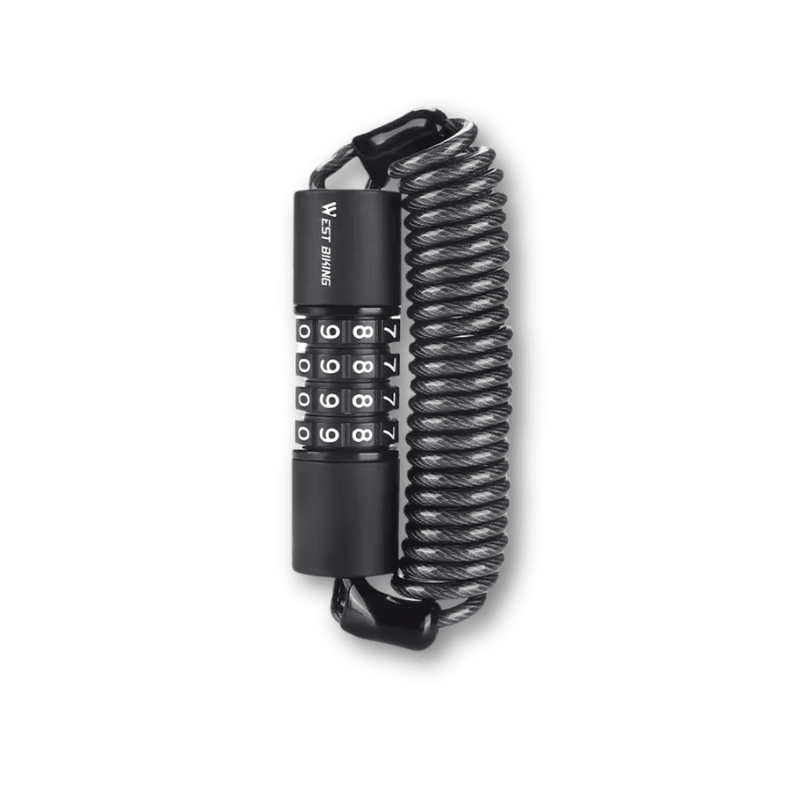
- Will it be parked outside? A heavy, expensive scooter attracts thieves. Read our guide on how to protect your electric scooter from theft and choose a sturdy lock.
Tyres, brakes and rain
All the Teverun models we sell have pneumatic tyres – none of them have solid tyres. The Blade Mini Ultra, Fighter Mini Pro, Blade GT II, Fighter Eleven+ and the Supreme models have tubeless tyres, and the 11-inch models also have a sealant layer that plugs small holes as you ride, but not larger cuts. A small hole in the tread of a tubeless tyre can often be plugged without taking the tyre off – our step-by-step tyre guide shows how. We cover how they compare with solid tyres in our guide to solid vs pneumatic tyres.
All the models have hydraulic disc brakes. They’re powerful and easy to modulate, but a hydraulic front brake can lock the front wheel with very little hand force if you grab it in a panic. Practise braking with both levers in a closed-off area where you have permission to ride before you set off on longer rides.
Water resistance varies between models, and an IP rating applies to a new scooter – seals age over time. Check the manual for your model before riding in the rain, not just the IP number, and never ride through standing water. We explain what the ratings mean in practice in our guide to riding an electric scooter in the rain, and before the cold sets in there are tips on riding an electric scooter in winter.
Spare parts, service and warranty
Tyres, shock absorbers and mudguards wear over time. The spare parts finder has parts such as tyres, shock absorbers, mudguards, lights and controls for several Teverun models. Always search for the full model name, for example Fighter Mini Pro V6 or Blade GT II with the right battery option, as parts differ between versions. If you can’t find the part you need, ask our customer service.
All the models come with a 2-year warranty. Keep the original box. If the vehicle needs to be sent in for repair, it must be packed in its original box – we don’t send out new boxes.
Common mistakes when choosing a Teverun
- Choosing by series name. A Blade isn’t automatically light and a Fighter isn’t automatically the biggest – compare models, not series.
- Comparing kilometres instead of watt-hours. Two models with the same claimed range can have completely different batteries.
- Forgetting the weight. The difference between 30 and 51 kg is something you feel every day, not just on delivery day.
- Buying the biggest model just in case. More battery also means longer charging and heavier handling.
- Missing the maximum load. The Blade Q Pro, Blade Mini Ultra and Fighter Mini Pro are made for riders up to 120 kg according to our product data. Check the maximum load for the model you choose.
- Test-riding to see how it feels. An e-scooter that has been ridden can’t be returned, according to our returns terms. Check it over without riding it.
- Not checking where you can ride. Our Teverun models are built for more power and speed than a typical commuter e-scooter – our guide to electric scooter laws in Europe explains what that means for where you can ride.