
The product page says 25 km/h, but on the hill on your way home the display can show a lot less. That is completely normal. Top speed is what the scooter manages in good conditions – day to day, hills, your weight, the battery level and the weather decide. Here is what speed you can expect and what drags it down.
How fast does an electric scooter go? The short answer
A commuter electric scooter usually does 20–25 km/h in its fastest mode – that is its top speed or where the limiter is set. Kids' models do 14–16 km/h, and dual-motor models are rated at 50 km/h or more. Day to day you go slower: hills, a heavier rider, cold, soft tyres and a low battery cut your speed.
Speed by type of electric scooter
The figures below come from our product pages (October 2026) and are the manufacturers' specifications. The stated top speed is what the scooter is built for – many models also have a speed limiter set at 20 or 25 km/h, and the product page shows whether there is one.
| Type | Weight | Rated power | Stated top speed | What you notice |
|---|---|---|---|---|
| Kids' and junior models | 6–10 kg | 130–180 W | 14–16 km/h | calm speed, easy to handle |
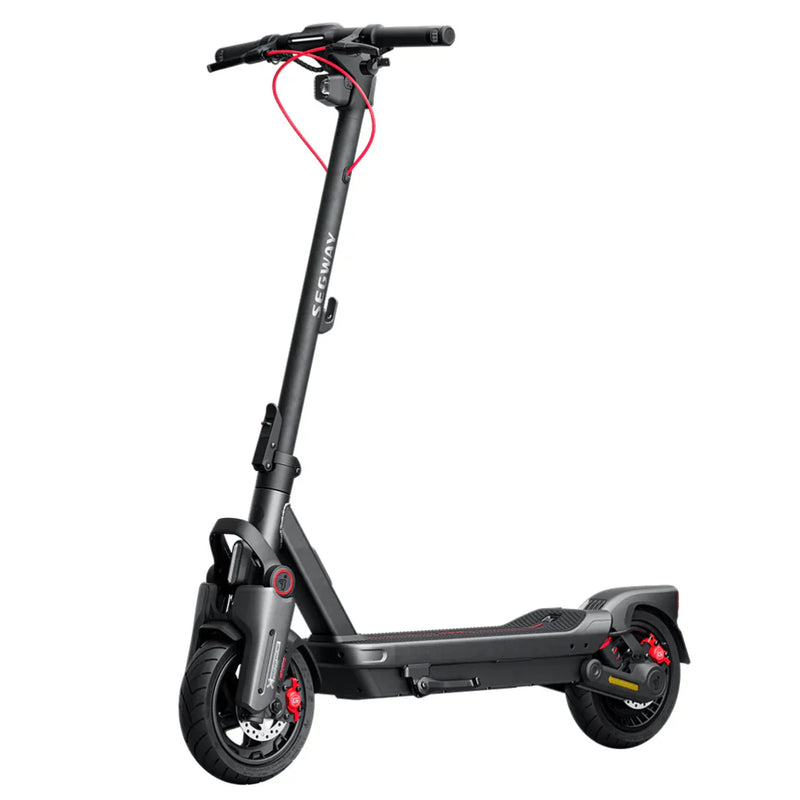
| Light single-motor commuters | 10.5–25 kg | usually 350–500 W | 20–50 km/h, usually 20–25 km/h | easy to carry, slow down on steep hills |
| Heavier single-motor models | 25 kg and up | 400–3,000 W | 20–70 km/h | better on hills, heavier to lift |
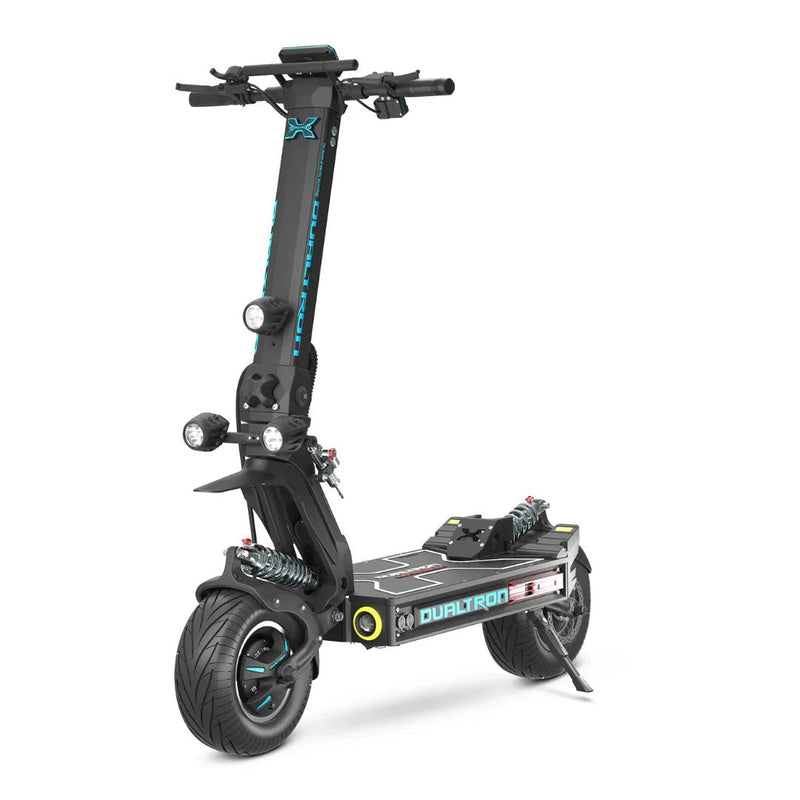
| Dual motor | usually 27 kg and up | usually 1,600 W or more combined | 25–120 km/h, most 50 km/h or more | strong acceleration, need good brakes |
For most city commuters a light model from our commuter electric scooters is enough. The most powerful ones are among our fast electric scooters – there, brakes, tyres and suspension matter as much as the motor. Speed limits for cycle lanes and roads differ from country to country; our overview of electric scooter laws in Europe explains them.
Riding modes and the app – how you control speed
Three riding modes is the most common setup on our electric scooters. There is usually a slow mode for walking the scooter or riding among pedestrians, a middle mode and a fast mode. Many models add an Eco mode that saves battery and a Sport mode that gives you full speed.
Many electric scooters also have an app. It usually shows speed, battery and ride statistics, and on many models you can choose the mode, set the energy recovery and lock the motor. Some have a boost button, or a saving mode that lowers the top speed when the battery starts running low.
- The middle mode suits busy city streets, shared paths and slippery days.
- The fastest mode is for clear straight stretches – but it uses the most power.
- Walk mode helps when you push the scooter up a steep hill or through a crowd.
What slows you down in everyday riding
- Hills and rider weight. This is where the difference shows most. A light scooter holds its top speed on the flat but can drop a long way on a steep hill, and a heavier rider loses more speed on the same climb.
- Battery level. When the battery is almost flat the voltage drops, and the motor cannot hold top speed as well – especially uphill. Some models automatically lower the top speed when the battery is low.
- Cold. A cold battery delivers less power. Keep the scooter or the battery indoors when it is below freezing and you will have more in reserve.
- Tyre pressure. Soft pneumatic tyres roll heavier, so you go slower and use more power. Our guide to electric scooter tyre pressure shows how to find the right value.
- Headwind and riding position. Air resistance rises quickly with speed, and you stand upright on a scooter, so a headwind is very noticeable.
- Surface. Gravel, cobbles and wet leaves take more power than smooth tarmac – and you ride slower there anyway for grip.
Higher speed costs range
Manufacturers usually measure range at a low, steady speed with a light rider. Ride in the fastest mode all the way, in the cold or with a heavy bag, and the range gets shorter. In Tom's Guide's review of a Segway Ninebot model, riding non-stop in Sport mode for just over 11 km left 36% of the battery. The same tester, who weighs close to 90 kg and lives somewhere hilly, says in his buying tips that he usually gets 50–60% of the advertised range. More ways to get further on a charge are in our guide on how to increase your range.
Watts, volts and speed – how they connect
More watts do not automatically mean a higher top speed. Top speed depends on how the scooter is built and set up. What the watts change is how quickly you get up to speed and how much you lose on a hill. Peak power and battery voltage matter a lot: a 48-volt model with high peak power holds its speed uphill better than a light 36-volt model with the same rated power. We explain rated versus peak power in our guide to electric scooter watts.
Choose your speed by your route
- Short, flat trips in town. A light model that does 20–25 km/h is enough. Most of your time goes on junctions and traffic lights anyway.
- A longer commute. Look more at the battery than at the top speed. A bigger battery lets you ride in the middle or fast mode without worrying about the trip home.
- A hilly route. Go for higher peak power and ideally 48 V, so your speed does not collapse on the first climb.
- A heavier rider. Check the maximum load and pick a model with some margin – you will notice it on hills and in range.
- Faster models. More speed asks more of the brakes, the tyres and you. Good brakes on both wheels and a properly fitted helmet are a must – see our helmets.
Common mistakes about electric scooter speed
- Thinking top speed is average speed. Starts, stops, hills and junctions mean your average is clearly lower than the top speed.
- Buying more watts to go faster. If the scooter is built for 20 or 25 km/h, a stronger motor will not make it faster – it just pulls better on hills.
- Riding in the fastest mode all the time. It is the mode that drains the battery fastest.
- Forgetting the tyres. A couple of weeks without a pump and the scooter feels sluggish without you knowing why.
- Comparing scooters on top speed alone. Weight, battery, brakes and tyres decide much more about how it feels to ride every day.
More buying advice, comparisons and maintenance tips are in our guides. You will find every model among our electric scooters.