
The question heavier riders ask us most is simple: will it hold up? The answer depends less on the brand and more on max load, motor, tyres and brakes. Here we compare six electric scooters built for 150 kg or more – and explain what to look for if you weigh 120–150 kg.
Which e-scooter suits a rider of 120–150 kg?
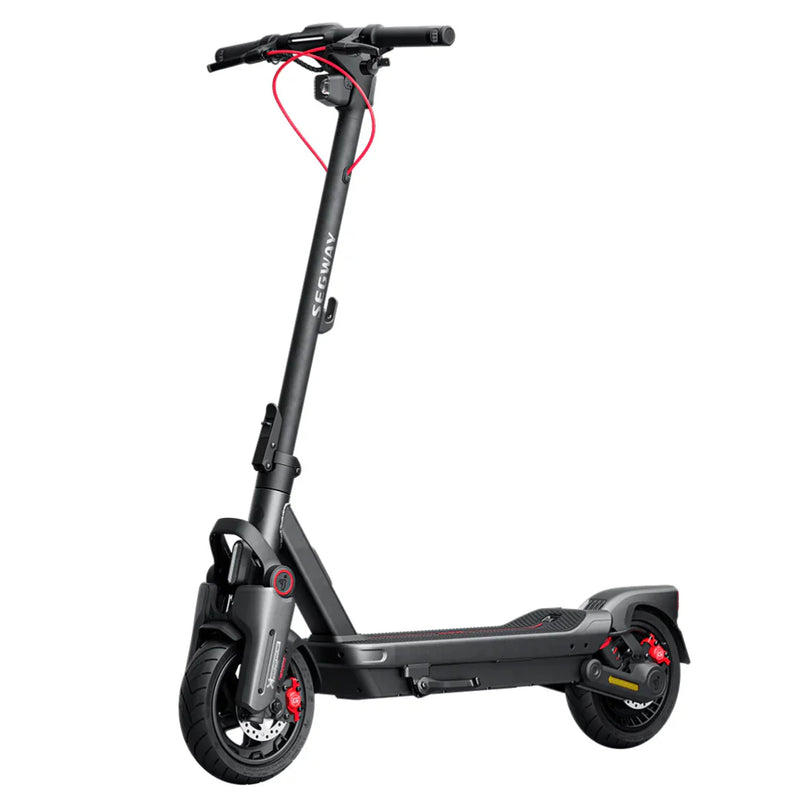
At around 120 kg, a model with a 150 kg max load is enough, such as the NAVEE NT5 Ultra X or the Ninebot GT3. Closer to 150 kg, or carrying a heavy bag, the BOYUEDA S5-11 with a 200 kg max load gives you the most headroom. For calm commuting the NAVEE ST5 Max is the sensible pick, and the iScooter iX7 Pro is the most affordable dual-motor option here.
Quick answer: which model for your weight?
- Up to about 120 kg: NAVEE NT5 Ultra X or Ninebot GT3 by Segway – a 150 kg max load leaves around 30 kg of headroom.
- Over 120 kg, up to 150 kg: BOYUEDA S5-11 – the only model here with a 200 kg max load.
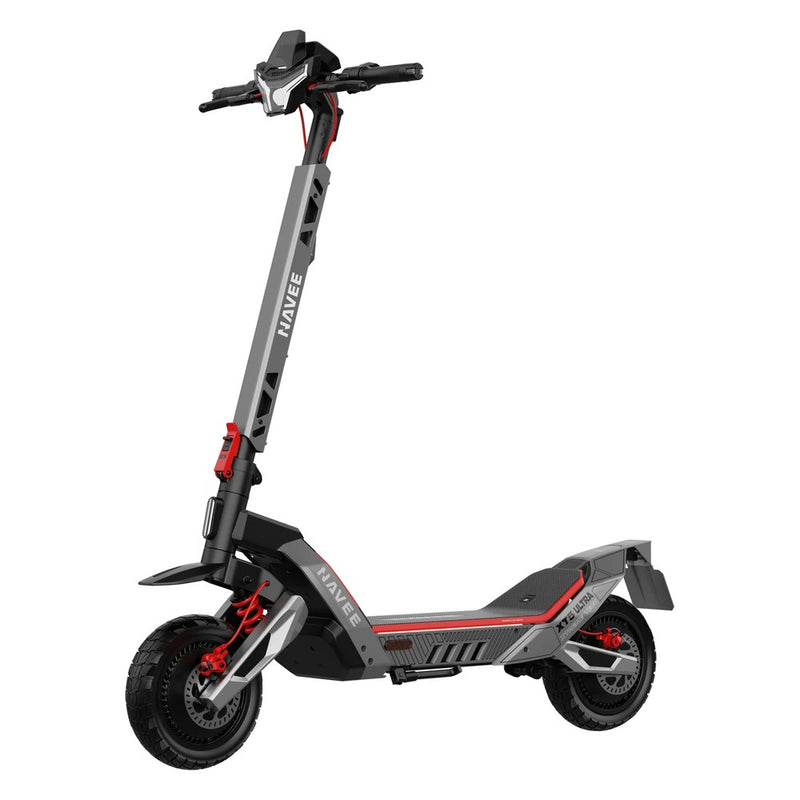
- Hills and gravel: NAVEE XT5 Ultra with 12-inch tyres and dual motors.
- Lowest price with dual motors: iScooter iX7 Pro.
- Relaxed commuting, easy to carry: NAVEE ST5 Max – the lightest in the comparison, 20 km/h top speed.
- Longest range: BOYUEDA S5-11 (120 km per spec), followed by Ninebot GT3 (95 km).
Six electric scooters for heavy adults compared
| Model | Max load | Range | Top speed | Motor (rated / peak) | Tyres | Weight | Price band |
|---|---|---|---|---|---|---|---|
| NAVEE ST5 Max | 150 kg | 90 km | 20 km/h | 500W / 1650W | Puncture resistant 10.0" | 25.4 kg | €1,000–1,500 |
| iScooter iX7 Pro | 150 kg | 80 km | 60 km/h | 2000W (1000W x2) | Off-road (Air) 10.0" | 30 kg | under €1,000 |
| NAVEE NT5 Ultra X | 150 kg | 90 km | 65 km/h | 1600W (800W x2) / 2400W (1200W x2) | Off-road (Air) 10.5" | 36.5 kg | €1,000–1,500 |
| NAVEE XT5 Ultra | 150 kg | 90 km | 50 km/h | 1000W (500W x2) / 4400W (2200W x2) | Off-road (Air) 12.0" | 38.6 kg | €1,000–1,500 |
| Ninebot GT3 by Segway | 150 kg | 95 km | 50 km/h | 1200W / 2400W | Puncture resistant 11.0" | 39.5 kg | €1,500–2,000 |
| BOYUEDA S5-11 | 200 kg | 120 km | 85 km/h | 6000W (3000W x2) | Off-road (Air) 11.0" | 45 kg | €1,500–2,000 |
Specifications are taken from our product pages. Price bands are approximate and prices can change – check the product page for the current price.
How to choose an e-scooter when you are heavier
Max load with a margin
Max load is the most important number. Add clothes, helmet and bag to your body weight, then add another 20–30 kg. Riding close to the limit every day wears tyres, bearings, the folding joint and brakes faster.
Motor power and dual motors
Rated (continuous) power tells you more than peak power. Heavier riders feel the difference on hills: one motor slows down, two keep going. Our guide how many watts an electric scooter needs explains the numbers, and you will find more options among our dual-motor electric scooters.
Tyres and suspension
Bigger, wider tyres carry weight better and soak up potholes. Pneumatic tyres cushion the most but need the right pressure – even more so at higher weight, see our tyre pressure guide. Want to avoid punctures? Read solid vs pneumatic tyres before you decide.
Brakes
More weight means longer stopping distances. Choose disc brakes front and rear; hydraulic brakes give the most power with a light pull. All six models have disc brakes on both wheels, and the BOYUEDA S5-11 has hydraulic ones.
Frame, stem and folding joint
The stem and folding joint take the strain when you weigh more. Check for play on a test ride and re-tighten the bolts after the first few rides. If you like to sit now and then, have a look at electric scooters with a seat.
Hills and range under a heavy load
The more you weigh, the more energy every climb takes. Expect real-world range to be clearly shorter than the spec sheet, especially in the cold and on hilly routes. Choose dual motors and a large battery rather than a model that only just works on paper.
Warranty and service
Every scooter in this comparison comes with a 2-year warranty from Wheelyshop. As a heavier rider it is worth picking a model with easy-to-find spare parts such as tyres, brake pads and inner tubes.
Checklist before you buy
- Max load at least 20–30 kg above your weight with clothes and bag
- Dual motors if you ride hills
- Wide tyres of 10 inches or more
- Disc brakes front and rear
- A solid stem with no play
- 2-year warranty
The models at a glance
- NAVEE ST5 Max – 20 km/h top speed, puncture-resistant tyres and the lowest weight in the comparison. For relaxed commuting. More in our NAVEE review.
- iScooter iX7 Pro – dual motors and off-road pneumatic tyres in the lowest price band. See also which iScooter to buy.
- NAVEE NT5 Ultra X – dual motors, 10.5-inch tyres and 2 disc brakes + E-ABS. A strong all-rounder at 120 kg.
- NAVEE XT5 Ultra – 12-inch tyres and high peak power, good for gravel roads or long climbs.
- Ninebot GT3 by Segway – puncture-resistant 11-inch tyres and 95 km range – a steady choice for long commutes. More in our Ninebot guide.
- BOYUEDA S5-11 – 200 kg max load and 2 hydraulic disc brakes + E-ABS. The most headroom, but also the heaviest to carry.
Common mistakes
- Trusting the claimed range. It is often measured with a 75 kg rider at a steady speed – expect less.
- Choosing a max load equal to your weight. That leaves no margin for a bag or winter clothes.
- Forgetting the scooter's own weight. A sturdy model often weighs 35–45 kg – think about stairs and car boots.
Speed limits, helmet rules and insurance requirements differ from country to country, as Your Europe explains – see our electric scooter laws in Europe before you ride. No favourite yet? Browse all electric scooters.