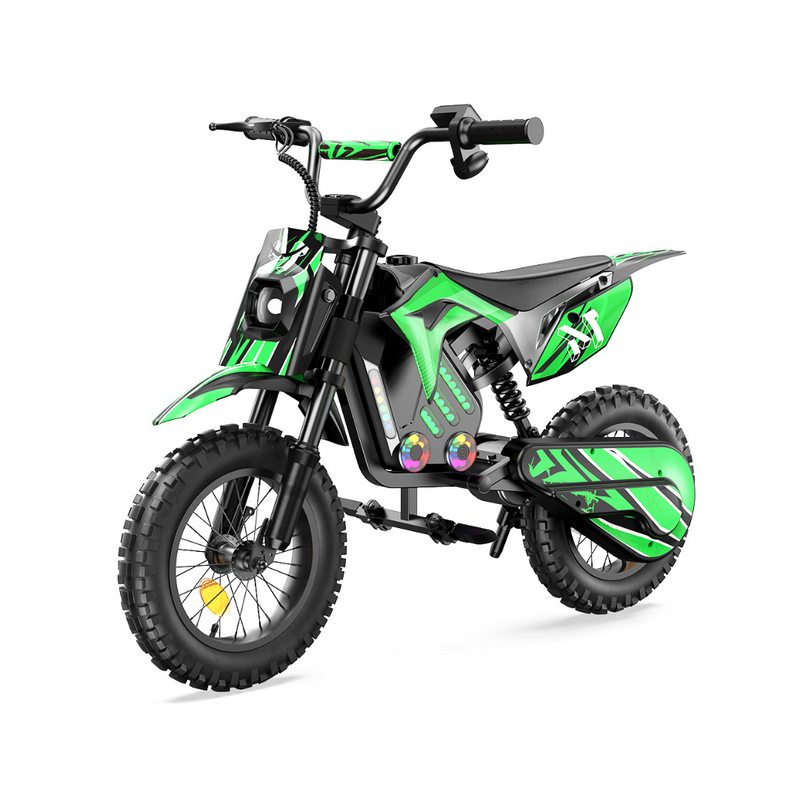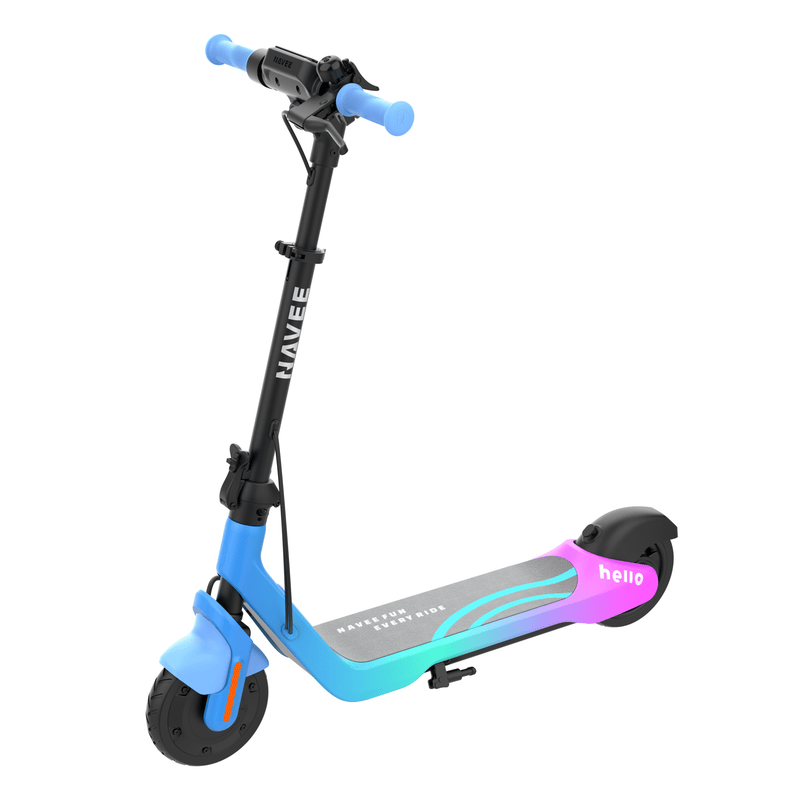

An electric motorcycle for kids should match your child’s age, height and weight – not just how cool it looks. Here we sort the models by age using our own product data, then cover what decides whether the first season is a success: fit, protective gear, where to ride, charging, speed modes and when it’s time for the next size up.
Short answer: which electric motorcycle for kids?
For ages 3–5, the JKING C6 fits: it weighs 10 kg and has three speed modes up to 16 km/h. For ages 6–8 there is the KOOLUX K7 (6–10), the Wheely A14 (from 6) and the Wheely Y3 (from 7). For ages 9–12, weight decides: the K7 takes 65 kg, the Y3 50 kg and the A14 80 kg.
Kids’ electric motorcycles in numbers
| Model | Age | Top speed | Range | Weight | Max load | Price range |
|---|---|---|---|---|---|---|
| JKING C6 | from 3 | 16 km/h | 12 km | 10 kg | 50 kg | under €400 |
| Wheely A14 | from 6 | 27 km/h | 22 km | 22.5 kg | 80 kg | €600–700 |
| KOOLUX K7 | 6–10 | 30 km/h | 25 km | 20 kg | 65 kg | €600–700 |
| Wheely Y3 | from 7 | 25 km/h | 15 km | 19 kg | 50 kg | €600–700 |
Source: Wheelyshop product data, November 2026. Price ranges are for November 2026.
The right electric motorcycle by age
Ages 3–5: the first electric motorcycle
At this age it is all about balance and learning throttle and brakes. The JKING C6 is made for children from 3, weighs 10 kg and has three speed modes up to 16 km/h. Start in the lowest mode and walk alongside. Max load is 50 kg, so it often lasts longer than you’d expect. Its manual says an adult should always be there.
Most kids’ electric motorcycles are made for roughly ages 3–8 and have a limited top speed, according to Cleanrider’s overview (in French). A child who already rides a balance bike or a bicycle usually finds the balance easier, but throttle and brakes are new – plan a few short sessions before it clicks.
Ages 6–8: more suspension and bigger wheels
Now children usually want something that copes with potholes and gravel. The KOOLUX K7 is made for ages 6–10, has three speed modes up to 30 km/h, 12-inch tyres and weighs 20 kg. The Wheely A14 is rated from 6 and has 14-inch air-filled tyres, front and rear suspension and a disc brake, but weighs 22.5 kg – an adult will need to lift it.
From age 7 the Wheely Y3 fits too. It has 12-inch air-filled tyres, front and rear suspension and weighs 19 kg. According to its manual, you pick the speed mode to suit the child’s age, and an adult should be there when the child rides.
Ages 9–12: as your child grows
Here height and weight matter more than age. The K7 takes 65 kg and is made up to age 10, the Y3 takes 50 kg and the A14 80 kg. For a taller or heavier child, the A14 with its 14-inch wheels has the most headroom of the four. You’ll find more models among our kids’ electric dirt bikes.
Fit: size, weight and reaching the controls
The age on the box is a starting point, not a verdict. The motorcycling magazine Bennetts BikeSocial puts it well: the right bike depends more on a child’s strength and skill than on age alone. Do three quick checks before you decide:
- Feet: sitting on the seat, your child should reach the ground with both feet, at least on tiptoe, so they can stop and balance on their own.
- Hands: they should reach the bars with slightly bent arms and squeeze the brake lever without letting go of the grip.
- Weight: these bikes weigh between 10 and 22.5 kg. A small child who tips over a heavy machine can’t pick it up again – which is why the 10 kg C6 suits the youngest.
Don’t buy a bike that is too big “to grow into”. A child who can’t reach the ground or the brake loses control, and the fun goes quickly. Check the max load too: it applies to the rider and is set with headroom for the motor and brakes.
Protective gear from the first ride
The helmet comes first
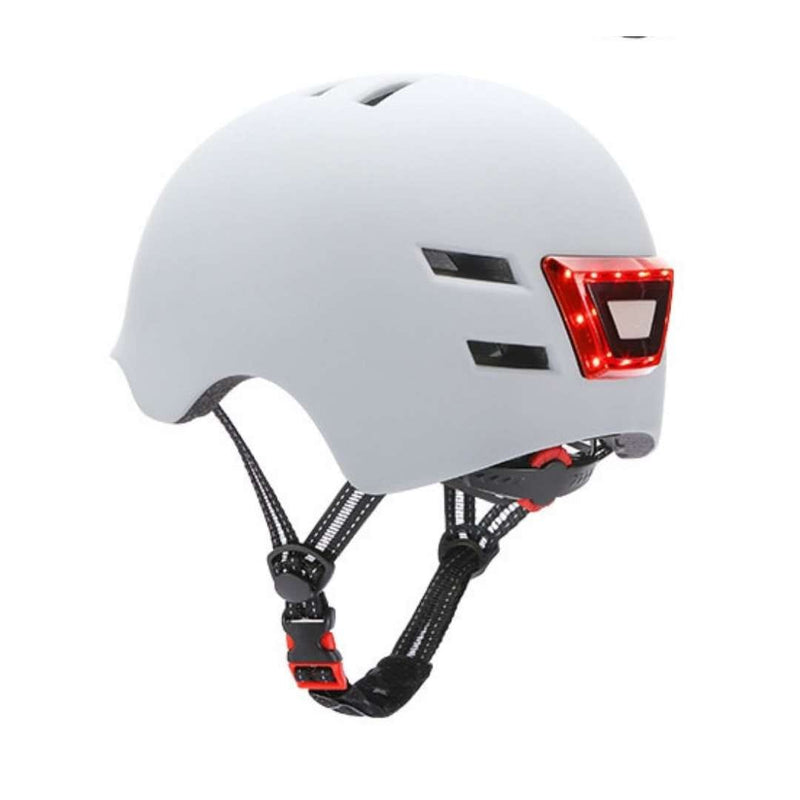
Choose a full-face helmet in your child’s size – never the smallest adult size. Spain’s RACE motoring club (in Spanish) says a helmet prevents 44 per cent of head injuries in a fall, recommends a full-face helmet for children and warns that a poorly sized helmet can come off in a crash. Look for ECE 22.05 or 22.06 on the label, buy it new and replace it after any hard knock.
For club riding, the Auto-Cycle Union, which governs motorcycle sport in the UK, requires an ACU-approved motocross helmet and advises buying the best quality your budget allows and making sure the fit is right. Bennetts adds that a lighter helmet is more comfortable for a child. You’ll find helmets among our helmets.
Other protection
- Gloves: hands take the impact in most spills. Pick gloves with a wrist strap so they stay on.
- Knee and elbow pads: even in the lowest mode – gravel and tarmac take skin off quickly.
- Boots and clothing: sturdy boots that cover the ankle, long trousers and long sleeves – never sandals.
- Goggles: on gravel and in the woods they keep dust and twigs out of the eyes.
Where can kids ride an electric motorcycle?
A kids’ electric motorcycle is not a toy for the street – the Y3 manual says plainly that it must not be ridden on public roads. The best place to ride is a motocross track or club. The ACU runs classes from age 5 (50cc Autos for 5–8-year-olds, for example), and Bennetts notes that youngsters aged 4–7 on electric bikes race in their own E4 class. The rules for riding off-road vary from country to country; we go through them in electric vs petrol dirt bike.
Charging and battery safety
The battery is the part that deserves the most respect. Charging takes 3 hours for the C6, 4–6 hours for the K7, 6–7 hours for the A14 and 8–9 hours for the Y3. The London Fire Brigade notes that most e-bike and e-scooter fires happen while the battery is charging, and the National Fire Chiefs Council gives a short checklist:
- Use the charger supplied by the manufacturer or one it recommends.
- Never leave a battery charging unattended, while you’re asleep or away from home.
- Never charge in a bedroom, hallway or anywhere it could block your escape, and fit a smoke alarm where you charge.
- Check the battery and charger for damage, and don’t cover them while charging.
Let the battery cool after a ride before you charge it, as the London Fire Brigade advises. If the bike is stored over winter, the Y3 manual recommends charging the battery at least every 30 days. More tips in electric scooter fire risk: how to charge and store safely.
Speed modes and parental control
All four have several speed modes, and that is your most important tool. The C6 has three modes up to 16 km/h and the K7 three modes up to 30 km/h. Many kids’ electric motorcycles have some form of parental control to limit speed, says Cleanrider – check in the manual how your model works before your child gets on.
A simple ladder that works: first sessions in the lowest mode on a flat, enclosed area. Step up one mode only once your child brakes smoothly, turns both ways and stops on a signal. Agree the rules before you start – for example, always stop when you raise your hand – and keep sessions short. A tired child rides worse. For track riding, the ACU also recommends a lanyard kill switch that cuts the power if the rider falls off, according to Bennetts.
Care: tyres, brakes and storage
A kids’ electric motorcycle doesn’t need much, but a little regular attention goes a long way. Before every ride: squeeze the brakes, look at the tyres and check the bars are tight. The A14 and Y3 have air-filled tyres, which grip better and ride more smoothly but need pumping up – low pressure makes steering heavy and raises the risk of punctures. The Y3 has a disc brake that needs adjusting when it gets slack.
The K7, A14 and Y3 are rated IPX4, meaning splash-proof. That is fine for a wet gravel track but not for deep puddles or a pressure washer. Wipe the bike down after a ride and store it somewhere dry and frost-free indoors.
Common mistakes
- A bike “to grow into”: your child can’t reach the ground and loses control.
- Too fast, too soon: jumping straight to the top mode is a common cause of spills.
- A bicycle helmet instead of a full-face: it doesn’t protect the chin and face.
- Charging overnight: charge while you are awake and nearby.
- Riding on the street or in the woods: pick a track or an enclosed area where you are allowed to ride.
- Forgetting tyres and brakes: the Y3 manual says tyre pressure and brakes must be checked before each ride.
When does a child outgrow it?
The signs usually come in this order: knees touch the bars, your child rides in the top mode all the time and gets close to the maximum load. That is the time for a bigger model – not for trying to unlock more speed or fitting a stronger battery. Of the four, the A14 lasts longest thanks to its 80 kg max load, while the C6 with 50 kg is made for the youngest.
Don’t forget the helmet as your child grows: check the fit every season. And keep the original box – if the vehicle has to be sent in it is packed in that box, and all our electric vehicles come with a 2-year warranty.