EASWE C30
EASWE C30
In stock: Delivery %%DELIVERY_5_10%%.
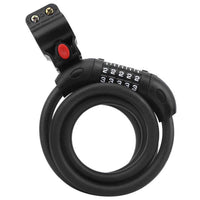
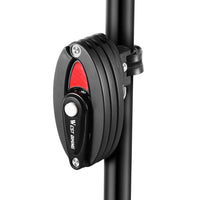
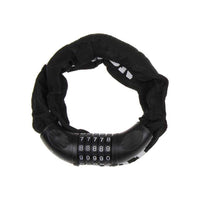
Perfect together
Tick the box and the accessory is added to the cart with the vehicle.
Failed to load download availability
- 2-year warrantyPeace of mind with every purchase
- 14-day returnsChange your mind, no stress
- Always fast replies in chatWe help you right away
Specifications
Performance
-
Speed
Top speed varies depending on road surface, rider weight, wind, gradient, riding mode and temperature.
- 6.4 km/h
-
Speed limiter
Some models come with a speed limit of 25 km/h. This speed limit can be easily removed by following the instructions in the video below.
- No
-
Motor power
Motor output in watts (W). The left value is the nominal output for normal riding and the right value is the peak output.
- Dual motors: 400 W (200 W × 2)
-
Max incline
The gradient the vehicle can climb; affects the effort needed when riding uphill or downhill.
- 12°
-
Suspension
Mechanism that absorbs shocks for a smoother ride; may be fitted at the front and/or rear.
- Front
-
Riding modes
Lets the rider choose between different speed levels for greater flexibility and control while riding.
- 2 modes
Battery
-
Range
Range varies depending on road surface, rider weight, wind, gradient, riding mode and temperature.
- 24–48 km
-
Capacity
Battery voltage (V) and capacity (Ah/Wh). A higher capacity gives a longer range.
- 24 V 12 Ah
-
Charging time
The time it takes to charge the battery from empty to full capacity, which affects the user’s wait time between uses.
- 5–6 h
-
Removable
Ability to easily remove the battery for charging and convenience. Also eliminates the risk of theft of the entire vehicle when the battery is locked away separately.
- Yes
-
Dual charging ports
A feature that allows the use of two charging cables simultaneously, which shortens charging time and provides flexibility when using different charging stations.
- Yes
Wheels
-
Tyres
Air-filled tyres provide comfort and grip but can puncture. Solid tyres are puncture-proof and durable. Honeycomb and semi-solid tyres combine puncture resistance with comfort and grip. Off-road tyres suit rough terrain but can affect speed.
- Solid
-
Size
Specifies the physical size of the tyres, which affects both speed and stability, with common sizes such as 8.5 and 10 inches for different uses.
- 6.5" & 12"
-
Puncture-proof
Tyres designed to resist punctures and eliminate the risk of sudden stops, increasing reliability and minimising the need for repairs.
- Yes
Safety
-
Brakes
The system used to control speed; crucial for safety and lets the rider regulate their pace.
- Electromagnetic
-
IP rating
A standardized code representing sealing against water and dust. A high IP rating indicates an increased level of protection against external influences, which is important for extending the life of the device and ensuring reliable performance.
- IPX5
-
Lights
Built-in lights that provide illumination for increased visibility and safety while riding, especially in low light or at night.
- Front
-
Indicators
Integrated light signals that improve visibility and road safety by indicating direction when turning and alerting other road users.
- No
-
Electric horn
A sound device that uses electrical current to produce an audible signal. It alerts other road users and increases the rider’s safety in traffic.
- Yes
-
NFC lock
A feature that enables secure wireless communication via NFC, used to lock and unlock the vehicle with a simple tap of a key card.
- No
-
Key
A key used to switch the ignition on or off or to lock the battery, increasing security and preventing unauthorised use.
- No
Size
-
Dimensions
Specifies the physical dimensions, including length, width, and height, which are crucial for assessing size and suitability for the user, as well as for storage and transportation.
- 850 × 600 × 900 mm
-
Weight
Represents the total weight, which matters for handling, portability and convenience when carrying and storing the vehicle.
- 11.3 kg
-
Max load
The highest recommended load limit suggested by the manufacturer for safe and optimal use, which is important for performance and durability during use.
- 120 kg
Comfort
-
App
A smartphone app compatible with the e-scooter/e-bike that adds features such as navigation, speed control or battery monitoring for an enhanced user experience.
- No
-
Saddle
An adjustable seat that offers personalised comfort for a more comfortable ride.
- Yes
-
Adjustable handlebars
Lets the rider adjust the height of the handlebars for a personalised and comfortable riding position.
- No
-
Cruise control
A built-in feature that maintains a constant speed without holding the throttle, increasing comfort and giving a more relaxed ride over longer distances.
- No
-
Hook
A device for securely attaching or hanging lighter items, handy for carrying small bags or accessories.
- No
-
USB port
Lets you charge and connect external devices such as smartphones or tablets via USB.
- No
-
Foldable
Foldable means that the electric vehicle can be folded, which makes it easier to transport, store or place in the car.
- Yes
Documents
-
Manual
Information or materials provided to explain, describe, or support a product, process, or system. This may include user manuals, instruction manuals, technical specifications, and safety information.
- Download file
In the box
-
Contents
See what comes with your product here. The contents of the package are listed to ensure you know exactly what you are getting with your order.
- EASWE C30
- Battery pack
- Footrest assembly
- User manual
- Certificate
- Tool kit
- Charger
Product description
Product description
EASWE C30 electric wheelchair for light and easy mobility.
EASWE C30 is a folding electric wheelchair for anyone who wants low weight, easy transport and comfortable powered mobility. The carbon-fibre frame helps keep the net weight at just approximately 11.3 kg, while the recommended maximum user weight is 120 kg. Two brushless 200 W motors deliver 400 W in total and are paired with a removable 24 V 12 Ah lithium battery. With a top speed of 6.4 km/h, an electromagnetic brake, puncture-proof tyres and a 360-degree joystick, EASWE C30 is designed for convenient use both at home and when travelling.
Carbon-fibre frame weighing just 11.3 kg.
One of the clearest advantages of EASWE C30 is its low weight. The frame is made of carbon fibre, a material that combines low weight with high structural strength. Its net weight is approximately 11.3 kg, making this electric wheelchair easier to lift and transport than many traditional powered wheelchairs. The folding design also means C30 takes up less space in the car, at home or in storage.
Two 200 W motors delivering 400 W in total.
EASWE C30 is powered by two brushless motors of 200 W each, providing 400 W of total motor output. The motors are designed for smooth, controlled movement on asphalt, footpaths, gravel and other everyday surfaces. The stated climbing ability is up to 12 degrees under suitable conditions. A top speed of 6.4 km/h provides a comfortable pace for both indoor and outdoor use.
24 V 12 Ah battery with approximately 24–48 km of range.
The removable 24 V 12 Ah lithium battery has a capacity of 288 Wh and provides approximately 24–48 km of range on one charge under favourable conditions. Charging takes approximately 5–6 hours. Actual range depends on factors including user weight, speed, slopes, temperature and the surface. The battery has BMS protection to monitor and manage its operation and charging.
Two practical ways to charge.
EASWE C30 offers flexibility when the battery needs charging. You can remove the battery and charge it separately, which is useful if the wheelchair is in the car or somewhere a wall socket is difficult to reach. You can also charge through the connection at the joystick controller. This lets you choose the charging method to suit the situation without always having to remove the battery.
Electric and manual modes for flexible use.
EASWE C30 can switch between electric and manual operating modes. In electric mode, the user controls the wheelchair with the joystick. In manual mode, an accompanying person can push the wheelchair more easily when needed. The mode is changed using the controls at the motors, making C30 practical when powered operation is not needed or an accompanying person wants to take over moving the wheelchair.
360-degree joystick with LCD display.
The joystick controller brings the main functions together in an accessible location. It lets the user switch the wheelchair on and off, accelerate, reduce speed and check battery level, speed and riding information on the LCD display. The joystick moves through 360 degrees and can be positioned for either hand. Five adjustable speed levels make it easier to adapt to the surroundings, while an electric horn helps alert people nearby.
Automatic electromagnetic braking.
EASWE C30 has an electromagnetic braking system that automatically helps stop the wheelchair when the joystick is released. The system also improves control on slopes by counteracting unintended rolling. This makes powered movement more intuitive and reduces the need for separate brake controls during normal use.
Anti-tip wheels for improved stability.
The rear of EASWE C30 has anti-tip devices designed to reduce the risk of the wheelchair tipping backwards. They provide extra stability when negotiating small changes in level or slopes, for example. Together with the electromagnetic brake and seat belt, they contribute to more controlled everyday use.
Front suspension and a comfortable seat cushion.
For greater comfort, EASWE C30 has front suspension to help reduce vibrations from uneven surfaces. The seat and backrest are upholstered in soft microfibre leather, designed to withstand repeated use while providing a comfortable seating surface. The seat is approximately 16 inches wide, and the armrests can be adjusted for a more tailored seating position.
Puncture-proof tyres for less maintenance.
EASWE C30 has 6.5-inch front wheels and 12-inch rear wheels with solid, puncture-proof tyres. This means you do not need to check tyre pressure or deal with ordinary punctures. The wheels are suited to several everyday surfaces, including asphalt, concrete, firmer gravel and smoother natural paths. The larger rear wheels also contribute to stability and smooth movement.
Folding design for the car and storage.
C30 folds from side to side into a much narrower shape for transport and storage. Unfolded, the wheelchair measures approximately 850 × 600 × 900 mm; folded, it measures approximately 630 × 259 × 701 mm. Its combination of low weight and compact dimensions is practical if you often need to take your wheelchair in the car or store it in a small space.
UN38.3-tested battery and IPX5 protection.
The battery has been tested to UN38.3 for lithium battery transport. Rules for taking a 288 Wh battery on a flight vary between airlines and destinations, so always check the requirements with your airline before travelling. EASWE C30 also has an IPX5 rating for protection against splashing water during normal use. Electrical components should still be protected from submersion and heavy exposure to water.
Choose EASWE C30 for compact powered mobility.
EASWE C30 combines a lightweight carbon-fibre frame of approximately 11.3 kg with two 200 W motors, a 24 V 12 Ah battery and approximately 24–48 km of range. Five speed levels, a 360-degree joystick, an electromagnetic brake, puncture-proof tyres, suspension and a folding design make it a practical electric wheelchair for everyday use and transport. The package includes EASWE C30, a battery pack, footrest assembly, user manual, certificate, tool kit and charger. Order EASWE C30 from Wheelyshop for convenient, flexible mobility.
Spare parts.
If you need spare parts that are not in our range, do not hesitate to contact us. We can arrange a special order for the specific spare part you need and provide a quotation. Our customer service team is always ready to help you find the right solution for your needs and keep your product working at its best. We aim to offer our customers the best service and make sure you receive the support you need.
Delivery
Delivery
Shipping terms
- Free shipping: applies to orders from €69.90 across the EU.
- Shipping cost: for orders under €69.90, a shipping fee of €6.95 applies.
Delivery times
- All products: delivery time is 5–10 working days.
- Special orders: for special orders placed by email, such as spare parts, delivery can take up to 20 working days.
Home delivery or pickup point
- Electric scooters and e-bikes: always delivered to your door, free of charge.
- On delivery day: you are responsible for being available at the given address – the carrier will usually contact you in advance to arrange a time.
- Pickup point instead: contact the carrier directly to change the delivery method.
- Smaller parcels: if the parcel does not fit in your letterbox, you will receive a notification about collection or a new delivery attempt.
Guarantee
Guarantee
Warranty period
- 2-year warranty: applies to all products – electric vehicles, accessories and spare parts – in addition to your statutory rights.
- No exceptions: no shorter warranty periods for individual components.
What the warranty covers
- Manufacturing and material defects: on electric vehicles this includes the battery, motor, controller, display and the supplied charger.
- Approved claims: we send spare parts, arrange a repair or replace the product – and we pay for parts, labour and shipping.
What to do if something is wrong
- Register the claim with us first: via customer service – always before going to a local workshop.
- Attach photos and video: this speeds up the assessment.
- Keep the box: the original box is needed if the product has to be sent in.
- Terms: read the full warranty terms.
Payment
Payment
Card payment
Visa, Mastercard and American Express.
Klarna
Pay with Klarna – the options available for your country are shown at checkout.
Apple Pay & Google Pay
Quick and easy at checkout.
PayPal
Pay without revealing your payment details and choose how you want to pay.
Customer support
Customer support
- Response time: we reply within 24 hours on working days.
- Contact us: via the form on customer service – you will also find answers to common questions there.
Return
Return
- 14-day right of withdrawal: counted from the day you receive the goods.
- Electric vehicles: an electric vehicle that has been used or ridden – no matter how short the distance – is not taken back. Check the vehicle without riding it.
- Keep the original box: the product is always sent in its original box – we do not send out new boxes.
- Photos and video: always attach photos and video when you register a return.
- How it works: read our return and refund policy.
Laws & rules
Laws & rules
EU-wide rules
- Electric bikes: under Regulation (EU) 168/2013 a pedal-assisted bike with a motor of max 250 W that cuts out at 25 km/h is a bicycle in every EU country – no registration, licence or insurance. Anything more powerful or faster is a moped (L1e) with type approval, registration, licence, insurance and helmet requirements.
- Electric scooters: e-scooters are excluded from the EU regulation, so each country sets its own rules on speed, power, minimum age, helmets, insurance and registration. In most countries the limit is 20–25 km/h.
- More powerful models: a scooter that exceeds your country’s limits may only be used on private or enclosed land.
- Sources: Regulation (EU) No 168/2013 and Your Europe – road rules and safety.
Electric scooter rules by country
Key facts per country, checked against the national authority in September 2026. Rules change often – always confirm the current rules with the linked authority before you buy and before you ride.
- Austria: e-scooters up to 600 W and 25 km/h follow bicycle rules; children under 12 only with supervision or a cycling licence; helmet mandatory under 16. Source: oesterreich.gv.at.
- Belgium: minimum age 16, max 25 km/h, bicycle rules, no passengers, never on the pavement; helmet mandatory from 1 September 2026 for scooters faster than 20 km/h. Source: belgium.be.
- Bulgaria: max 25 km/h; minimum age 14 on cycle lanes and 16 on streets limited to 50 km/h; helmet mandatory under 18; reflective vest at night. Source: State Agency Road Safety.
- Croatia: minimum age 14; helmet mandatory for all riders; cycle lanes where available; reflective vest in poor visibility. Source: Croatian Police.
- Cyprus: rules differ – check with the Road Transport Department before riding. Source: Road Transport Department.
- Czechia: an e-scooter counts as a bicycle if limited to 25 km/h and 250 W; helmet mandatory under 18; not on the pavement. Source: Czech Police.
- Denmark: minimum age 15, max 20 km/h, bicycle helmet mandatory, lights on at all times, bicycle rules apply. Source: Færdselsstyrelsen.
- Estonia: max 25 km/h and 1 kW; helmet mandatory under 16; riders aged 8–15 need supervision or a cycling licence; insurance required above 14 km/h or 25 kg. Source: Transpordiamet.
- Finland: light electric vehicle up to 25 km/h and 1 kW; minimum age 15; bicycle rules, not on the pavement; helmet recommended; motor insurance if over 25 kg. Source: Traficom.
- France: minimum age 14, limited to 25 km/h, liability insurance mandatory, cycle lanes, never on the pavement; helmet mandatory in Paris and several départements. Source: Service-Public.
- Germany: only e-scooters with a type approval (ABE) and insurance sticker; 6–20 km/h, max 500 W, minimum age 14, cycle paths or road, no helmet obligation. Source: eKFV.
- Greece: light personal electric vehicles limited to 25 km/h are treated as bicycles; minimum age 15; cycle lanes where they exist. Source: Ministry of Infrastructure and Transport leaflet.
- Hungary: rules are being revised – check with the Hungarian Police before riding. Source: Hungarian Police.
- Ireland: legal on public roads since May 2024 if max 400 W, 20 km/h and 25 kg; minimum age 16; no licence, tax or insurance; not on footpaths. Source: gov.ie.
- Italy: minimum age 14, helmet mandatory for all, max 20 km/h (6 km/h in pedestrian areas); identification plate since 16 May 2026 and liability insurance since 16 July 2026. Source: ACI.
- Latvia: minimum age 14 with a cycling or driving licence, max 25 km/h, registration with CSDD, one rider; helmet mandatory for ages 14–17. Source: CSDD.
- Lithuania: max 25 km/h and 1 kW; minimum age 16 (14 with a certificate); helmet mandatory under 18. Source: Lithuanian Transport Safety Administration.
- Luxembourg: max 25 km/h; not allowed under 10, ages 10–13 only on pavements and cycle paths; no registration; helmet recommended. Source: Police Grand-Ducale.
- Malta: e-kickscooters (max 20 km/h) must be inspected, registered and licensed with Transport Malta before use. Source: Transport Malta.
- Netherlands: only RDW-approved e-steps may be used on public roads – most models are not approved; minimum age 16, max 25 km/h, liability insurance and number plate required, no helmet obligation. Source: Rijksoverheid.
- Poland: max 20 km/h; minimum age 13 (bicycle card required under 18); helmet mandatory under 16 since 3 June 2026; no passengers. Source: gov.pl.
- Portugal: e-scooters up to 0.25 kW and 25 km/h are treated as bicycles; helmet mandatory; faster or more powerful models are not allowed on public roads. Source: Diário da República.
- Romania: minimum age 14; helmet mandatory under 16 on the road; cycle lanes or roads limited to 50 km/h; not on the pavement; no passengers. Source: Romanian Police.
- Slovakia: max 25 km/h; riders over 15 may use the road, younger riders only cycle paths and residential zones; helmet voluntary. Source: BECEP.
- Slovenia: light motor vehicle limited to 25 km/h; minimum age 15 since February 2026; helmet mandatory under 18. Source: Slovenian Traffic Safety Agency.
- Spain: max 25 km/h; from 1 October 2026 minimum age 15 and homologated helmet mandatory; registration with the DGT and liability insurance mandatory since 2026; never on pavements or interurban roads. Source: DGT.
- Sweden: an e-scooter counts as a bicycle if limited to 20 km/h and 250 W; helmet mandatory under 15; cycle paths, never on the pavement. Source: Transportstyrelsen.
Disclaimer
- Your responsibility: the summary above is for guidance only and is not legal advice. Laws and local by-laws change, and it is the rider’s responsibility to check what applies where the vehicle will be used – before purchase and before riding.
Customer reviews
Customer reviews